Precautions for Using Off-road Walk-behind Pallet Trucks On Construction Sites
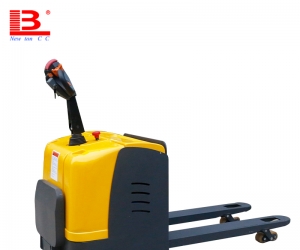
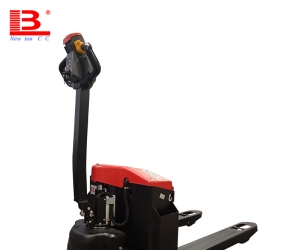
Construction sites and building material yards are covered with gravel, steel bars, mud pits and ponding water. You must select handling equipment carefully; ordinary pallet trucks suffer severe wear or even total failure after only a few uses. To avoid such troubles, choose the Off-road Full Electric Walk-behind Pallet Truck.
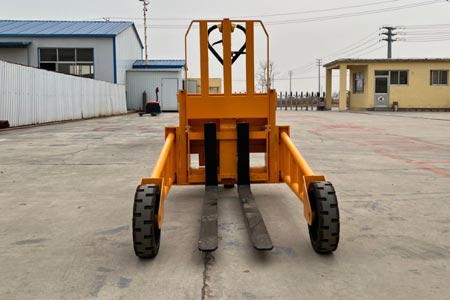
Equipped with wide deep-tread rubber tires, raised chassis for larger ground clearance, robust heavy-duty frame and high-precision controller, this truck enables efficient and convenient cargo transport outdoors. However, suitability for harsh terrain does not mean you can neglect regular maintenance.
Although lithium-powered off-road pallet trucks deliver powerful performance, random rough handling and careless storage lead to drastically higher failure rates compared to properly maintained units of the same model, driving up substantial maintenance expenses over time.
What Precautions Should You Take When Using the Off-road Walk-behind Pallet Truck On Construction Sites? Full Checklist Below
1. Complete Pre-operation Inspection Before Each Shift
1.1 Inspect off-road tires and wheel brackets Clear trapped gravel, iron wire and steel bars embedded in tire treads; check tires for punctures and cracks. All wheel bracket bolts easily loosen from bumpy travel, so tighten every fastener thoroughly. Unremoved sharp debris will pierce thickened off-road tires during operation.
1.2 Check hydraulic system for oil leakage Lift and lower empty forks repeatedly to check for oil stains on cylinder piston rods and high-pressure hose joints. Construction dust accelerates seal wear; replace seals immediately at the first sign of minor seepage. Insufficient hydraulic pressure under full load causes automatic fork sinking and cargo tipping hazards.
1.3 Verify waterproof sealing of electric controls and batteries Make sure the battery compartment waterproof cover is fully fastened; check that waterproof sleeves for motor and controller wiring are intact with no cracks. Mud, water and dust penetrating wiring triggers short circuits and burnt controllers, which carry extremely high repair costs on site.
1.4 Test braking performance Push the truck forward and backward without load to test brake response. Brake failure on slippery muddy ground creates critical safety risks. Do not operate with heavy loads if brakes stick or deliver weak stopping power.
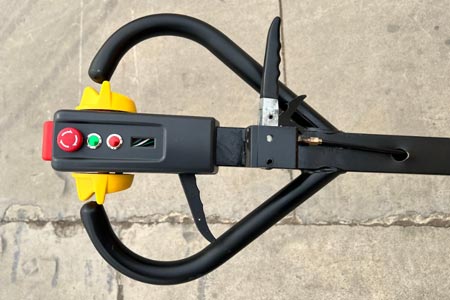
2. Standard Operating Rules On Site
Never overload or unevenly load cargo Though reinforced for off-road use, the chassis will deform and motors overheat & burn out under overload on slopes and muddy ground. Center cargo evenly without one-sided stacking. Keep load gravity low when climbing or descending ramps, travel straight without mid-slope turns or sudden hard braking.
Drive slowly over rough terrain; avoid forced obstacle crossing Lay steel plates in advance before passing deep pits, tall curbs or areas scattered with steel bars to prevent direct impact damage to the chassis. Travel at low speed on gravel roads to avoid loosened pipelines and bolts from violent vibration. Do not wade through water deeper than the chassis protective height; prolonged submersion damages motors and battery terminals.
Operate smoothly without sudden acceleration or hard braking Muddy and gravel surfaces offer low traction; rapid acceleration or braking causes skidding. Instant high current surges also damage brushless controllers and lithium batteries, shortening battery runtime and service life after repeated heavy discharge.
Do not remove original factory protective parts Chassis guards, battery waterproof housings and wheel mudguards must stay installed. Without these protections, sand and mud directly scour cylinders, wiring and bearings, quickly triggering jamming, oil leaks and electrical faults.
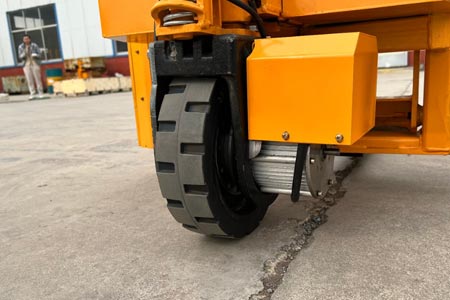
3. Daily Cleaning & Maintenance After Work
Full machine mud and dust removal Rinse mud off wheel brackets, chassis and forks with low-pressure clean water. Never spray high-pressure water directly onto control boxes, motors or battery terminals to prevent water ingress and short circuits. Clear sand trapped between pins and chains to eliminate dry friction noise and jamming.
Regular greasing for moving components After cleaning mud from axles, hydraulic hinge pins and push-pull joints, apply fresh grease daily. Lack of lubrication leads to rapid rust, heavy pushing resistance and seized parts.
Proper battery storage Wipe mud and water off battery surfaces and terminals. Cover with rainproof dust shields for outdoor overnight parking; dew and rain corrode terminals. Long-term outdoor storage with low power causes irreversible damage to lithium cells.
Matching your equipment to construction site conditions is only the basic requirement for the Off-road Full Electric Walk-behind Pallet Truck. Consistent daily cleaning and maintenance are the key to extending service life and cutting failure frequency.
-
 Reliability Of Newnewton Warehouse Forklifts For Heavy-Duty ShiftsWarehouse forklift reliability relies on industrial parts, reinforced frames and factory durability tests. Proper operation and maintenance reduce unexpected downtime.
Do you like ?0
Read more -
 Forklift Configuration Strategy For Dense Warehousing, Warehouse ForkliftDense warehousing needs matched forklifts besides racks. Reach and trilateral stackers fit different layouts, coordinate aisle, load curve and floor for smooth handling.
Do you like ?0
Read more -
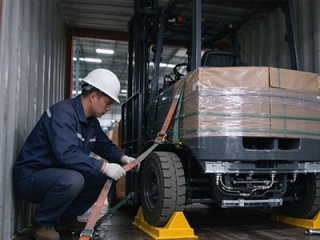 Full Container Supply For Export Forklifts, Forklift ManufacturerBulk forklift orders for overseas can ship by FCL or LCL. Newnewton FCL offers stable freight, safer packing and mixed models for large purchases.
Do you like ?0
Read more -
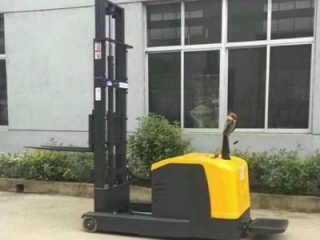 Stand-on Reach Stacker For Narrow Aisle Stacking, Mast Reach StructureStand-on reach stackers feature sliding masts that stay outside racks. They boost storage density in narrow aisles and require flat floors and standard pallets.
Do you like ?0
Read more -
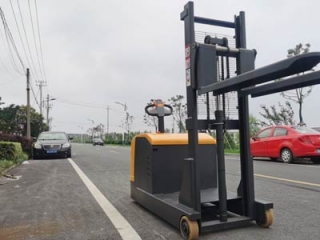 Stand-on Counterbalance Stacker For Various Pallets, Why No Leg RestrictionCounterbalance stackers have no front outriggers, using rear counterweight to avoid pallet interference. They fit various odd pallets yet need wider warehouse aisles.
Do you like ?0
Read more -
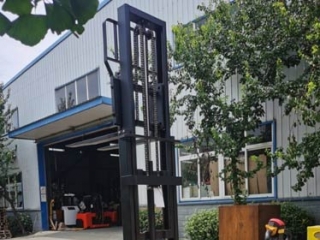 Custom Walk-Behind Counterbalance Stacker | Non-Standard ModificationsStandard walk-behind counterbalance stackers struggle with non-standard pallets and tight aisles. Customize load, lift, forks and structure, share working conditions for safe design.
Do you like ?0
Read more