
Walkie reach truck refers to all kinds of wheeled handling vehicles for loading, unloading, stacking and short-distance transportation of palletized goods.
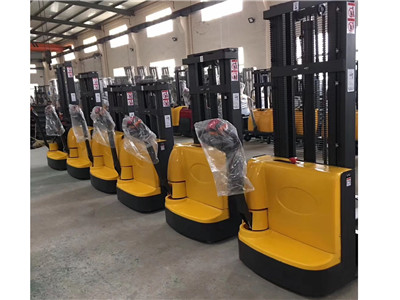
First, the function of the pedestrian pallet stacker
1.Walkie reach truck is mainly used for stacking height and loading and unloading of cargo.
2.The correct use of the pedestrian pallet stacker, can effectively improve the operator's safety and work efficiency.
Second, the standard operation points of the walkie reach truck
1. Check the control and drive devices, operating handles, pedals, wheels and fasteners of the pedestrian pallet stacker before use. If damage or defects are found, they should be operated after repair.
2. When the walkie reach truck is moving, the fork must be fully inserted under the cargo, and the cargo is evenly placed on the fork. It is not allowed to pick the cargo with a single fork.
3. The pedestrian pallet stacker should be smoothly started, steered, formd, braked and stopped. Walkie reach truck must be decelerated when it is turned on a wet or smooth road.
4. When using the pedestrian pallet stacker, it is not allowed to be overweight, super high, and over speed. It is forbidden to brake and turn sharply.
5. Walkie reach truck should pay attention to whether the cargo wrapping is firm when lifting the packaged goods, and do not carry the unfixed or loosely stacked goods, carefully handling large-sized goods. .
6. Pedestrian pallet stacker can adjust the spacing of the forks according to the size of the goods, so that the goods are evenly distributed between the two forks to avoid eccentric load.
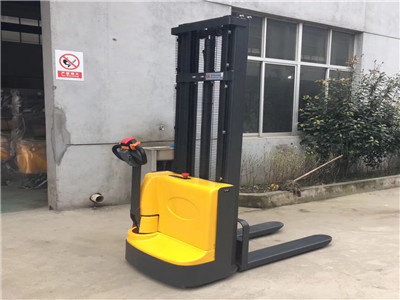
Third, how to maintain the walkie reach truck
Only after systematic study can the maintenance work of the pedestrian pallet stacker
(1) The maintenance site should be kept clean and hygienic before the maintenance of the walkie reach truck.
(2) When repairing the pedestrian pallet stacker, do not carry loose items or valuables on the maintenance personnel of the walkie reach truck. When repairing the electrical system of the pedestrian pallet stacker, if the metal contacts the energized electronic components, it may cause short circuit or combustion. So please take off your watch, earrings or other accessories.
(3) Before the maintenance of the walkie reach truck, unplug the power outlet and disconnect the power supply.
(4) The key switch of the pedestrian pallet stacker should be turned off before opening the left and right lids or electrical systems of the walkie reach truck.
(5) Before the inspection of the hydraulic system, the pedestrian pallet stacker should lower the fork and release the system pressure.
(6) When checking the oil leakage of the walkie reach truck, please wipe it with paper or cardboard. Do not touch it directly with your hands to avoid burns.
(7) Please note that the oil temperature in the transmission or hydraulic system of the pedestrian pallet stacker may be high. the walkie reach truck should be cooled first, then the gear oil or hydraulic oil should be replaced to prevent the oil from burning.
(8) The hydraulic system of the pedestrian pallet stacker should be filled with new cleaning oil.
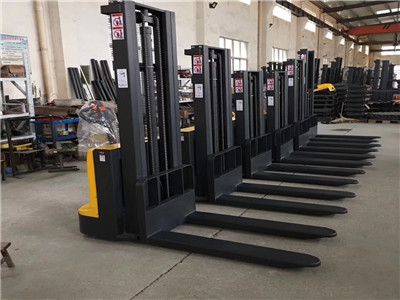
If the hydraulic oil of the walkie reach truck is not clean, it will affect the precision hydraulic components and reduce the hydraulic system capacity of the entire pedestrian pallet stacker. If the walkie reach truck uses different grades of hydraulic oil, it will damage the hydraulic components and affect the system capability. Therefore, when adding or replacing hydraulic fluid to a pedestrian pallet stacker, be careful to use a uniform grade.
(9) When using the walkie reach truck, please observe the relevant regulations, protect the environment, store and discharge the oil of the pedestrian pallet stacker according to the regulations, and do not discharge it to the sewer pipe.
(10) The body of the walkie reach truck is welded, and the battery power is disconnected. Because welding current may enter the battery during soldering, to avoid this, turn off the battery.
(11) When working under the pedestrian pallet stacker, the walkie reach truckis supported by the bracket.
-
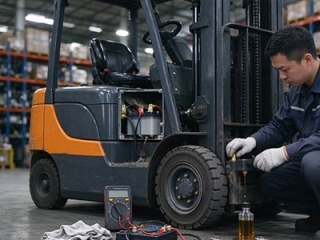 Reliability Of Newnewton Warehouse Forklifts For Heavy-Duty ShiftsWarehouse forklift reliability relies on industrial parts, reinforced frames and factory durability tests. Proper operation and maintenance reduce unexpected downtime.
Do you like ?0
Read more -
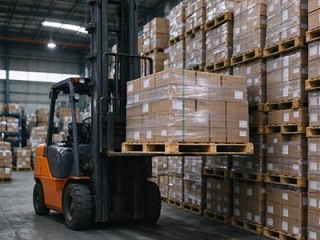 Forklift Configuration Strategy For Dense Warehousing, Warehouse ForkliftDense warehousing needs matched forklifts besides racks. Reach and trilateral stackers fit different layouts, coordinate aisle, load curve and floor for smooth handling.
Do you like ?0
Read more -
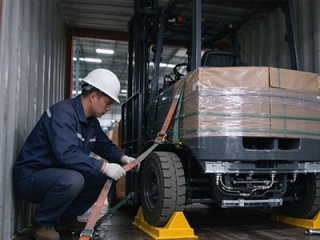 Full Container Supply For Export Forklifts, Forklift ManufacturerBulk forklift orders for overseas can ship by FCL or LCL. Newnewton FCL offers stable freight, safer packing and mixed models for large purchases.
Do you like ?0
Read more -
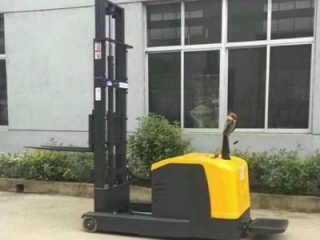 Stand-on Reach Stacker For Narrow Aisle Stacking, Mast Reach StructureStand-on reach stackers feature sliding masts that stay outside racks. They boost storage density in narrow aisles and require flat floors and standard pallets.
Do you like ?0
Read more -
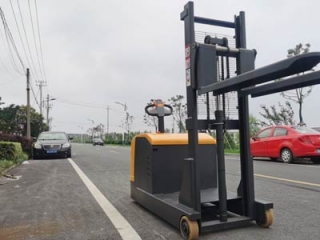 Stand-on Counterbalance Stacker For Various Pallets, Why No Leg RestrictionCounterbalance stackers have no front outriggers, using rear counterweight to avoid pallet interference. They fit various odd pallets yet need wider warehouse aisles.
Do you like ?0
Read more -
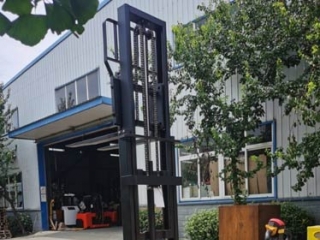 Custom Walk-Behind Counterbalance Stacker | Non-Standard ModificationsStandard walk-behind counterbalance stackers struggle with non-standard pallets and tight aisles. Customize load, lift, forks and structure, share working conditions for safe design.
Do you like ?0
Read more








