
In recent years, China's logistics industry has developed rapidly. Walkie pallet trucks, as an important warehousing and logistics handling equipment, have made walking forklifts a shining star in the domestic warehousing, logistics and handling equipment industry, and the industry's active development backing.
China's walkie pallet trucks have significantly improved their technological innovation capabilities and levels, energy conservation and emission reduction, and fruitful green manufacturing. The intelligent and informational development of walking forklift has achieved remarkable results. Walkie pallet truck companies have begun to attach great importance to product after-sales service, and actively provide integrated solutions for users of walking forklifts to enhance service and promote the development of the industry chain. The development of walkie pallet trucks is now analyzed from seven technical parameters.
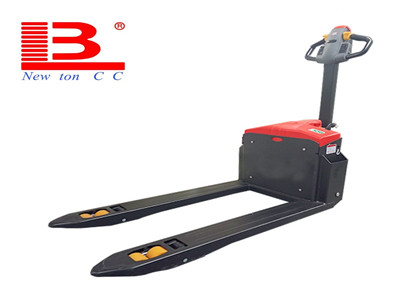
1. The weight of the walking forklift.
The empty weight of a walkie pallet truck, also known as its own weight, refers to the mass of a fully equipped walking forklift in kilograms. The weight of the walkie pallet truck indicates the technical specifications of the quality of the walking forklift.
2. Analysis of the load capacity of the walkie pallet truck.
The carrying capacity of the walking forklift refers to the maximum rated load weight when the walkie pallet truck is shipped, that is, the maximum weight of the cargo allowed to lift when the distance from the center of the cargo to the forearm of the vertical section of the fork is not greater than the load center distance, expressed in t .
3. Analysis of the total weight of the walking forklift.
The total weight of the walkie pallet truck refers to the sum of the empty weight of the walking forklift and the load capacity of the walkie pallet truck.
4. Analysis of the external dimensions of the walking forklift.
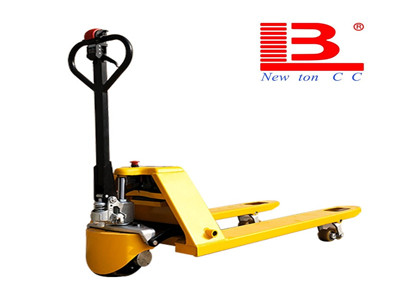
The size of the walkie pallet truck refers to the total length, total width and total height of the vehicle. In order to make the walking forklift have good maneuverability, the size of the walkie pallet truck should be minimized.
5. Analysis of the load center distance of the walking forklift.
The load center distance of the walkie pallet truck refers to the horizontal distance from the center of gravity of the cargo of the walking forklift to the forearm of the vertical section of the fork when standard cargo is placed on the fork.
6. Analysis of the lifting height of the walkie pallet truck.
Walking forklift is on a flat and solid ground, the walkie pallet truck is fully loaded, the gantry is vertical, the cargo is at the highest position, and the vertical distance from the upper surface of the horizontal section of the fork to the ground becomes the maximum lifting height of the walking forklift.
7. Analysis of the maximum grade of the walkie pallet truck.
The maximum grade of the walking forklift refers to the maximum slope that can be climbed when the walkie pallet truck is running at low speed and under normal conditions under normal road conditions, usually expressed in degrees or percentages.
-
 Reliability Of Newnewton Warehouse Forklifts For Heavy-Duty ShiftsWarehouse forklift reliability relies on industrial parts, reinforced frames and factory durability tests. Proper operation and maintenance reduce unexpected downtime.
Do you like ?0
Read more -
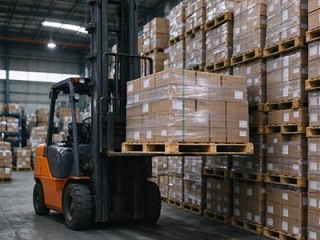 Forklift Configuration Strategy For Dense Warehousing, Warehouse ForkliftDense warehousing needs matched forklifts besides racks. Reach and trilateral stackers fit different layouts, coordinate aisle, load curve and floor for smooth handling.
Do you like ?0
Read more -
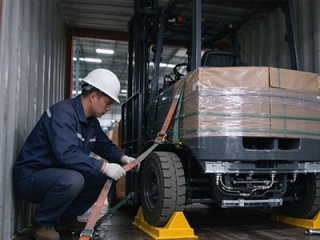 Full Container Supply For Export Forklifts, Forklift ManufacturerBulk forklift orders for overseas can ship by FCL or LCL. Newnewton FCL offers stable freight, safer packing and mixed models for large purchases.
Do you like ?0
Read more -
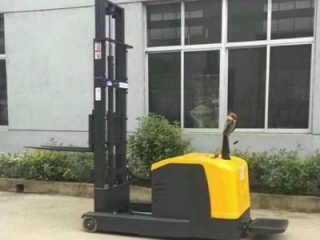 Stand-on Reach Stacker For Narrow Aisle Stacking, Mast Reach StructureStand-on reach stackers feature sliding masts that stay outside racks. They boost storage density in narrow aisles and require flat floors and standard pallets.
Do you like ?0
Read more -
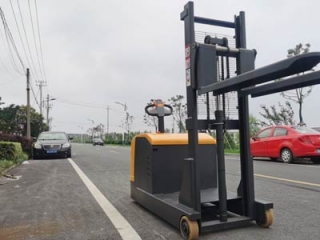 Stand-on Counterbalance Stacker For Various Pallets, Why No Leg RestrictionCounterbalance stackers have no front outriggers, using rear counterweight to avoid pallet interference. They fit various odd pallets yet need wider warehouse aisles.
Do you like ?0
Read more -
 Custom Walk-Behind Counterbalance Stacker | Non-Standard ModificationsStandard walk-behind counterbalance stackers struggle with non-standard pallets and tight aisles. Customize load, lift, forks and structure, share working conditions for safe design.
Do you like ?0
Read more








