Precautions for loading, unloading and handling of counterbalanced forklifts
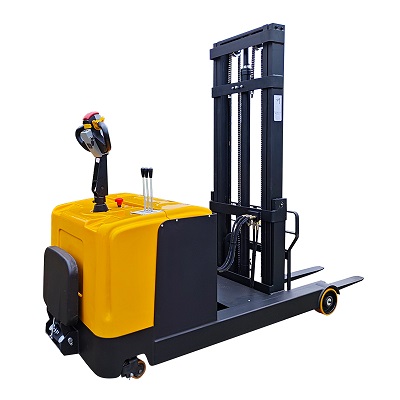
Precautions when loading, unloading and handling:
When the fork approaches or evacuates the item, the speed should be slow and steady, taking care to avoid the wheels running over the item, the skid(pallet) and the fork head, and at the same time do not scratch the item support personnel.
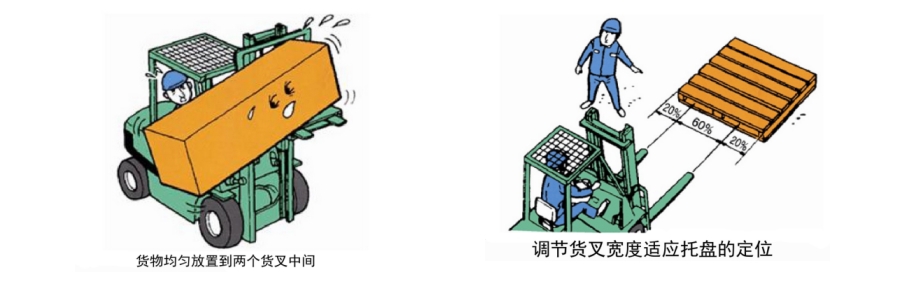
When forks are loaded with goods, the weight of the goods should be evenly shared between the two forks, and the goods should not be deviated, and one side should be attached to the retaining shelf. Small goods should be placed in a collection box or wooden pallet to avoid falling. The goods carried by the counterbalanced forklift shall not block the operator's line of sight, and if the line of sight is blocked, it should be reversed slowly.
When loading the goods, the distance of the forks should be adjusted according to the size of the goods, and the weight of the goods should be evenly distributed on the two forks to avoid eccentric load or the goods slipping to the side when driving.
When loading and unloading goods in a container or box vehicle, the movable lap of the ramp must be placed on the box board of the container or box vehicle. The rear wheels of the container or box vehicle must be blocked by a triangular block, otherwise loading and unloading cannot be carried out.
Counterbalanced forklift loading and unloading "ten prohibitions":
· It is not allowed to use a single fork to load and unload goods;
· It is not allowed to use inertial high-speed forks to pick up goods;
· It is not allowed to directly shovel dangerous goods;
· It is forbidden to use slip to load and unload goods;
· It is not allowed to use the force of impact to load and unload goods;
· It is forbidden to use people to balance the weight of the goods;
· It is not allowed to hang the goods in the air for a long time;
· It is not allowed to push or lift goods with fork tips;
· It is not allowed to use forks to lift personnel to engage in high-altitude operations;
· It is not allowed to use counterbalanced forklifts to push and pull goods.
-
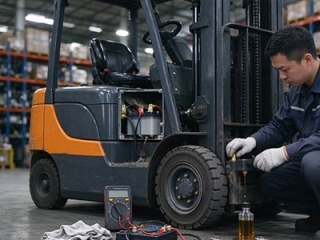 Reliability Of Newnewton Warehouse Forklifts For Heavy-Duty ShiftsWarehouse forklift reliability relies on industrial parts, reinforced frames and factory durability tests. Proper operation and maintenance reduce unexpected downtime.
Do you like ?0
Read more -
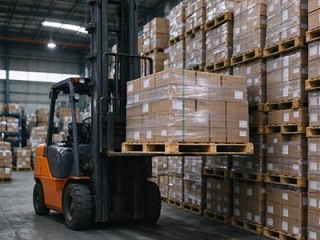 Forklift Configuration Strategy For Dense Warehousing, Warehouse ForkliftDense warehousing needs matched forklifts besides racks. Reach and trilateral stackers fit different layouts, coordinate aisle, load curve and floor for smooth handling.
Do you like ?0
Read more -
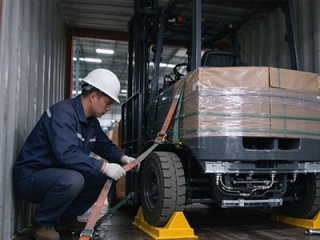 Full Container Supply For Export Forklifts, Forklift ManufacturerBulk forklift orders for overseas can ship by FCL or LCL. Newnewton FCL offers stable freight, safer packing and mixed models for large purchases.
Do you like ?0
Read more -
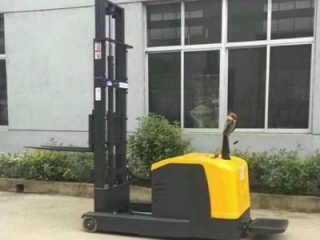 Stand-on Reach Stacker For Narrow Aisle Stacking, Mast Reach StructureStand-on reach stackers feature sliding masts that stay outside racks. They boost storage density in narrow aisles and require flat floors and standard pallets.
Do you like ?0
Read more -
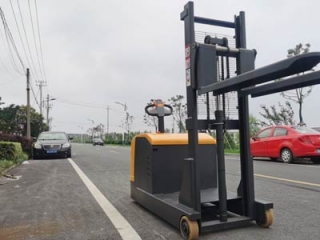 Stand-on Counterbalance Stacker For Various Pallets, Why No Leg RestrictionCounterbalance stackers have no front outriggers, using rear counterweight to avoid pallet interference. They fit various odd pallets yet need wider warehouse aisles.
Do you like ?0
Read more -
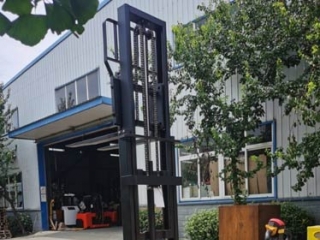 Custom Walk-Behind Counterbalance Stacker | Non-Standard ModificationsStandard walk-behind counterbalance stackers struggle with non-standard pallets and tight aisles. Customize load, lift, forks and structure, share working conditions for safe design.
Do you like ?0
Read more