Safe driving operation guide for counterbalanced forklifts
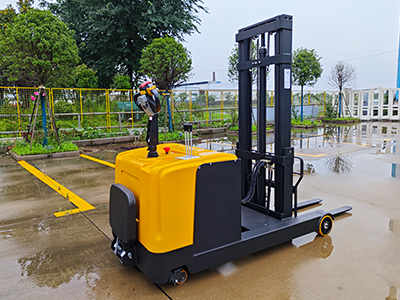
In order to ensure the safe operation of counterbalanced forklift trucks, the following precautions must be strictly observed during driving:
1. Speed control
When driving, you should pay attention to the speed limit and never exceed the speed limit.
2. Smooth operation
Starting, steering, driving, braking, stopping and other operations should be kept stable to avoid emergency operations.
Slow down around corners to ensure safe passage.
3. Troubleshooting
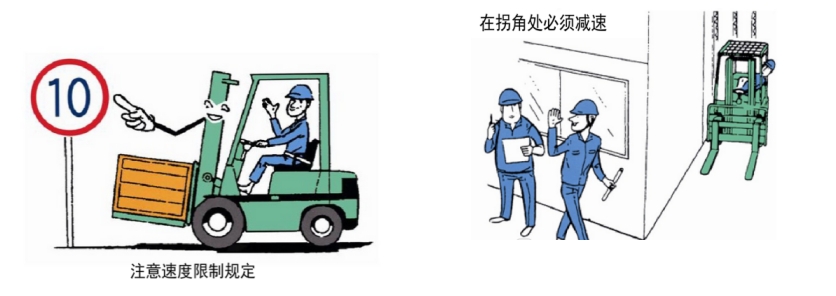
During driving, if you find suspicious noise or abnormal phenomena, you should stop immediately for inspection.
Troubleshoot in time to ensure safety before continuing the operation.
4. Carriage of goods
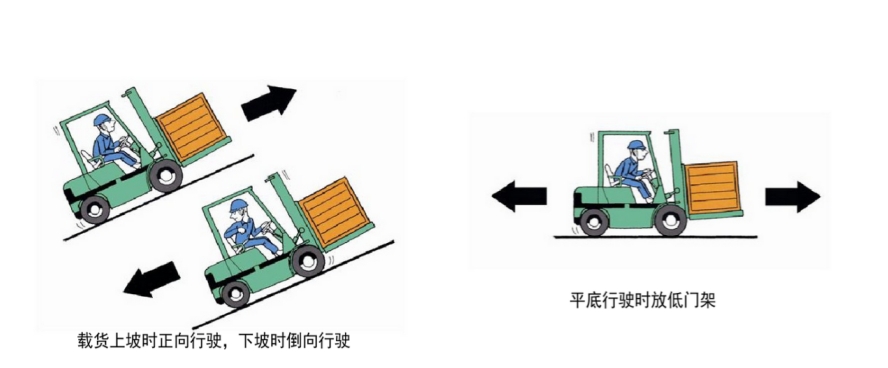
When carrying goods uphill, it should drive in the forward direction; When going downhill, drive in the opposite direction.
When driving on a ramp, steering is prohibited.
When unloaded, the fork is 200-300 mm from the ground; When the cargo is traveling, the height of the cargo from the ground must not be greater than 500 mm, and the mast should be tilted backwards.
When driving on flat ground, the mast should be lowered.
Except for loading and unloading, you must drive on the right.
5. Personnel safety
During driving, it is forbidden for anyone to get on and off the counterbalanced forklift.
When getting up and down the counterbalanced forklift, you should grab the handle with your hands, step on the pedal, and prohibit grabbing the steering wheel or lever.
It is forbidden to jump on or off the counterbalanced forklift.
It is forbidden to ride on the forks and pallets of counterbalanced forklifts.
6. Environmental safety
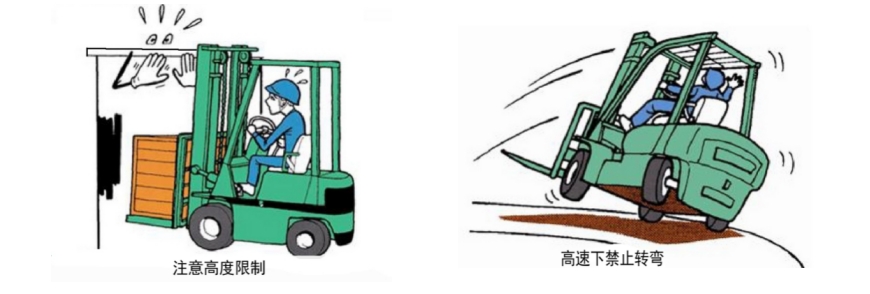
When entering and exiting the gate of the work area or driving, pay attention to the scratching of obstacles in the air.
Make sure there is enough clearance between the mast and the roof and entrances.
In non-emergency situations, sharp turns and sudden braking are prohibited.
7. Avoid surprises
It is forbidden to operate brutally and suddenly manipulate the handle to avoid causing the goods to fall or the counterbalanced forklift to tiplop.
It is forbidden to start, brake, steer or slam the accelerator pedal suddenly, and avoid sudden stop and sudden landing on the shelf.
8. Overtaking safety
In principle, overtaking is prohibited.
When overtaking a stopped vehicle, slow down and sound the horn and pay attention to the observation to prevent the vehicle from starting suddenly or someone jumping off the vehicle.
9. Keep your distance
Make sure the counterbalanced forklift has a sufficient safety distance from the curb or platform edge to prevent the counterbalanced forklift from falling.
10. Turn safely
When turning in a small space or place, attention must be paid to the swing of the tail of the counterbalanced forklift to prevent the tail of the counterbalanced forklift from hitting the goods
-
 Newnewton Forklift Manufacturer, Forklift CE Certification for ExportNewnewton forklift factory offers full CE certification complying with EN ISO 3691, complete technical documents and OEM service to reduce customs detention risks.
Do you like ?0
Read more -
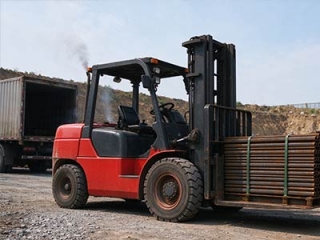 Electric Forklift Vs Diesel Forklift, Warehouse Selection GuideElectric forklift is zero-emission and quiet for indoor clean warehouses. Diesel forklift offers strong power for outdoor heavy-duty tasks.
Do you like ?0
Read more -
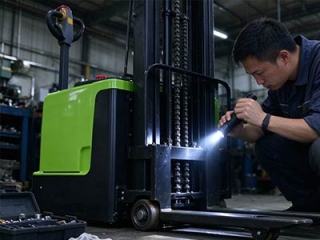 Narrow Aisle Stacker Forklift Custom Manufacturer for WarehouseCustom narrow aisle stacker for non-standard racking. Adjust body, mast and fork specs, upgrade power and protection, site survey available.
Do you like ?0
Read more -
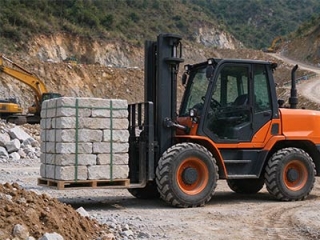 4WD All Terrain Rough Terrain Forklift Climbing for Mountain Sites4WD rough terrain forklift works on unpaved roads. Observe load climbing limit, attachments optional for forest and construction sites.
Do you like ?0
Read more -
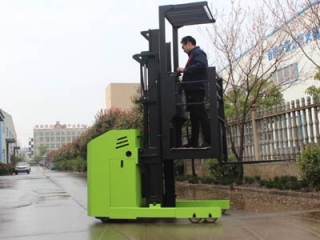 Man-Up Order Picker for High Level Picking, Suitable Warehouse ModesMan-up high level order picker for high-level split picking. Not for full pallet stacking, check rack, aisle and floor before selection.
Do you like ?0
Read more -
 Narrow Aisle Operation Of Three-Wheel Forklift With Compact Turning RadiusThree-point electric forklift features small turning radius for narrow aisles. Reserve safety margin and check floor condition during selection.
Do you like ?0
Read more