
What benefits does free lift bring to a reach stacker, especially for warehouses with limited ceiling height? A standard reach stacker without free lift will extend the outer mast upwards at the initial lifting stage. It may hit overhead beams and pipelines and fail to place pallets on racks smoothly.
The stand-on reach stacker with free lift works differently. At the beginning of lifting, only the forks rise while the outer mast stays stationary, so the overall height of the truck does not increase. This feature creates great value for low-ceiling warehouses and low rack zones.
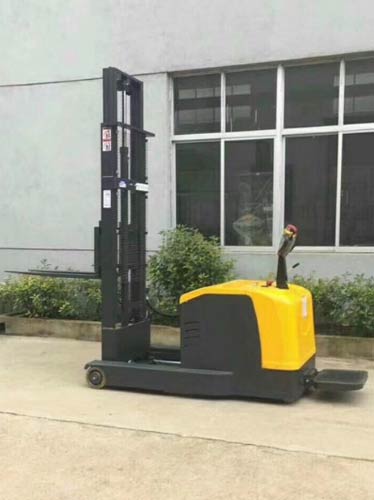
When the truck drives into the rack bay, the forks lift the pallet first for alignment before further lifting. There is no risk of striking overhead structures. For narrow aisles with ducts and fire pipes, free lift removes many stacking restrictions and saves warehouse renovation cost.
Besides low-height warehouses, free lift reach stacker performs well inside containers and box trucks. Cargo compartments have tight vertical clearance. Conventional masts gain height rapidly during lifting and leave little operating room. The free lift model lifts loads inside the compartment first, then uses the reach function for smooth loading and unloading, reducing cargo damage and boosting efficiency.
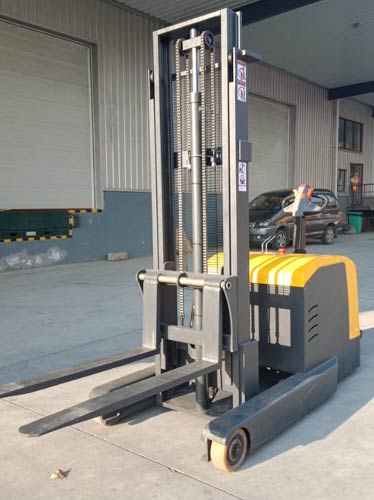
One point for selection: free lift mast will slightly reduce the maximum lifting height. If your warehouse has ample headroom and stacking is mainly on high racks, the standard mast version offers better cost performance. Operators still need to watch overhead obstacles and control lifting speed properly.
If your warehouse has low clearance and frequent stacking inside box trucks, stand-on reach stacker with free lift is a better option. Send us your ceiling height and rack specs, and we can advise whether free lift mast is needed.
-
 Galvanized Anti-Rust Manual Pallet Jack For Humid And Corrosive WorkshopHand pallet trucks rust easily in humid or salty areas. Paint, hot-dip galvanizing and stainless steel offer different anti-corrosion levels for your budget.
Do you like ?0
Read more -
 Do Large Capacity Stackers Need Wider Support Legs For Stability?Wide-leg stackers feature wider support base for better stability at high lifting heights and fit wide pallets, while requiring wider working aisles.
Do you like ?0
Read more -
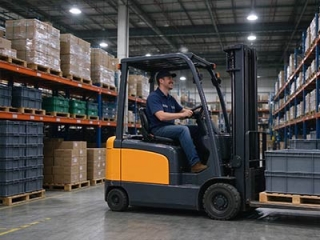 Compact Electric Forklift For Narrow Warehouse From Newnewton FactoryCompact electric forklifts fit narrow aisles in renovated old warehouses. Their small turning radius avoids rack collision and boosts storage capacity without site expansion.
Do you like ?0
Read more -
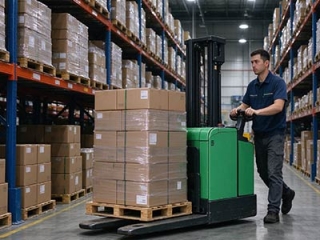 Is Lithium Electric Pallet Truck Suitable For Continuous Operation?Lithium pedestrian pallet trucks suit two-shift high-throughput warehouses. They support quick interim charging, with stable power and easy maintenance, yet have obvious drawbacks.
Do you like ?0
Read more -
 Is Lithium Electric Self-Loading Forklift Reliable For Single Driver Unloading?Delivery drivers often lack loading aids at drop-offs. Lithium self-loading stackers fit in trucks, letting one person handle pallets for multi-stop deliveries.
Do you like ?0
Read more -
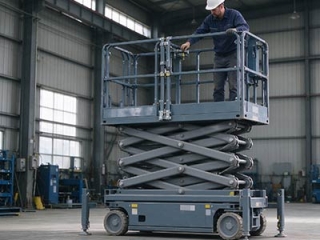 Functions Of Extendable Platform On Self-Propelled Scissor LiftFixed aerial platforms need frequent repositioning. Self-propelled lifts with extending decks expand working reach without moving the machine, ideal for factory piping and high warehouse light maintenance.
Do you like ?0
Read more








