
Self loading pallet stacker is a very popular logistics storage equipment at present. It is very practical, simple in structure, flexible in operation, high in safety factor, and suitable for narrow passages and confined spaces. It has been widely used in petroleum, chemical industry, medicine, textile, military industry, paint, pigment, coal and other industries, as well as ports, railways, freight yards, warehouses and other places. It can also enter the engine room for short distance transportation of pallet goods and transportation, stacking and loading and unloading of containers. It can improve work efficiency, save manpower and help enterprises improve economic efficiency. What are the quality requirements for the working device of the self loading pallet stacker? What kind of self loading pallet stacker is of high quality? The hydraulic stacker manufacturer will tell you about it.
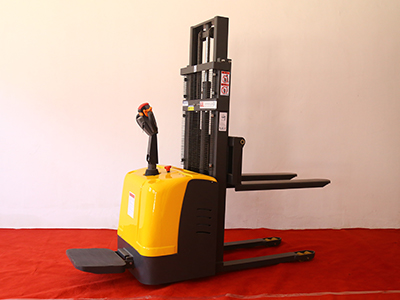
First of all, the mast of the self loading pallet stacker shall not be deformed and there shall be no loose connection. The rolling clearance between internal and external masts shall not be less than 15mm. The drum and shaft must be free from cracks and defects. The wear of the car trough shall not exceed 10% of the original size. The two lifting chains must not be deformed and must be firmly connected. The hydraulic stacker manufacturer told us that the chain pitch must exceed 14% of the total length, and the sprocket can rotate flexibly.
The fork of the self loading pallet stacker shall be free of serious deformation, surface damage and cracks, all parts shall be firmly welded, the rotation angle of the fork shall not be greater than 90 degrees, and the thickness shall not be less than 90% of the original size. The supporting surface and locating surface of the fork hook shall be free from obvious defects, and proper clearance between the fork and the mast shall be ensured. The lifting cylinder shall be firmly connected with the mast of the self loading pallet stacker. The hinge of the mast shall be firm and flexible. The oil cylinder is well sealed without damage. The hydraulic stacker manufacturer told us that under the rated load, the lifting speed of the fork should not be lower than the standard value.
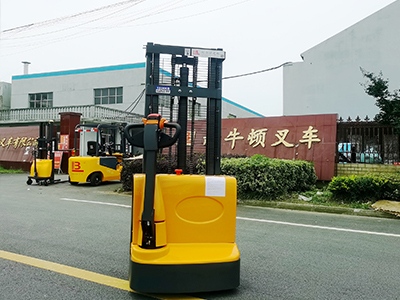
Self loading pallet stacker from hydraulic stacker manufacturer are widely used in stations, ports, airports, factories, warehouses and other places, and are the main force in the production and manufacturing of logistics warehousing equipment. If you want to buy a high-quality self loading pallet stacker or have any questions about the self loading pallet stacker, welcome to consult.
-
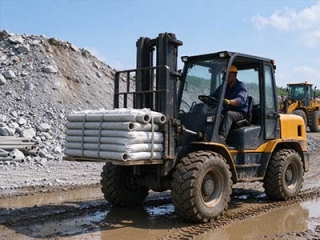 Anti-Slip 2WD Diesel Rough Terrain Forklift for Unpaved GroundRough sites need high-ground-clearance 2WD rough-terrain forklifts. Diesel power prevents slipping and bottoming for outdoor loose ground handling.
Do you like ?0
Read more -
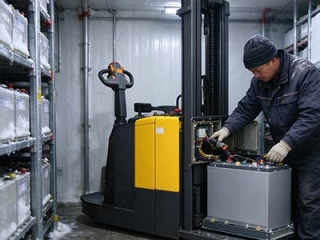 Cold Storage Narrow Aisle Stacker, Direct Supply for Cold Chain WarehousingCold storage narrow aisle stackers come with factory low-temp protection against condensation, better than simple retrofits for frozen food and pharmaceutical cold chains.
Do you like ?0
Read more -
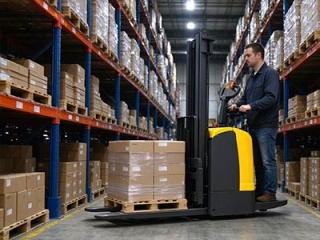 When to Choose Stand-on Electric Double Pallet StackerChoose between double pallet and standard stackers by aisle and load per trip for e-commerce and transfer warehouses to avoid inefficient equipment.
Do you like ?0
Read more -
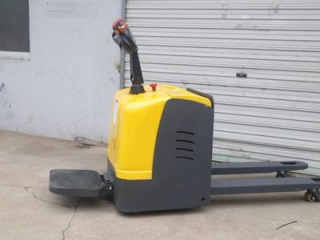 3 Key Parameters to Select Small Stand-on Electric Pallet TruckFor compact stand-on pallet trucks, turning radius, load and battery are core specs. Match aisle, frequency and budget to avoid poor site adaption.
Do you like ?0
Read more -
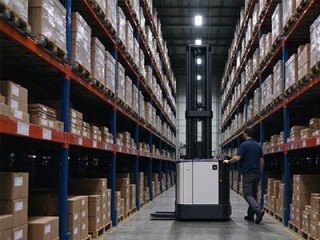 What Aisle Width Is Required for Safe Stacking of Walk-behind StackerWhen choosing walkie stackers, Ast (right-angle stacking aisle) matters more than body width. Differentiate stacking aisle from straight passage and leave extra space.
Do you like ?0
Read more -
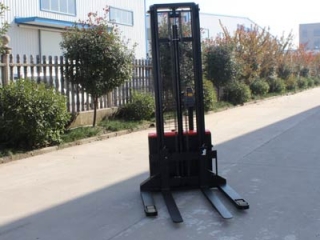 Silent Version Walk-behind Straddle Electric Stacker for Clean WorkshopSilent walkie straddle stackers reduce noise from motor, hydraulics and wheels for quiet workshops in electronics, medical and precision manufacturing.
Do you like ?0
Read more








