Safety guidelines for forklift operation: five taboos to protect the job site
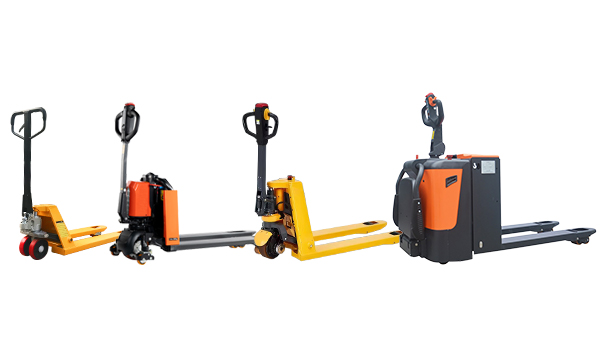
Manual hydraulic forklifts are a common and efficient piece of equipment in industrial handling operations, but their improper operation can lead to serious accidents. In order to ensure the safety of workers and the normal operation of equipment, it is necessary to strictly abide by the principle of "five prohibitions" and put an end to the following dangerous behaviors.
1. No overload operation Every manual hydraulic forklift has its "limit" – the rated load. This value is usually marked on the nameplate of the forklift truck and is an indicator that the operator must strictly observe. Overloading not only increases the pressure on the hydraulic system, but can also cause forks to deform, break, and even cause rollover accidents. Danger principle: Hydraulic oil pipe burst: under high pressure, the oil pipe joint may spray high temperature hydraulic oil, causing scalding or equipment damage; Permanent deformation of the forks: bending that is imperceptible to the naked eye reduces the load-bearing capacity for subsequent use; Axle breakage: The steering axle is easy to collapse under heavy load, resulting in the loss of control of the forklift. Correct operation: Accurate calculation of weight: gross weight of goods = weight of single product × quantity (including pallets); Strictly refer to the identification: the "rated load" marked on the forklift nameplate is the limit value, and it is recommended to reserve 10% of the safety margin; Reasonable selection of equipment: overweight goods must use forklifts with larger loads, and do not force the use of equipment that does not meet the requirements.
2. Prohibition of single fork eccentric load The goods must be evenly placed on the two forks, which is the basic requirement for the balanced operation of the forklift. Single-sided load-bearing can not only cause the forklift to roll over, but can also cause cargo to tip and even cause injury to the operator. Real case: A warehouse staff used a single fork in violation of regulations to pry a stuck pallet, but the fork suddenly slid sideways, and the forklift handle rebounded and hit the operator's liver, causing serious injury. Danger principle: Lateral overturning: the center of gravity shifts to break the balance, causing the forklift to roll over and the goods to the operator; Fork twisting: One side fork bears full weight and may break from the root; Handle out of control: The pressure distribution of the hydraulic system is uneven during eccentric load, and the handle may suddenly rebound. Correct operation: Double fork centering: the width of the goods should cover at least 2/3 of the two forks; Symmetrical stacking and fixing: loose goods need to be fixed with stretch film to prevent the center of gravity from shifting during transportation; No prying: Stuck pallets should be assisted by professional tools such as crowbars, and should never be used to pry hard.
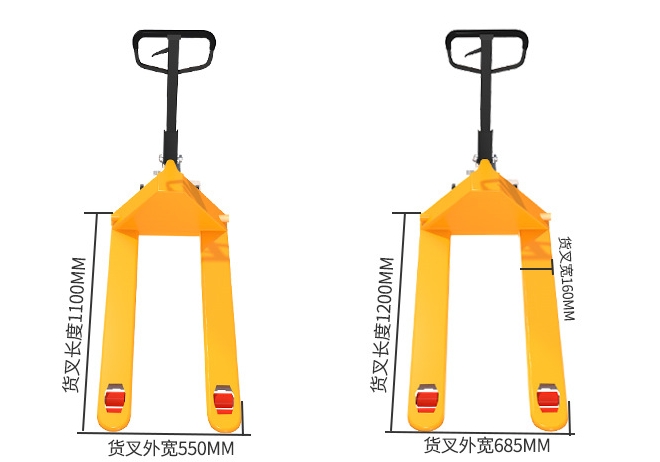
3. It is forbidden to carry people to operate The forklift is designed only for cargo handling, and there is no protective device when carrying people, and once an accident occurs, the consequences are unimaginable. For example, a loss of control of the hydraulic system or a slippage of goods can cause fatal injuries to personnel. Danger principle: No protective device: the fork has no guardrails and safety belts, and the risk of falling is extremely high; Hydraulic unreliability: the hand pump may be "depressurized", and the fork will fall instantaneously; Blind spot: The operator cannot observe the front when carrying people, and it is easy to hit obstacles. Correct operation: Special equipment for aerial work: if the height exceeds 1.5 meters, a scissor lift table or scaffold must be used; It is strictly forbidden to "hitchhike": even if you move a short distance, you must refuse to allow others to ride; Install warning signs: paste the "no standing" sticker in the conspicuous position of the fork.
4. It is forbidden for people to stand on the car and slide
The forklift is designed only for pushing and pulling goods, and it is very easy for people to slide due to the unstable center of gravity and fall. As a result, some workers were hit by the handle of the forklift and fractured their ribs, and even slipped due to oil stains on the ground, and even crashed into the shelves with people and cars, and their spleens were ruptured and removed.
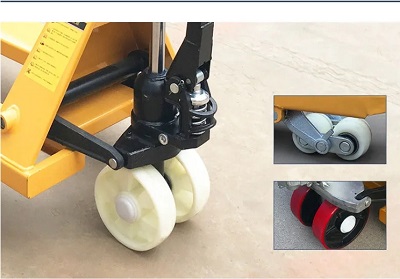
Principle of Danger:
Brake failure: manual forklift has no braking system, and the downhill speed can reach 15km/h;
Handle impact: The metal handle will hit the abdomen and ribs violently during the emergency stop;
Crushing risk: If your foot touches the ground while sliding, you may be run over by the wheel.
Correct Operation:
Always walk control: hold the handle with both hands and push steadily in the direction of travel;
Ramp prohibition: when the slope exceeds 5°, it must be coordinated with a tractor;
Clean the passage: make sure that the ground is free of oil stains, water stains, and sundries, and wear non-slip labor protection shoes.
5. Do not put your hands and feet under the forks
When adjusting the height of the fork, if the hand is placed between the fork and the ground, the finger may be crushed when the hydraulic descent is instantaneous. When operating, you should always maintain a safe posture of "hands off the fork and eyes in all directions".
Real case: When an employee adjusted the position of the fork with his hand, the colleague pressed the handle by mistake, and the fork fell and pressed his four fingers into a comminuted fracture.
-
 Reliability Of Newnewton Warehouse Forklifts For Heavy-Duty ShiftsWarehouse forklift reliability relies on industrial parts, reinforced frames and factory durability tests. Proper operation and maintenance reduce unexpected downtime.
Do you like ?0
Read more -
 Forklift Configuration Strategy For Dense Warehousing, Warehouse ForkliftDense warehousing needs matched forklifts besides racks. Reach and trilateral stackers fit different layouts, coordinate aisle, load curve and floor for smooth handling.
Do you like ?0
Read more -
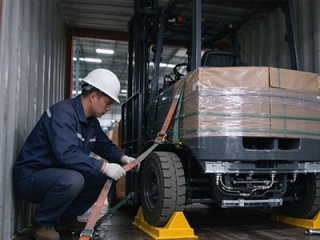 Full Container Supply For Export Forklifts, Forklift ManufacturerBulk forklift orders for overseas can ship by FCL or LCL. Newnewton FCL offers stable freight, safer packing and mixed models for large purchases.
Do you like ?0
Read more -
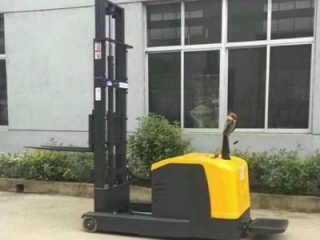 Stand-on Reach Stacker For Narrow Aisle Stacking, Mast Reach StructureStand-on reach stackers feature sliding masts that stay outside racks. They boost storage density in narrow aisles and require flat floors and standard pallets.
Do you like ?0
Read more -
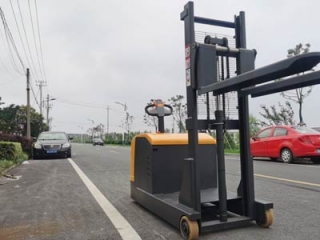 Stand-on Counterbalance Stacker For Various Pallets, Why No Leg RestrictionCounterbalance stackers have no front outriggers, using rear counterweight to avoid pallet interference. They fit various odd pallets yet need wider warehouse aisles.
Do you like ?0
Read more -
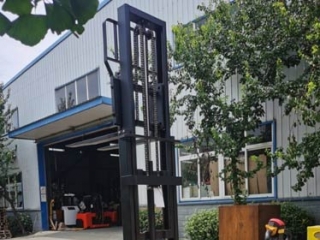 Custom Walk-Behind Counterbalance Stacker | Non-Standard ModificationsStandard walk-behind counterbalance stackers struggle with non-standard pallets and tight aisles. Customize load, lift, forks and structure, share working conditions for safe design.
Do you like ?0
Read more