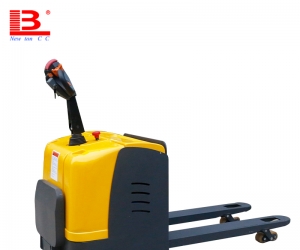
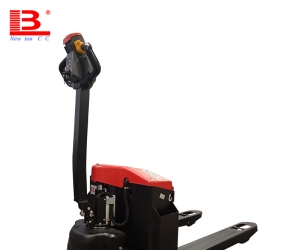
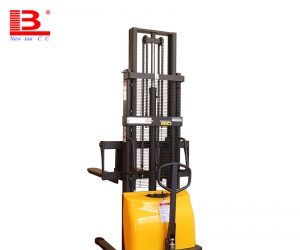
For rack loading in small and medium-sized warehouses, a highly maneuverable and capable stacker is essential. The lightweight stand-on stacker meets this critical requirement and offers additional advantages to help reduce costs and improve efficiency. With proper operation in narrow rack aisles, its strengths and benefits will quickly become apparent.
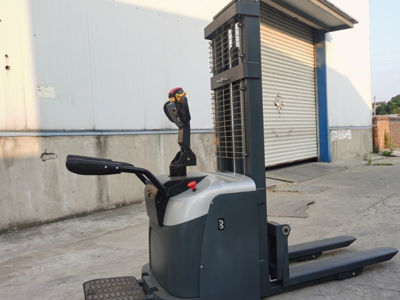
This stacker operates similarly to other models, but its high agility and lightweight frame require extra attention to operating details. For example, the steering system is especially important in narrow aisles. Delayed steering can cause collisions with racks, resulting in damage to goods or even injury. Therefore, always test the steering components thoroughly before operation.
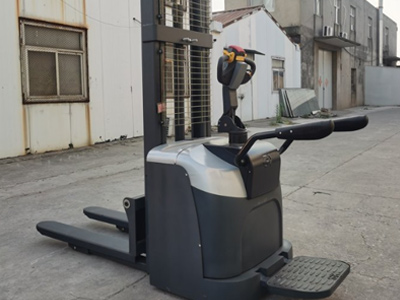
In addition, the stacker features stepless speed control, allowing operators to adjust speed as needed. This prevents inefficiency from overly slow movement and avoids collisions or damage caused by excessive speed in confined spaces.
High precision in fork positioning is also critical during rack loading. Align the forks with the target location, lower the load slowly, and place goods gently. Using the high-precision controller and following the sequence of “top to bottom, inner to outer” for stacking improves space utilization and enhances operational safety.
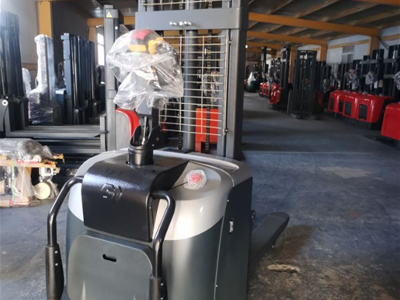
For rack loading, the lightweight stand-on stacker enables accurate, fixed-point handling in narrow areas, ensuring smooth lifting and stacking and boosting overall efficiency. Beyond these advantages, always exercise caution in confined spaces and prioritize the safety of both personnel and cargo.
-
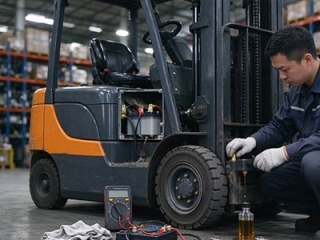 Reliability Of Newnewton Warehouse Forklifts For Heavy-Duty ShiftsWarehouse forklift reliability relies on industrial parts, reinforced frames and factory durability tests. Proper operation and maintenance reduce unexpected downtime.
Do you like ?0
Read more -
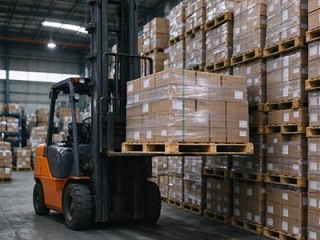 Forklift Configuration Strategy For Dense Warehousing, Warehouse ForkliftDense warehousing needs matched forklifts besides racks. Reach and trilateral stackers fit different layouts, coordinate aisle, load curve and floor for smooth handling.
Do you like ?0
Read more -
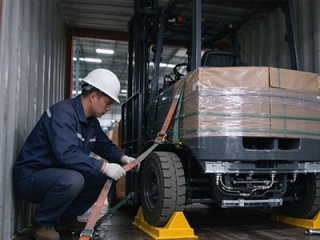 Full Container Supply For Export Forklifts, Forklift ManufacturerBulk forklift orders for overseas can ship by FCL or LCL. Newnewton FCL offers stable freight, safer packing and mixed models for large purchases.
Do you like ?0
Read more -
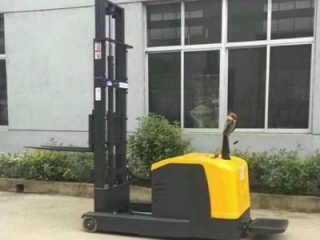 Stand-on Reach Stacker For Narrow Aisle Stacking, Mast Reach StructureStand-on reach stackers feature sliding masts that stay outside racks. They boost storage density in narrow aisles and require flat floors and standard pallets.
Do you like ?0
Read more -
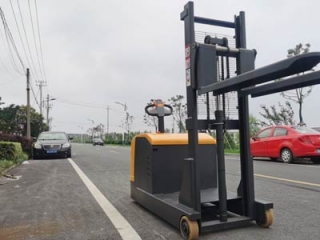 Stand-on Counterbalance Stacker For Various Pallets, Why No Leg RestrictionCounterbalance stackers have no front outriggers, using rear counterweight to avoid pallet interference. They fit various odd pallets yet need wider warehouse aisles.
Do you like ?0
Read more -
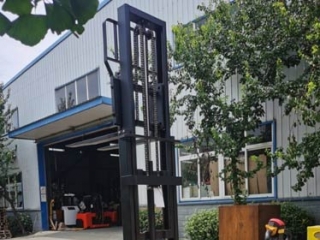 Custom Walk-Behind Counterbalance Stacker | Non-Standard ModificationsStandard walk-behind counterbalance stackers struggle with non-standard pallets and tight aisles. Customize load, lift, forks and structure, share working conditions for safe design.
Do you like ?0
Read more