
Which Stacker is Suitable for Workshop Material Handling? Ride-on Electric Model
In daily workshop production, manual material handling is labor-intensive and time-consuming, failing to keep up with loading and unloading rhythms and reducing overall efficiency. Many factory managers wonder Which Stacker for Workshop Material Handling to improve on-site operation.
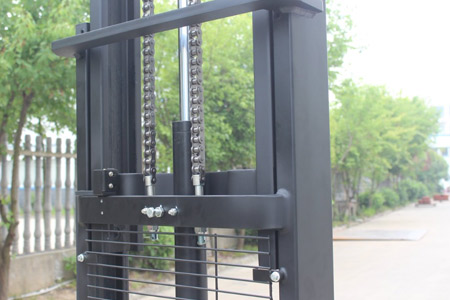
Walkie stackers often cause operator fatigue, inflexible turning and slow production coordination. In comparison, the Ride-on Full Electric Stacker is more practical for workshop material transportation and fully adapts to modern production demands.
Featuring a standing driving design, it removes long-distance walking fatigue. It turns flexibly in narrow aisles and equipment gaps with sensitive start and stop response, ideal for machine loading, production line replenishment and semi-finished product transfer. Operators stay productive with low physical consumption to maintain stable working rhythm.
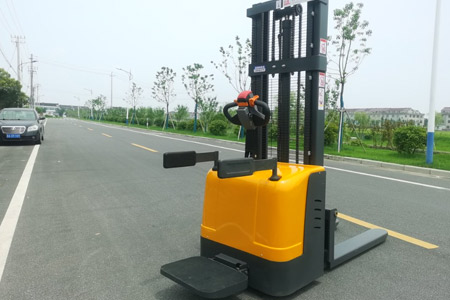
This Easy-to-Operate Ride-on Electric Stacker comes with simple button control for electric travelling, lifting and steering. New staff can operate it skillfully with minimal training, greatly lowering entry costs and reducing safety risks caused by misoperation.
It fully meets daily workshop load demands, handling parts, carton goods and standard pallets steadily. The low-center design ensures smooth lifting and stable movement to avoid material collision and damage. With zero emissions and low noise, it fits precision processing, electronics and light industry workshops perfectly.
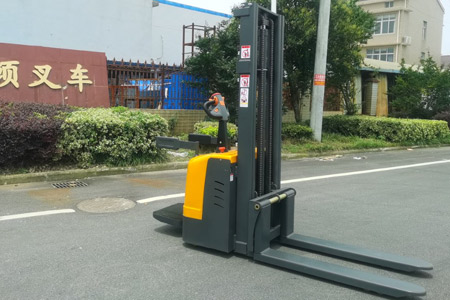
To sum up, workshop material handling requires flexible, labor-saving and user-friendly equipment. The easy-to-operate ride-on electric stacker effectively boosts transfer efficiency, relieves labor pressure and adapts to complex workshop layouts.
For reliable workshop loading and unloading solutions, the Ride-on Full Electric Stacker remains the cost-effective and practical choice for most manufacturing plants.
-
 Reliability Of Newnewton Warehouse Forklifts For Heavy-Duty ShiftsWarehouse forklift reliability relies on industrial parts, reinforced frames and factory durability tests. Proper operation and maintenance reduce unexpected downtime.
Do you like ?0
Read more -
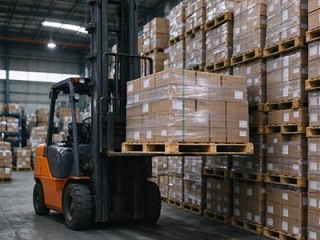 Forklift Configuration Strategy For Dense Warehousing, Warehouse ForkliftDense warehousing needs matched forklifts besides racks. Reach and trilateral stackers fit different layouts, coordinate aisle, load curve and floor for smooth handling.
Do you like ?0
Read more -
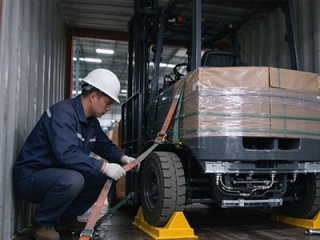 Full Container Supply For Export Forklifts, Forklift ManufacturerBulk forklift orders for overseas can ship by FCL or LCL. Newnewton FCL offers stable freight, safer packing and mixed models for large purchases.
Do you like ?0
Read more -
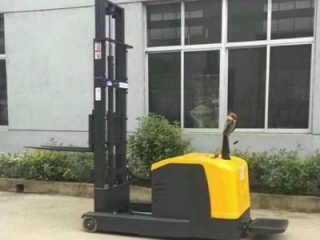 Stand-on Reach Stacker For Narrow Aisle Stacking, Mast Reach StructureStand-on reach stackers feature sliding masts that stay outside racks. They boost storage density in narrow aisles and require flat floors and standard pallets.
Do you like ?0
Read more -
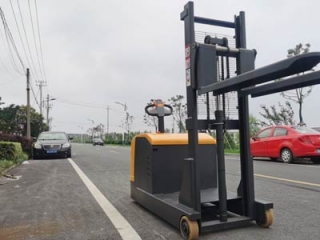 Stand-on Counterbalance Stacker For Various Pallets, Why No Leg RestrictionCounterbalance stackers have no front outriggers, using rear counterweight to avoid pallet interference. They fit various odd pallets yet need wider warehouse aisles.
Do you like ?0
Read more -
 Custom Walk-Behind Counterbalance Stacker | Non-Standard ModificationsStandard walk-behind counterbalance stackers struggle with non-standard pallets and tight aisles. Customize load, lift, forks and structure, share working conditions for safe design.
Do you like ?0
Read more








