Does Walk-behind Electric Stacker Have High Failure Rate? Factory Real Analysis
Before purchasing a Walk-behind Electric Stacker, most buyers will wonder: Does Walk-behind Electric Stacker Have High Failure Rate? This article gives you a complete answer. As a direct source factory with nearly 20 years of production experience, Newnewton explains frankly that the failure rate mainly depends on three factors: raw material quality, warehouse working conditions and daily maintenance.
1. Overall Raw Material Quality
Low-cost Generic Walk-behind Stackers: Frequent Breakdowns, 1–3 Repairs Monthly
These cheap models cut corners on components, only suitable for low-frequency warehouses handling less than 10 pallets daily. Frequent malfunctions occur under heavy-duty use:
Brushed drive & lifting motors wear carbon brushes within 3–6 months, leading to slow travel and weak lifting force.
Inferior hydraulic seals leak oil and lose pressure in 1–2 months, causing automatic fork dropping and jerky lifting.
Thin steel masts and ordinary plastic sliding blocks deform and jam easily under collision or offset loads.
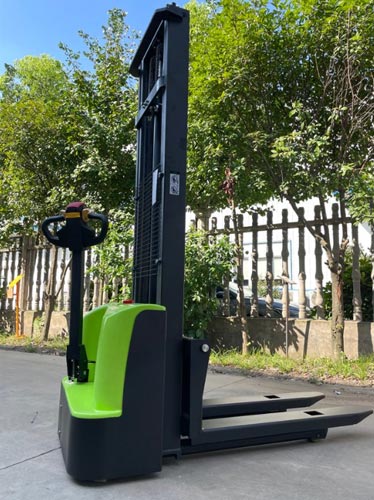
Poor lead-acid battery cells bulge from frequent power loss, with oxidized wiring triggering short circuits and unplanned downtime.
High-spec Lithium Models From Formal Source Factories: 80% Lower Failure Rate, Only Routine Quarterly Maintenance
All core components are precisely manufactured to standard, supporting stable high-volume outbound work of 50 pallets per day for single or double shifts:
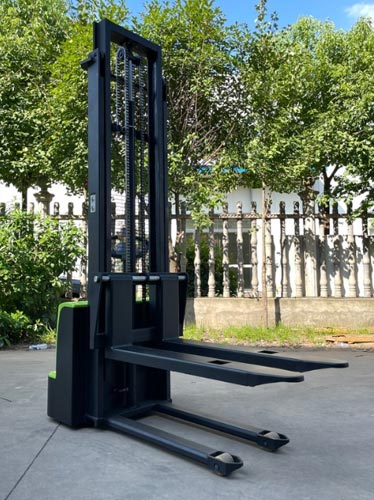
Maintenance-free brushless AC motors with no carbon brush wear, offering over 1000 hours of mean time between failures.
Double-layer anti-aging sealed hydraulic power unit keeps stable pressure without oil leakage under long heavy loads.
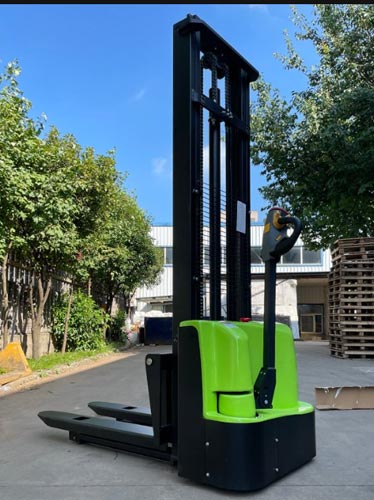
Thickened manganese steel masts, wear-resistant sliding blocks and thickened chains resist collision and deformation.
Industrial lithium iron phosphate batteries with multi-layer BMS protection against overcharging and over-discharging, serving 3–5 years.
Waterproof and dustproof electric control and wiring prevent short circuits and poor contact in damp, dusty workshops.
2. Warehouse Working Conditions
The following operating environments double breakdown risks and account for most maintenance cases:
Long-term Overloading & Offset Loading
Cargo exceeding rated capacity or one-sided pallet loads overtax the hydraulic pump, twisting masts and stretching chains until fracture, rapidly damaging the lifting system.
Continuous low-power operation for two shifts (Major flaw of lead-acid versions)
Standard lead-acid batteries require 8 hours full charging without fast lunch-break top-up. Forced operation on drained power burns batteries and controllers, which can be avoided with fast-charge lithium versions.
Unclean damp, dusty or greasy workshops
Wood scraps and plastic straps wrap wheel axles; dust invades control handles and motors, causing stuck wheels, unresponsive buttons and wire oxidation.
Rough operation with frequent rack collisions
Sudden acceleration/braking and hard fork impacts on racks double wear on steering bearings, oil pipes and mast sliders.
3. Daily Maintenance
5 Simple Maintenance Steps For Early Fault Prevention
Daily Pre-shift Check (5 minutes)
Check battery power and hydraulic oil leakage; test empty-load lifting; clear plastic straps and metal wires tangled on wheel axles.
Weekly Care (10 minutes)
Grease mast chains, guide rails and bearings; wipe dust off electric control boxes and battery surfaces.
Monthly Inspection
Tighten all wiring terminals, check oil pipes and brake clearance, test overload pressure relief protection.
Quarterly Deep Maintenance
Replace hydraulic oil and filter, fully inspect wear of motors, batteries and sealing parts.
Standard Operation Rules
Center cargo on forks and never overload; fully lower forks to release hydraulic pressure during idle time to reduce vehicle load.
In summary, you can evaluate the failure risk of the Walk-behind Electric Stacker from the above three dimensions. It is recommended to choose suppliers with official after-sales warranty for double protection and worry-free long-term use.
-
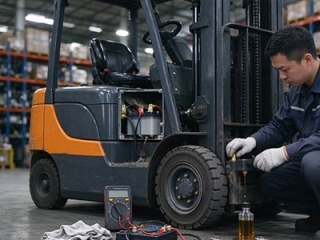 Reliability Of Newnewton Warehouse Forklifts For Heavy-Duty ShiftsWarehouse forklift reliability relies on industrial parts, reinforced frames and factory durability tests. Proper operation and maintenance reduce unexpected downtime.
Do you like ?0
Read more -
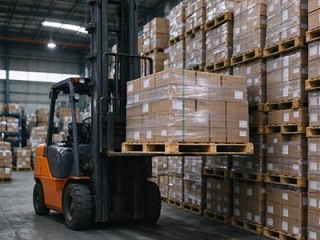 Forklift Configuration Strategy For Dense Warehousing, Warehouse ForkliftDense warehousing needs matched forklifts besides racks. Reach and trilateral stackers fit different layouts, coordinate aisle, load curve and floor for smooth handling.
Do you like ?0
Read more -
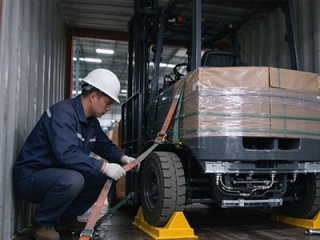 Full Container Supply For Export Forklifts, Forklift ManufacturerBulk forklift orders for overseas can ship by FCL or LCL. Newnewton FCL offers stable freight, safer packing and mixed models for large purchases.
Do you like ?0
Read more -
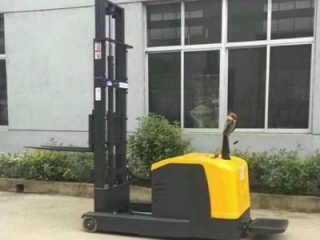 Stand-on Reach Stacker For Narrow Aisle Stacking, Mast Reach StructureStand-on reach stackers feature sliding masts that stay outside racks. They boost storage density in narrow aisles and require flat floors and standard pallets.
Do you like ?0
Read more -
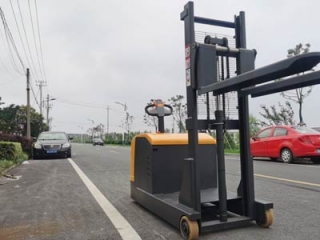 Stand-on Counterbalance Stacker For Various Pallets, Why No Leg RestrictionCounterbalance stackers have no front outriggers, using rear counterweight to avoid pallet interference. They fit various odd pallets yet need wider warehouse aisles.
Do you like ?0
Read more -
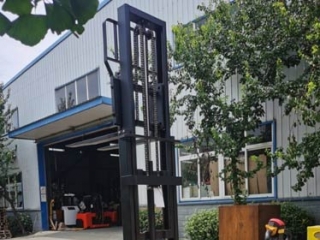 Custom Walk-Behind Counterbalance Stacker | Non-Standard ModificationsStandard walk-behind counterbalance stackers struggle with non-standard pallets and tight aisles. Customize load, lift, forks and structure, share working conditions for safe design.
Do you like ?0
Read more