Why does the battery capacity of a semi-electric stacker decrease?

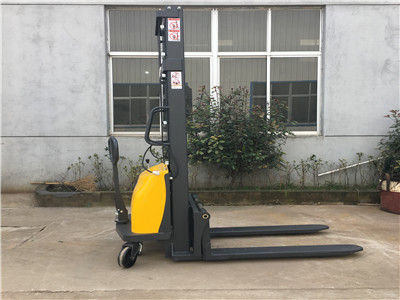
With the continuous advancement of science and technology, semi electric stacker in the industrial market are quickly occupying a certain market due to their convenient operation, simple maintenance, high cost performance, low noise, and no pollution. The semi-electric stacker is very suitable for indoor operation. Our more common semi electric stackerare battery-powered, and the price is relatively low. The semi-electric stacker can be charged for 8 hours at a time, but as time goes by, it can be fully charged in about 4 hours, and then the power will drop rapidly. What is going on?
There is a situation that after the electric storage forklift semi electric stacker battery is delivered, the user does not install and use it in time. Long-term storage will cause self-discharge and cause insufficient battery capacity. Therefore, for the maintenance of the battery, we want to remind everyone to charge it every once in a while.
In addition, the positive plate of the battery is corroded and deformed, causing insufficient battery capacity. The positive plate of the battery greatly affects the service life of the battery, and the capacity of the forklift battery charge and discharge cycle will cause the capacity drop under the deep cycle to be closely related to the quality deviation of the positive plate.
The active material on the positive grid of the electric storage forklift battery softens and falls off mainly due to the high current charge and discharge of the forklift battery. Microscopically, there are macropores and micropores in the active material. The macropores are composed of many small pores with a size exceeding 0.5cm. As the discharge cycle progresses, the surface of the active material shrinks to form a core coral-like structure; and multiple discharge cycles The increase in the use of small pores will increase the number of large pores, destroy the structure of the positive electrode, and cause the active material to fall off. The corrosion deformation rate of the positive grid depends on the composition of the grid alloy. The higher the storage temperature, the faster the corrosion rate, and the deeper the discharge depth, the more severe the corrosion.
The sulfation of the negative plate of the battery of the semi electric stacker will also cause the battery capacity of the electric storage forklift to decrease. In normal operation, the PbSO4 particles on the negative plate are small, and the discharge can easily return to velvet lead, but sometimes lead sulfate is generated inside the battery, which is difficult to reduce, which is called sulfation.
There are many reasons for the salting of the negative electrode, such as the inability to charge in time after discharge, long-term storage of the battery, causing serious self-discharge, excessive electrolyte concentration, insufficient long-term charging, and long-term discharge at high temperature. This lead sulfate is difficult to reduce by conventional methods In this way, the reduction of active materials will inevitably affect the battery capacity of the semi electric stacker.
-
 Reliability Of Newnewton Warehouse Forklifts For Heavy-Duty ShiftsWarehouse forklift reliability relies on industrial parts, reinforced frames and factory durability tests. Proper operation and maintenance reduce unexpected downtime.
Do you like ?0
Read more -
 Forklift Configuration Strategy For Dense Warehousing, Warehouse ForkliftDense warehousing needs matched forklifts besides racks. Reach and trilateral stackers fit different layouts, coordinate aisle, load curve and floor for smooth handling.
Do you like ?0
Read more -
 Full Container Supply For Export Forklifts, Forklift ManufacturerBulk forklift orders for overseas can ship by FCL or LCL. Newnewton FCL offers stable freight, safer packing and mixed models for large purchases.
Do you like ?0
Read more -
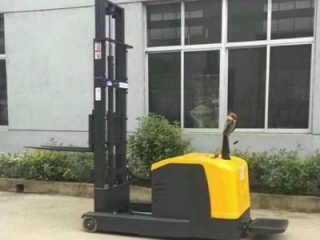 Stand-on Reach Stacker For Narrow Aisle Stacking, Mast Reach StructureStand-on reach stackers feature sliding masts that stay outside racks. They boost storage density in narrow aisles and require flat floors and standard pallets.
Do you like ?0
Read more -
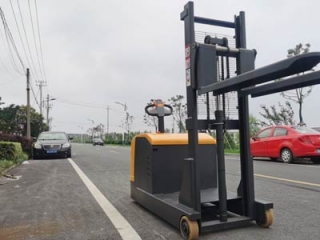 Stand-on Counterbalance Stacker For Various Pallets, Why No Leg RestrictionCounterbalance stackers have no front outriggers, using rear counterweight to avoid pallet interference. They fit various odd pallets yet need wider warehouse aisles.
Do you like ?0
Read more -
 Custom Walk-Behind Counterbalance Stacker | Non-Standard ModificationsStandard walk-behind counterbalance stackers struggle with non-standard pallets and tight aisles. Customize load, lift, forks and structure, share working conditions for safe design.
Do you like ?0
Read more