What are the precautions for charging the battery of a semi-electric stacker?
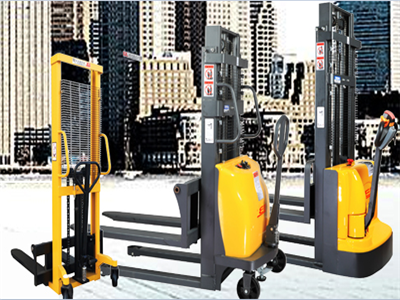
The battery of a semi electric stacker truck cannot be discharged completely, and should be charged until the charger receives the charge completion signal. In fact, there are many precautions for charging the battery of a semi electric stacker truck . Next, let's learn about the relevant content together. So that we can avoid stepping on thunder when charging the device in the future.
Generally, the connection between the charger and the power supply is usually about 14-16 hours. After charging, the voltage of each large cell battery is about 2.7V, and the electrolyte density of each cell battery will reach 1.27~1.29kg/1.25℃. Here, we recommend that you charge the electric stacker in time after using the semi-electric stacker, and do not leave the equipment for a long time. The equipment should be charged and maintained after a short period of time. The following are the things you should
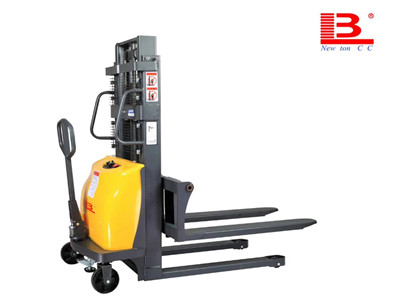
keep in mind during the charging process:
It is invisible that the battery is connected to the open flame, so as to prevent the gas from causing an explosion, causing a fire, and bringing unnecessary economic losses and personal injuries. When charging, it should be in a well-ventilated environment. We recommend opening the upper cover of the semi electric stacker truck or removing the battery from the forklift. Temporary wiring is not allowed. Ensure that the insulator firmly wraps the charging cable to ensure the personal safety of the operator. The surface of the battery of the semi-electric stacker should be kept clean. Use an antistatic rag to wipe the surface of the battery. Do not place tools or other metal objects on the battery. When charging, the temperature of the electrolyte cannot be higher than 45°C. After charging the semi-electric stacker, check the electrolyte level to see if it is 15mm higher than the partition. Normally, add distilled water once a week. Avoid contact between the skin and acid. If it touches the skin, wash it with plenty of soap and water, or seek medical attention in time. Waste batteries should be disposed of according to local regulations.
We have to talk about the issue of battery conversion for semi-electric stackers. We need to start from the following four aspects:
1) Remove the battery solid screws
2) Remove the cable from the battery terminal.
3) Slide out or hang out the battery.
4) Install the battery of the semi electric stacker truck according to the reverse process indicated below, and tighten and connect correctly.
-
 Reliability Of Newnewton Warehouse Forklifts For Heavy-Duty ShiftsWarehouse forklift reliability relies on industrial parts, reinforced frames and factory durability tests. Proper operation and maintenance reduce unexpected downtime.
Do you like ?0
Read more -
 Forklift Configuration Strategy For Dense Warehousing, Warehouse ForkliftDense warehousing needs matched forklifts besides racks. Reach and trilateral stackers fit different layouts, coordinate aisle, load curve and floor for smooth handling.
Do you like ?0
Read more -
 Full Container Supply For Export Forklifts, Forklift ManufacturerBulk forklift orders for overseas can ship by FCL or LCL. Newnewton FCL offers stable freight, safer packing and mixed models for large purchases.
Do you like ?0
Read more -
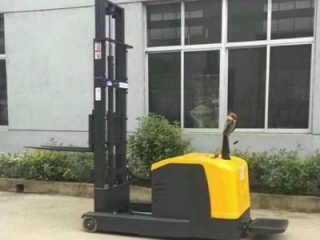 Stand-on Reach Stacker For Narrow Aisle Stacking, Mast Reach StructureStand-on reach stackers feature sliding masts that stay outside racks. They boost storage density in narrow aisles and require flat floors and standard pallets.
Do you like ?0
Read more -
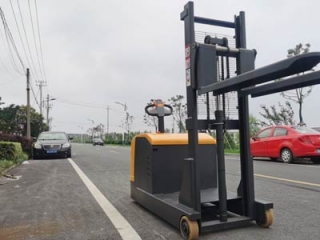 Stand-on Counterbalance Stacker For Various Pallets, Why No Leg RestrictionCounterbalance stackers have no front outriggers, using rear counterweight to avoid pallet interference. They fit various odd pallets yet need wider warehouse aisles.
Do you like ?0
Read more -
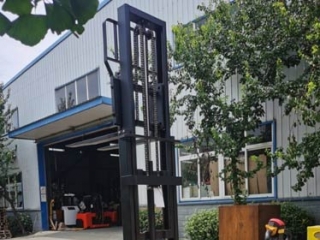 Custom Walk-Behind Counterbalance Stacker | Non-Standard ModificationsStandard walk-behind counterbalance stackers struggle with non-standard pallets and tight aisles. Customize load, lift, forks and structure, share working conditions for safe design.
Do you like ?0
Read more