Is 2WD Rough Terrain Forklift High On Fuel Consumption | 2026 Real Test Data
Operators of mines, farms, building material yards and construction sites always ask Is 2WD Rough Terrain Forklift High On Fuel Consumption. Based on our factory long-term on-site working condition tests and third-party industry evaluation data, the 2WD All-terrain Forklift cuts fuel consumption by nearly 20% compared with same-tonnage 4WD rough terrain forklifts.
Unified Test Conditions
Equipped with National IV high-pressure common rail diesel engine, tested on compacted gravel ground under mixed intermittent loading & unloading cycles, normal outdoor ambient temperature.
1. 3-ton mainstream 2WD rough terrain forklift
Empty short-distance transfer: 2.2–2.8 L/h
Standard full-load flat ground loading/unloading: 3.0–3.8 L/h
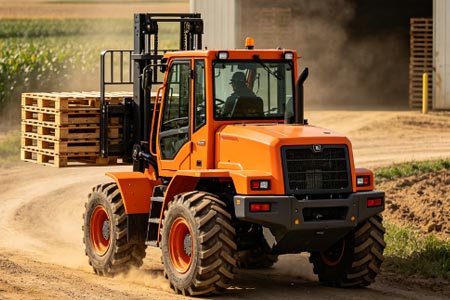
Gentle slopes, 8-hour full-day mixed operation: 4.0–4.5 L/h Same-tonnage 4WD model consumes 4.2–5.4 L/h under identical conditions, burning an extra 0.6–1L diesel per hour. For fleets running 2000 working hours yearly, the annual fuel cost gap exceeds 10,000 RMB.
2. 5-ton 2WD all-terrain forklift
Conventional full-load gravel transfer: 4.5–5.5 L/h 4WD 5-ton versions consume over 6 L/h, creating obvious long-term fuel cost gaps for high-frequency heavy-duty work.
3. Light 2-ton 2WD rough terrain forklift (agricultural supplies & small yards)
Low-load empty operation only uses 1.8–2.5 L/h, extremely low fuel expenditure for infrequent shifts.
2026 H1 cross-evaluation data released by third-party construction machinery media confirms: 4WD models feature heavier transmission assemblies and higher mechanical loss, leading to 15%–20% higher overall fuel consumption than equivalent 2WD forklifts, fully consistent with our factory test results.
Three Core Reasons Why 2WD All-terrain Forklift Saves Fuel
Simplified transmission reduces power loss 2WD only delivers power to rear wheels, eliminating the full set of 4WD transmission parts including transfer case, front drive shaft and front differential. Shorter power transmission paths greatly cut gear friction loss. 4WD vehicles add 50–120kg extra dead weight from complex drive structures, requiring more diesel to drive the whole machine during all travel.
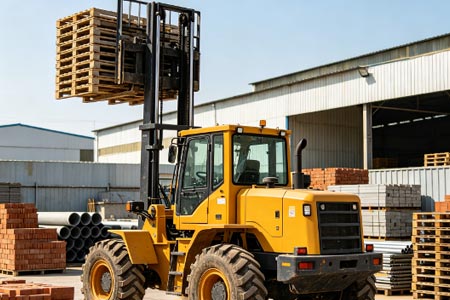
Lighter chassis lowers engine load 2WD rough terrain forklifts remove all matched 4WD accessories for lighter curb weight. The engine maintains low fuel-efficient RPM during flat ground and gentle slope travel for higher diesel utilization. Heavier 4WD frames force higher engine RPM during startup and climbing, pushing up fuel consumption simultaneously.
Lower rolling resistance for wider economic working range 2WD units deliver flexible steering with minimal resistance during uniform-speed travel on compacted gravel yards. 4WD only gains superior passing capacity on deep pits and steep slopes; continuous 4WD operation on flat stockyards constantly increases fuel burn. Fuel consumption drops immediately once switchable 4WD machines revert to 2WD mode.
In conclusion, the fuel consumption of the 2WD All-terrain Forklift is far lower than most buyers expect. If you need detailed quotations or full product catalogs, feel free to contact us anytime.
-
 Reliability Of Newnewton Warehouse Forklifts For Heavy-Duty ShiftsWarehouse forklift reliability relies on industrial parts, reinforced frames and factory durability tests. Proper operation and maintenance reduce unexpected downtime.
Do you like ?0
Read more -
 Forklift Configuration Strategy For Dense Warehousing, Warehouse ForkliftDense warehousing needs matched forklifts besides racks. Reach and trilateral stackers fit different layouts, coordinate aisle, load curve and floor for smooth handling.
Do you like ?0
Read more -
 Full Container Supply For Export Forklifts, Forklift ManufacturerBulk forklift orders for overseas can ship by FCL or LCL. Newnewton FCL offers stable freight, safer packing and mixed models for large purchases.
Do you like ?0
Read more -
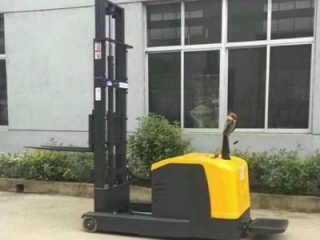 Stand-on Reach Stacker For Narrow Aisle Stacking, Mast Reach StructureStand-on reach stackers feature sliding masts that stay outside racks. They boost storage density in narrow aisles and require flat floors and standard pallets.
Do you like ?0
Read more -
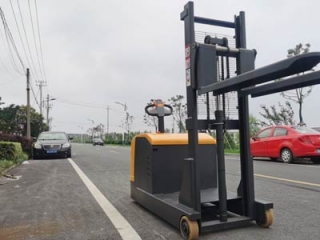 Stand-on Counterbalance Stacker For Various Pallets, Why No Leg RestrictionCounterbalance stackers have no front outriggers, using rear counterweight to avoid pallet interference. They fit various odd pallets yet need wider warehouse aisles.
Do you like ?0
Read more -
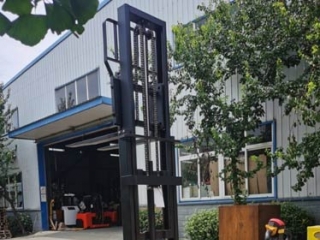 Custom Walk-Behind Counterbalance Stacker | Non-Standard ModificationsStandard walk-behind counterbalance stackers struggle with non-standard pallets and tight aisles. Customize load, lift, forks and structure, share working conditions for safe design.
Do you like ?0
Read more