
Forklift Safety Management Guide Based on Special Equipment Specifications
Forklifts belong to special equipment. Daily management cannot rely merely on operators’ self-discipline. Enterprises should build regular management procedures in accordance with special equipment safety technical specifications for forklifts, and implement control points for equipment, staff and working environments to avoid penalties and safety accidents caused by non-compliant operation.
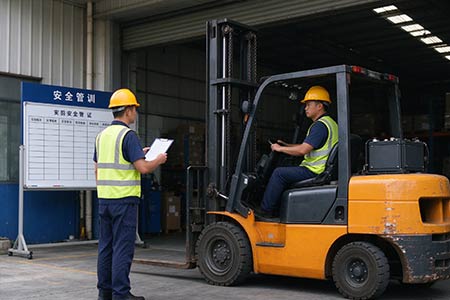
Staff management comes first. As required by specifications, forklift operators must hold valid special equipment operation certificates. Uncertified personnel are forbidden from working. Certificates need timely re-examination before expiry. Regular safety training covering pre-shift inspection, load limits, turning yielding rules and no-riding rules is required. New operators must pass practical assessment before independent work. Keep attendance and operation records to prevent fatigue driving and drunk operation.
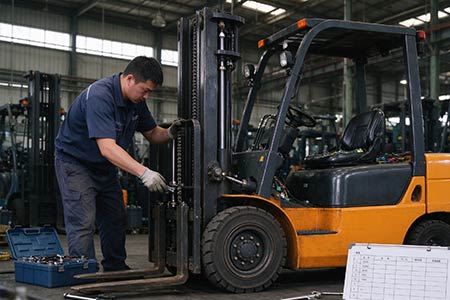
Equipment ledgers and periodic inspections are mandatory. Build an independent ledger for each forklift to record purchase information, maintenance logs, inspection dates and fault records. According to TSG 81, industrial forklifts need periodic inspection application. Label failed units as out-of-service and ban their use. Carry out fixed pre-shift checks on brakes, lights, horns, hydraulic systems, tires and forks. Stop operation immediately for repairs if cracks, oil leakage or brake failure are found.
Site control matters greatly. Separate pedestrian and forklift routes inside warehouses, and set speed and height limit signs. Forklifts shall yield to pedestrians without speeding or cutting in. Cargo loading must not exceed rated load, and eccentric or over-height stacking is prohibited. Passengers are not allowed on forklifts. Keep low speed on ramps and avoid turning on slopes. Special working conditions such as cold storage, dusty workshops and open-air sites need matching protective modifications; ordinary forklifts cannot be used directly.
Maintenance shall be performed by qualified personnel or manufacturers with standard spare parts. Keep maintenance records after service. Never modify forklift structures, counterweights or speed limit settings without approval. Such changes violate special equipment safety technical specifications for forklifts. Master these key points of forklift safety management to achieve standardized and safe operation.
-
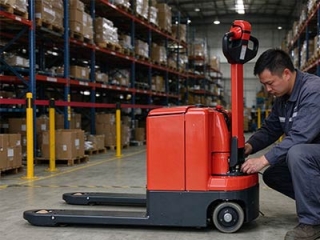 Maintenance Notes for Double Pallet Truck Under Heavy Warehouse LoadsOperators often ignore abnormal motor noise of double pallet trucks during rush orders. Continuous operation burns motors. Timely maintenance prevents failures.
Do you like ?0
Read more -
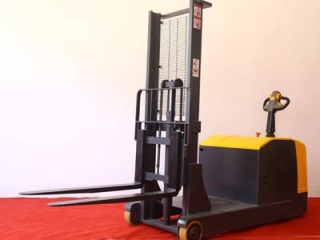 How to Get Accurate Quotations for Stand-on Counterbalance StackerStand-on counterbalance stackers rely on rear weight for stability and cost more. Battery, load, lift height and custom options affect final quotations.
Do you like ?0
Read more -
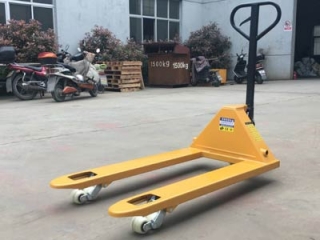 Manual Stacker Vs Pallet Jack: Key Operational Function DifferencesNew buyers confuse manual pallet trucks and manual stackers. They differ in lifting function. Pallet trucks for transfer, stackers for racking to avoid risks.
Do you like ?0
Read more -
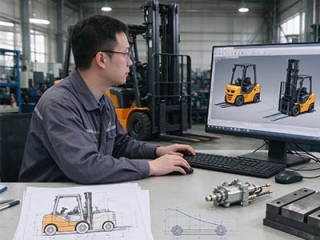 Custom Forklift Dimensions for Export to Fit Narrow Warehouse AislesForklift export faces size risks. Overseas orders may fail door, container or aisle fit. Customization needs balance of gravity, load and target market certifications.
Do you like ?0
Read more -
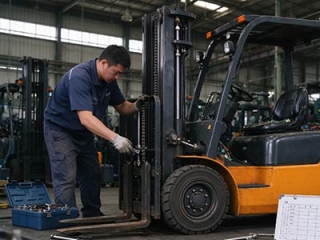 Forklift Safety Management Guide Based on Special Equipment SpecificationsForklifts are special equipment. Follow TSG 81 with training, records, inspection and on-site control to prevent accidents and penalties.
Do you like ?0
Read more -
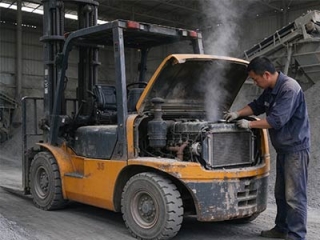 Heavy-Duty Diesel Forklift High Temperature Troubleshooting Guide3.5t diesel forklifts often overheat when handling sand and stone. Inspect cooling system step by step: radiator, belt, shroud, thermostat and water pump.
Do you like ?0
Read more








