Analysis and treatment of common faults of electronic scale trucks
In the daily use of electronic scale trucks, it is inevitable to encounter various faults, affecting the accuracy and efficiency of weighing work. The following is a detailed analysis of several common faults and provides corresponding solutions.
Fault 1: The results of multiple weighings are inconsistent and there are errors
When the electronic scale carrier weighs different weights and has errors many times, it can be solved in the following ways.
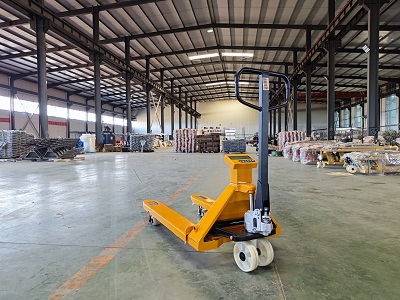
Solution 1: Raise the scale truck to the highest position, take a piece of paper, insert it into the gap between the scale and the tin cover, and make a circle along the gap to carefully check whether there is a place close to each other. If you find a tight grip, pry it away with a suitable tool to ensure that there is no unnecessary contact between the two.
Solution 2: Raise the tine cover, loosen the circlip of the sensor, adjust it upwards with a large flathead screwdriver, and then install the circlip after the adjustment is completed. If there are no adjustment screws on the sensor, loosen the circlip, remove the tin cap, and twist the 4 screws in the cap down 2-3 turns.
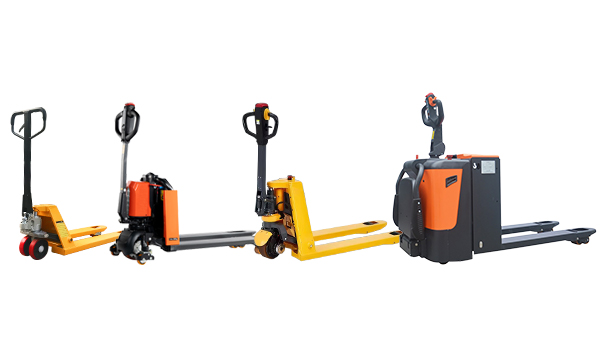
Fault 2: The number of jumps does not return to zero when weighing
When encountering this problem, first check whether the weighing is accurate. If the same item is weighed and the result of weighing twice is the same, it needs to be calibrated and debugged again until the weighing is accurate. If the number of jumps causes the zero error, check whether the fixing screws of the sensor are loose and whether the sensor is on the same plane. If the screws are not loose and the sensor is in the same plane, then it is necessary to check if there is a problem with the sensor itself. The sensor itself is tested with a multimeter to see if the linearity is consistent. If the sensor itself has a problem, it needs to be replaced.
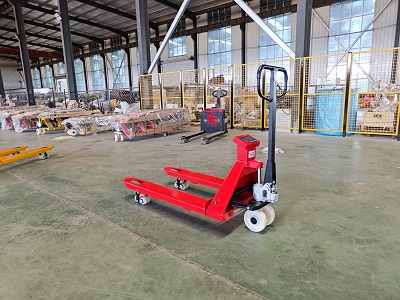
Fault 3: Weighing is unresponsive, and errors are frequently reported
When encountering the electronic scale carrier weighing does not respond and often gives errors, first check whether there is a problem with the line, check whether there is a short circuit at the end of the wire, whether the wire in the junction box has fallen off, etc. Secondly, check whether the instrument can be turned on normally and perform a self-test. If it is caused by a wiring problem, the wiring needs to be connected; If there is a problem with the instrument itself, please contact the manufacturer or dealer to deal with it.
-
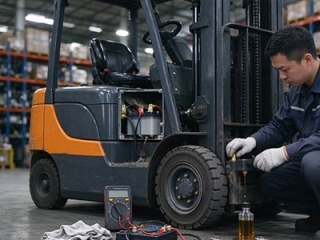 Reliability Of Newnewton Warehouse Forklifts For Heavy-Duty ShiftsWarehouse forklift reliability relies on industrial parts, reinforced frames and factory durability tests. Proper operation and maintenance reduce unexpected downtime.
Do you like ?0
Read more -
 Forklift Configuration Strategy For Dense Warehousing, Warehouse ForkliftDense warehousing needs matched forklifts besides racks. Reach and trilateral stackers fit different layouts, coordinate aisle, load curve and floor for smooth handling.
Do you like ?0
Read more -
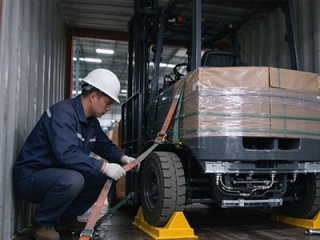 Full Container Supply For Export Forklifts, Forklift ManufacturerBulk forklift orders for overseas can ship by FCL or LCL. Newnewton FCL offers stable freight, safer packing and mixed models for large purchases.
Do you like ?0
Read more -
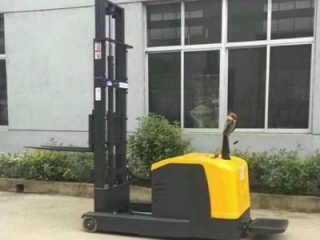 Stand-on Reach Stacker For Narrow Aisle Stacking, Mast Reach StructureStand-on reach stackers feature sliding masts that stay outside racks. They boost storage density in narrow aisles and require flat floors and standard pallets.
Do you like ?0
Read more -
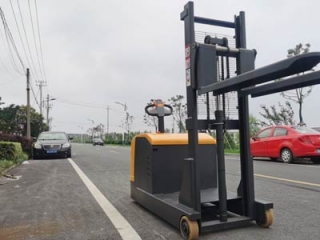 Stand-on Counterbalance Stacker For Various Pallets, Why No Leg RestrictionCounterbalance stackers have no front outriggers, using rear counterweight to avoid pallet interference. They fit various odd pallets yet need wider warehouse aisles.
Do you like ?0
Read more -
 Custom Walk-Behind Counterbalance Stacker | Non-Standard ModificationsStandard walk-behind counterbalance stackers struggle with non-standard pallets and tight aisles. Customize load, lift, forks and structure, share working conditions for safe design.
Do you like ?0
Read more