
Because of the good economy, operability and convenience, and engage in the loading and unloading of goods. Therefore, the use of semi electric stacker suppliers is becoming more and more common, but many customers in the use of china hydraulic stacker are often not likely to pay attention to the maintenance of semi electric stacker suppliers.
1. Battery maintenance for china hydraulic stacker. Check if the connection of the charging circuit is reliable, check whether the connection between the connection and the plug is intact; check whether the charger of the semi electric stacker suppliers is in good condition, check whether the battery is out of liquid or not; check whether the plate has irreversible sulfation.
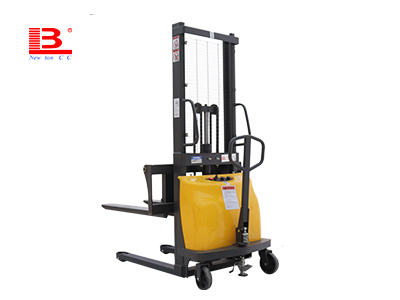
2. The circuit part of the china hydraulic stacker. Do not use the semi electric stacker suppliers under pressure; do not use the china hydraulic stacker while charging; protect from rain.
3. The fork of the semi electric stacker suppliers has a fixed tray type and a movable fork type. There is a gasket at the joint between the root of the movable fork and the china hydraulic stacker, and the height of the gasket is adjusted by screws to adjust the height of the front section of the fork.
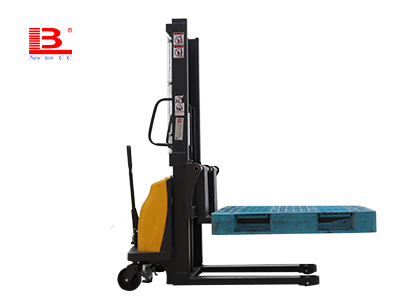
4. semi electric stacker suppliers oil leakage. Most of the oil leakage is at the connection between the oil pipe and the cylinder or the pumping station. The seal is not strict. You can use the wrench to tighten the nut at the joint to the tight position for a few times, but remember that the force is too strong, otherwise it will cause the wire to slip. If it is confirmed that the nut is tightened and continues to leak oil, the nut should be disassembled, and the gasket or explosion-proof valve should be replaced with the correct model or new one, and then re-tightened. Generally, this fault can be solved. When removing the nut, the fork must be minimized, and the hydraulic oil in the oil circuit has been returned to the pumping station cylinder to avoid a large amount of leakage.
-
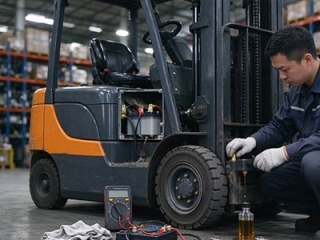 Reliability Of Newnewton Warehouse Forklifts For Heavy-Duty ShiftsWarehouse forklift reliability relies on industrial parts, reinforced frames and factory durability tests. Proper operation and maintenance reduce unexpected downtime.
Do you like ?0
Read more -
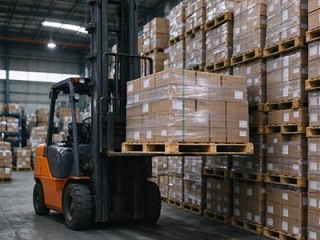 Forklift Configuration Strategy For Dense Warehousing, Warehouse ForkliftDense warehousing needs matched forklifts besides racks. Reach and trilateral stackers fit different layouts, coordinate aisle, load curve and floor for smooth handling.
Do you like ?0
Read more -
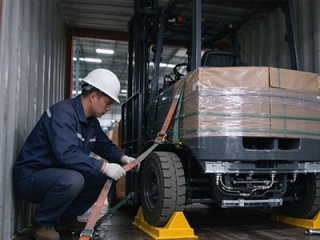 Full Container Supply For Export Forklifts, Forklift ManufacturerBulk forklift orders for overseas can ship by FCL or LCL. Newnewton FCL offers stable freight, safer packing and mixed models for large purchases.
Do you like ?0
Read more -
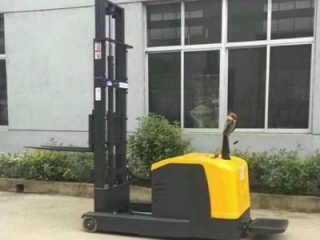 Stand-on Reach Stacker For Narrow Aisle Stacking, Mast Reach StructureStand-on reach stackers feature sliding masts that stay outside racks. They boost storage density in narrow aisles and require flat floors and standard pallets.
Do you like ?0
Read more -
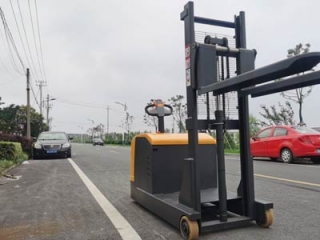 Stand-on Counterbalance Stacker For Various Pallets, Why No Leg RestrictionCounterbalance stackers have no front outriggers, using rear counterweight to avoid pallet interference. They fit various odd pallets yet need wider warehouse aisles.
Do you like ?0
Read more -
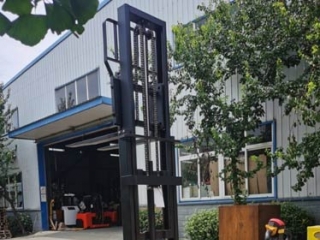 Custom Walk-Behind Counterbalance Stacker | Non-Standard ModificationsStandard walk-behind counterbalance stackers struggle with non-standard pallets and tight aisles. Customize load, lift, forks and structure, share working conditions for safe design.
Do you like ?0
Read more








