
As we all know, the forward-moving counterbalance pallet stacker is very common in the workplace, convenient, fast and efficient. So what should the forward stacker forklift with so many advantages pay attention to in the workplace?
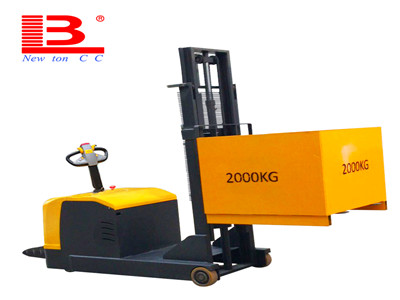
1. The forward-moving counterbalance pallet stacker can only be run on a flat hard surface, such as concrete or asphalt. The forward stacker forklift cannot work in the oily area to avoid slipping.
2. Ensure that the ground can withstand the total weight of the counterbalance pallet stacker, ie the weight of the forward stacker forklift, the weight of the load and the weight of the operator.
Driving and guidance during the movement of the counterbalance pallet stacker
1. The forward-moving stacker forklift should not suddenly brake and turn at high speed.
2. The forward counterbalance pallet stacker should be retracted while driving, and the cargo should be kept at the bottom position.
3. The forward-moving stacker forklift should slow down on the slope to keep the cargo at the lowest position of the counterbalance pallet stacker. The forward-moving stacker forklift should be straight up and down on the slope. The forward-moving counterbalance pallet stacker is forbidden to turn the head on the slope. It is forbidden to lean forward or lift the fork.
4. If the road surface slips, the forward-moving stacker forklift should be decelerated to prevent the forward-moving counterbalance pallet stacker from idling or overturning.
5. Except for loading and unloading goods, the forks of the forward-moving stacker forklift should fall at a height of no more than 200mm from the ground. The counterbalance pallet stacker should not lift the cargo and move the cargo at the same time.
6. If the line of sight is blocked while driving the forward-moving stacker forklift, please guide others around to ensure safety.
7. Require the forward-moving counterbalance pallet stacker to maintain a certain safe distance from the vehicles, personnel and objects in front.
8. When the forward-moving stacker forklift is overspeed, it should sound the horn.
9. Forward counterbalance pallet stacker are strictly prohibited for transporting personnel.
10. Before the forward-moving stacker forklift enters the elevator, ensure that the elevator can withstand all weights.
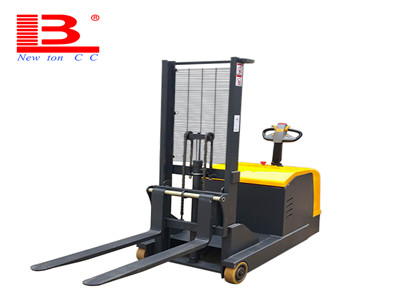
Forward counterbalance pallet stacker loading and unloading
1. The forward-moving stacker forklift can only lift the fork operation and keep a distance from the surrounding personnel only when unloading or forklifting. It is strictly forbidden to lift the fork during the walking counterbalance pallet stacker, and ensure that the forward-moving stacker forklift fork does not exceed 200mm from the ground.
2. The loading and unloading of the counterbalance pallet stacker remains equal on the forks in the left and right positions, which is unstable or unsafe and is not allowed to be transported.
3. When the forward-moving stacker forklift is stacked, the door frame is extended, and then the cargo is lifted. When the cargo is unloaded, the cargo is retracted to the door frame before it can be driven.
4. For the forward-moving counterbalance pallet stacker, when the cargo is lifted, it is strictly forbidden to touch the gantry of the forward-moving stacker forklift to prevent pinching.
5. The cargo can only be loaded and unloaded within the maximum lifting weight and load center range allowed by the counterbalance pallet stacker, and the symmetrical position of the cargo on the forward-moving stacker forklift fork is adjusted according to the size of the cargo.
6. Forward counterbalance pallet stacker should be especially careful when loading and unloading excessive and heavy cargo. For loading and unloading high-level cargo, the forward-moving stacker forklift should be equipped with a shelf.
-
 Reliability Of Newnewton Warehouse Forklifts For Heavy-Duty ShiftsWarehouse forklift reliability relies on industrial parts, reinforced frames and factory durability tests. Proper operation and maintenance reduce unexpected downtime.
Do you like ?0
Read more -
 Forklift Configuration Strategy For Dense Warehousing, Warehouse ForkliftDense warehousing needs matched forklifts besides racks. Reach and trilateral stackers fit different layouts, coordinate aisle, load curve and floor for smooth handling.
Do you like ?0
Read more -
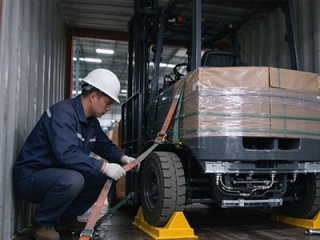 Full Container Supply For Export Forklifts, Forklift ManufacturerBulk forklift orders for overseas can ship by FCL or LCL. Newnewton FCL offers stable freight, safer packing and mixed models for large purchases.
Do you like ?0
Read more -
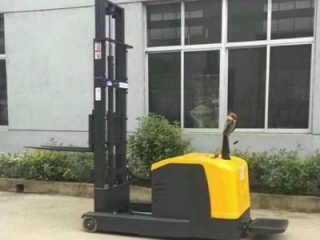 Stand-on Reach Stacker For Narrow Aisle Stacking, Mast Reach StructureStand-on reach stackers feature sliding masts that stay outside racks. They boost storage density in narrow aisles and require flat floors and standard pallets.
Do you like ?0
Read more -
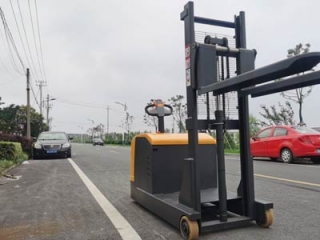 Stand-on Counterbalance Stacker For Various Pallets, Why No Leg RestrictionCounterbalance stackers have no front outriggers, using rear counterweight to avoid pallet interference. They fit various odd pallets yet need wider warehouse aisles.
Do you like ?0
Read more -
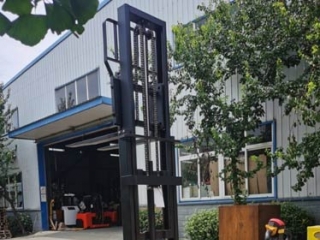 Custom Walk-Behind Counterbalance Stacker | Non-Standard ModificationsStandard walk-behind counterbalance stackers struggle with non-standard pallets and tight aisles. Customize load, lift, forks and structure, share working conditions for safe design.
Do you like ?0
Read more








