Newnewton Forklift: How to Reduce Failure Rate on Construction Sites?
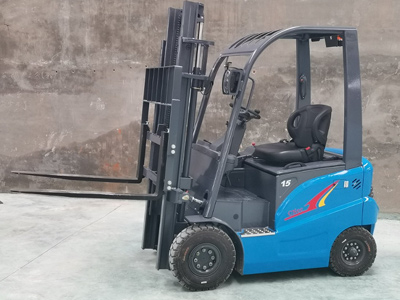
How to reduce the failure rate of forklifts used on construction sites?Construction sites feature complex working conditions, poor road conditions and frequent heavy loads. For stable and durable equipment, choosing the right diesel forklift for construction sites and strictly following operation notes for internal combustion forklifts are the keys to achieving a low failure rate of internal combustion forklifts.
Below we summarize a set of practical standards from three aspects: model selection, operation and maintenance, to help you greatly reduce downtime and repairs.
Operation Notes for Internal Combustion Forklifts
1. Model Selection
Give priority to genuine diesel forklift for construction sites.These models have higher chassis, reinforced frame and wear-resistant tires, suitable for harsh environments such as gravel, mud and ramps. They are equipped with high-torque engines and strong heat dissipation, supporting long hours of continuous heavy-duty work, reducing failure probability from the source.
Using ordinary factory forklifts forcibly on construction sites can easily lead to oil leaks, tire blowouts, engine overheating and other failures.
2. Operation
Pre-operation inspection is the first line of defense to lower the failure rate.Before daily work, check that diesel, engine oil, coolant and hydraulic oil are within standard ranges; inspect tires for damage or bulges; check whether chains, forks and pins are loose; verify lights, horn, reverse buzzer and handbrake are functioning properly.
In addition, check the working environment. When there is excessive debris on site, clear the driving route to avoid hard objects puncturing tires or hitting the chassis.
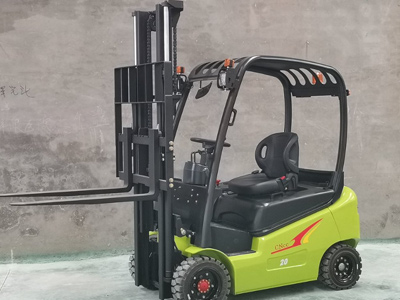
Start smoothly without revving the engine aggressively. Slow down on uneven construction roads; no sudden braking or sharp turns.Follow the principle of “symmetric lifting, centered center of gravity” when handling goods. Overloading, unbalanced loading, over-height and over-width are strictly prohibited.Drive slowly straight up and down ramps without turning to prevent overturning.
Correct operation directly contributes to a low failure rate of internal combustion forklifts.Avoid prolonged idling at high throttle to prevent engine carbon buildup and high water temperature. Operate lifting smoothly without forced pushing of heavy loads to reduce impact on the hydraulic system. After wading, gently press the brakes to dry the brake pads and ensure reliable braking.
Rough operation is the main cause of high failures on construction site forklifts. Standard driving extends the service life of engines, gearboxes and hydraulic components.
3. Maintenance
Change hydraulic oil regularly, clean the radiator, and perform rust removal and protection on the forklift.Since construction site environments are relatively harsh, to prevent excessive dust intake, you need to add air filters and replace them regularly. Clean carbon deposits in the fuel system periodically to avoid further failures caused by carbon buildup.
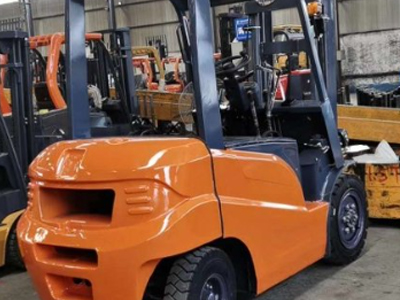
There are many operation notes for internal combustion forklifts used on construction sites.However, to reduce failure rate, improve cost-effectiveness and control costs, proper measures in all aspects are essential.
A low failure rate of internal combustion forklifts is not just a phenomenon – it is the result of reliable forklift quality and proper daily maintenance!
-
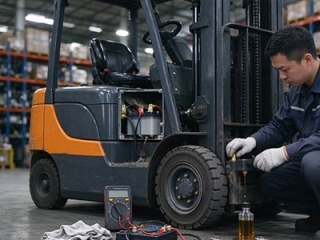 Reliability Of Newnewton Warehouse Forklifts For Heavy-Duty ShiftsWarehouse forklift reliability relies on industrial parts, reinforced frames and factory durability tests. Proper operation and maintenance reduce unexpected downtime.
Do you like ?0
Read more -
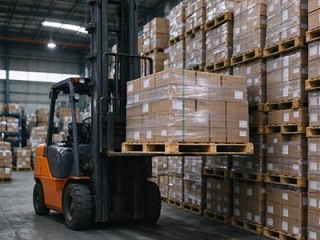 Forklift Configuration Strategy For Dense Warehousing, Warehouse ForkliftDense warehousing needs matched forklifts besides racks. Reach and trilateral stackers fit different layouts, coordinate aisle, load curve and floor for smooth handling.
Do you like ?0
Read more -
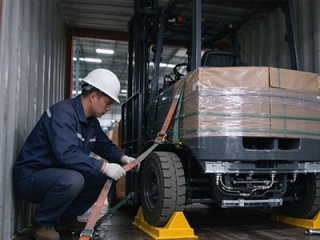 Full Container Supply For Export Forklifts, Forklift ManufacturerBulk forklift orders for overseas can ship by FCL or LCL. Newnewton FCL offers stable freight, safer packing and mixed models for large purchases.
Do you like ?0
Read more -
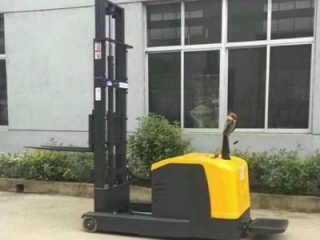 Stand-on Reach Stacker For Narrow Aisle Stacking, Mast Reach StructureStand-on reach stackers feature sliding masts that stay outside racks. They boost storage density in narrow aisles and require flat floors and standard pallets.
Do you like ?0
Read more -
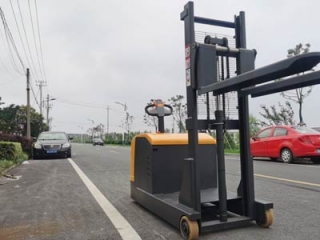 Stand-on Counterbalance Stacker For Various Pallets, Why No Leg RestrictionCounterbalance stackers have no front outriggers, using rear counterweight to avoid pallet interference. They fit various odd pallets yet need wider warehouse aisles.
Do you like ?0
Read more -
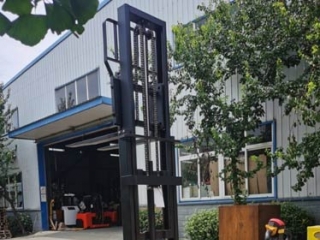 Custom Walk-Behind Counterbalance Stacker | Non-Standard ModificationsStandard walk-behind counterbalance stackers struggle with non-standard pallets and tight aisles. Customize load, lift, forks and structure, share working conditions for safe design.
Do you like ?0
Read more