
Electric Forklift vs Internal Combustion Forklift: How to Choose?
A clear comparison between electric forklifts and internal combustion forklifts can provide practical insights and useful information when you are confused, hesitant, or unsure about which forklift to choose. Today, our comparison will focus on maintenance costs. After all, many people fully understand performance, price and other aspects during the purchase stage, but easily overlook maintenance costs. Poor calculation of these costs can easily lead to over-budget spending, which is not good for your financial management.
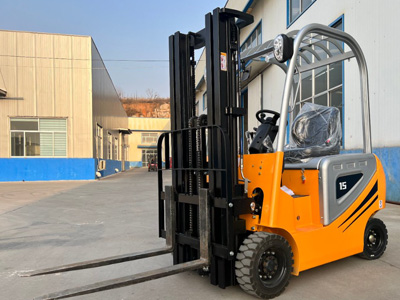
Let’s first look at core component maintenance, which accounts for the largest part of maintenance costs. Internal combustion forklifts are powered by engines, gearboxes and fuel systems, which have complex structures. Regular oil, oil filter, air filter and fuel filter replacements are required, plus spark plug and injector inspections. Even minor breakdowns result in costly and time-consuming repairs. For routine maintenance, internal combustion forklifts need basic service at least once a month, costing several thousand yuan per year. A single engine repair can cost over ten thousand yuan.
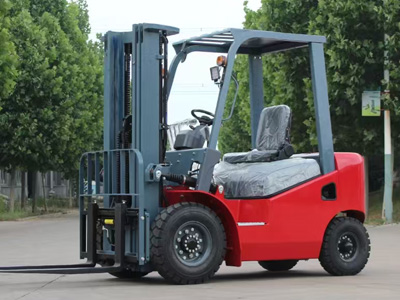
Newnewton electric forklifts are much simpler. Their core components are motors, batteries and electronic control systems, with simple structures and low failure rates. Daily maintenance does not require oil or filter changes—only regular battery checks, motor and controller cleaning, and wheel lubrication. Basic monthly maintenance costs only a few dozen yuan. With proper charging and use, batteries last 3–5 years, and their replacement cost is much lower than engine repairs for internal combustion forklifts.
Next are the hidden maintenance costs in daily use. Internal combustion forklifts have high fuel consumption and produce exhaust emissions. Long-term use requires regular maintenance of exhaust treatment systems to avoid non-compliant emissions and rectification orders. They also produce high noise and strong vibration, accelerating body wear and increasing repair frequency.
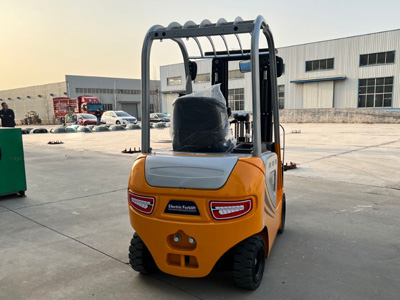
Electric forklifts avoid these problems. Powered by electricity, they have zero fuel consumption and zero exhaust, with no exhaust treatment system maintenance or extra fuel costs. Low noise and vibration slow down body wear, making hidden maintenance costs almost negligible. Especially in indoor warehouses, food workshops, pharmaceutical workshops and other scenarios, electric forklifts eliminate exhaust and noise concerns, making maintenance much easier.
From the perspective of maintenance costs of electric forklifts and internal combustion forklifts alone, you can clearly understand the differences between these two types of forklifts. We hope this helps you consider all factors more comprehensively when purchasing a forklift, so you can choose a product that best meets your needs!
-
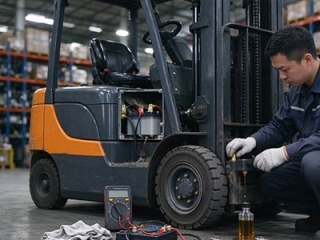 Reliability Of Newnewton Warehouse Forklifts For Heavy-Duty ShiftsWarehouse forklift reliability relies on industrial parts, reinforced frames and factory durability tests. Proper operation and maintenance reduce unexpected downtime.
Do you like ?0
Read more -
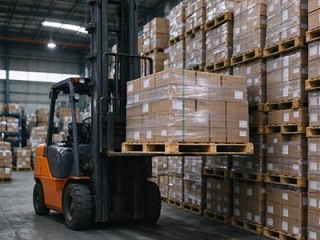 Forklift Configuration Strategy For Dense Warehousing, Warehouse ForkliftDense warehousing needs matched forklifts besides racks. Reach and trilateral stackers fit different layouts, coordinate aisle, load curve and floor for smooth handling.
Do you like ?0
Read more -
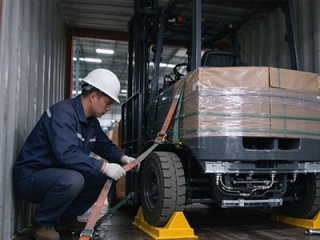 Full Container Supply For Export Forklifts, Forklift ManufacturerBulk forklift orders for overseas can ship by FCL or LCL. Newnewton FCL offers stable freight, safer packing and mixed models for large purchases.
Do you like ?0
Read more -
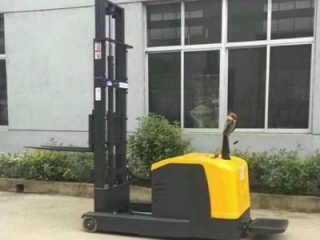 Stand-on Reach Stacker For Narrow Aisle Stacking, Mast Reach StructureStand-on reach stackers feature sliding masts that stay outside racks. They boost storage density in narrow aisles and require flat floors and standard pallets.
Do you like ?0
Read more -
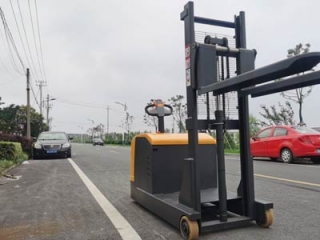 Stand-on Counterbalance Stacker For Various Pallets, Why No Leg RestrictionCounterbalance stackers have no front outriggers, using rear counterweight to avoid pallet interference. They fit various odd pallets yet need wider warehouse aisles.
Do you like ?0
Read more -
 Custom Walk-Behind Counterbalance Stacker | Non-Standard ModificationsStandard walk-behind counterbalance stackers struggle with non-standard pallets and tight aisles. Customize load, lift, forks and structure, share working conditions for safe design.
Do you like ?0
Read more








