Safety first: diesel forklift operation specifications and safety precautions
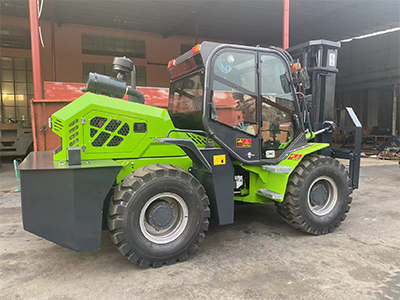
As an important tool for logistics and transportation, the safe operation of diesel forklifts is crucial. In order to ensure personal safety and equipment safety, the following operating specifications and safety precautions are formulated:
Diesel forklifts are also equipped with active safety systems, such as seat belt interlock switches, overload locking and speed control, safety collision avoidance, high-level automatic deceleration, charging alarm, etc., which further improve safety and efficiency.
Liability and Penalties:
Violations of the Code of Practice that cause personal injury, property damage, or affect the company's reputation will be punished according to the severity of the situation, including warnings, fines, compensation, dismissal, and transfer to judicial authorities.
Summary:
Proficiency in diesel forklift operation specifications and full use of the safety system is the key to ensure the safe operation of forklifts. Safe operation is not only related to its own safety, but also closely related to the safe production and development of enterprises.
Parking position: Lower the fork to the lowest position, pull the handbrake, turn off the key switch and remove the key, and park in the designated area, avoiding parking in emergency passages, entrances and exits, next to fire protection facilities or on slopes.
Operation after unloading: After unloading, the fork should be lowered to the normal driving position before driving.
End of work: The forklift must be parked in the designated place after each use.
Load start: Confirm that the cargo is stable and reliable, and start slowly and steadily.
Loading and unloading of goods: diesel When the forklift fork is lifted, no one is allowed within a radius of 1 meter of the fork range.
Safety during operation: It is strictly forbidden for anyone to get on and off the car, it is strictly forbidden to stand on the fork, and to honk the horn when encountering pedestrians or obstacles.
Ramp operation: backwards uphill when no-load, forks forward downhill; When loading, the fork goes uphill forward and backwards; Gliding in neutral is strictly prohibited.
Obstruction of vision: When encountering goods blocking the line of sight, the vehicle should be reversed and driven slowly, and if it encounters an uphill slope, it should not be reversed, and there should be a special person to command.
Overspeeding, overloading: It is strictly forbidden to overspeed, overload and eccentric driving, and the driving speed must be controlled within 5 kilometers.
Safe operation: It is not allowed to raise the goods for long-distance driving, it is not allowed to use forks to pick up and overturn pallets, it is not allowed to directly shovel dangerous goods, it is not allowed to use single fork operations, it is not allowed to use inertia to load and unload goods, and it is not allowed to use damaged or deformed pallets.
Troubleshooting: If noise or abnormal phenomena are found, stop the car immediately for inspection, and then continue the operation after troubleshooting, and it is strictly forbidden to repair it when it is started.
Vehicle pre-start inspection: Check whether the fuel tank capacity, oil pipes, water pipes, exhaust pipes, wheel bolts, tire pressure, steering and braking system, electrical wiring, horn, turn signal, brake lights, etc. are normal.
Licensed: Must undergo professional training and obtain relevant special operation licenses before driving.
Prohibition of drunk driving and fatigue driving: Do not engage in behaviors unrelated to safe operation, such as eating, drinking, and talking on mobile phones.
Standardized dress: Labor protection equipment must be worn when driving, and when getting on and off the car, you must grasp the handle with your hands, and your feet must be on the board, and it is strictly forbidden to grab the steering wheel or joystick to enter the cab.
-
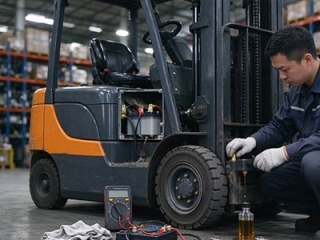 Reliability Of Newnewton Warehouse Forklifts For Heavy-Duty ShiftsWarehouse forklift reliability relies on industrial parts, reinforced frames and factory durability tests. Proper operation and maintenance reduce unexpected downtime.
Do you like ?0
Read more -
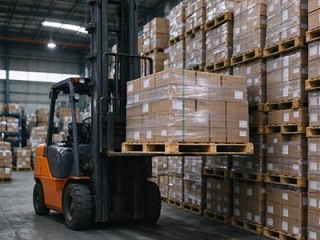 Forklift Configuration Strategy For Dense Warehousing, Warehouse ForkliftDense warehousing needs matched forklifts besides racks. Reach and trilateral stackers fit different layouts, coordinate aisle, load curve and floor for smooth handling.
Do you like ?0
Read more -
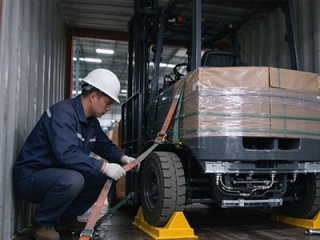 Full Container Supply For Export Forklifts, Forklift ManufacturerBulk forklift orders for overseas can ship by FCL or LCL. Newnewton FCL offers stable freight, safer packing and mixed models for large purchases.
Do you like ?0
Read more -
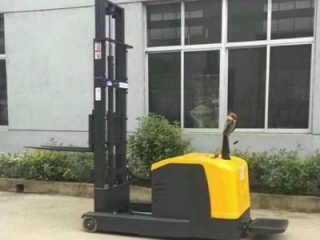 Stand-on Reach Stacker For Narrow Aisle Stacking, Mast Reach StructureStand-on reach stackers feature sliding masts that stay outside racks. They boost storage density in narrow aisles and require flat floors and standard pallets.
Do you like ?0
Read more -
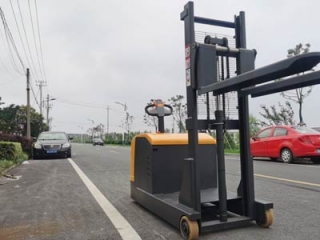 Stand-on Counterbalance Stacker For Various Pallets, Why No Leg RestrictionCounterbalance stackers have no front outriggers, using rear counterweight to avoid pallet interference. They fit various odd pallets yet need wider warehouse aisles.
Do you like ?0
Read more -
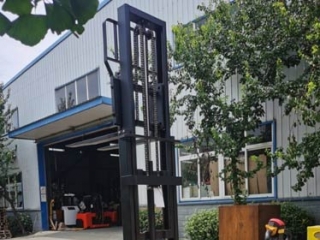 Custom Walk-Behind Counterbalance Stacker | Non-Standard ModificationsStandard walk-behind counterbalance stackers struggle with non-standard pallets and tight aisles. Customize load, lift, forks and structure, share working conditions for safe design.
Do you like ?0
Read more