
How to Source Internal Combustion Forklifts From Reliable Manufacturers
Many buyers only focus on unit price negotiation when ordering large quantities of internal combustion forklifts, while ignoring verification of factory comprehensive strength. This may lead to delayed delivery, unstable product quality and difficulty in purchasing spare parts later, and hinder material handling progress on construction sites or factory yards. For factory wholesale of diesel forklifts, buyers should evaluate and select source manufacturers from multiple dimensions instead of judging merely by price.
Verify factory production qualifications and product compliance documents. Qualified internal combustion forklift manufacturers must hold corresponding production licenses, complete machine test reports and products that meet relevant safety standards. CE certification and other documents can be provided for export orders. Before purchase, you can ask manufacturers for qualification documents and check nameplate information to avoid non-standard equipment without complete compliance procedures, which prevents problems in factory equipment filing.
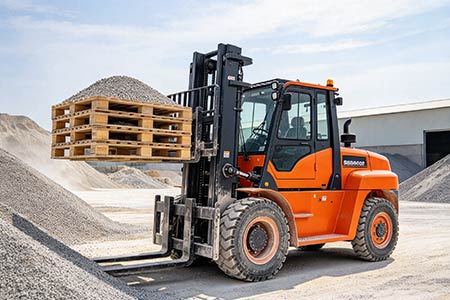
Check manufacturing capacity via on-site or online inspection. Genuine source factories own complete assembly lines and spare parts warehouses, rather than acting as simple assembly resellers. You may learn about annual production capacity and core component supply chains, including supply channels of engines, gearboxes and hydraulic parts, and review factory inspection procedures. Manufacturers with independent assembly and full machine testing capacity maintain better consistent quality for bulk orders and avoid big performance differences among forklifts in the same batch.
Confirm spare parts supply and long-term after-sales support. Internal combustion diesel forklifts consist of many wearing parts such as engines, hydraulic systems and transmission assemblies. Stable spare parts supply is required for maintenance and repair after bulk purchase. Resellers usually cannot supply original spare parts quickly, while source factories can allocate spare parts resources directly. Confirm after-sales response time, spare parts lead time and on-site maintenance service in advance to reduce long-term operation and maintenance pressure.
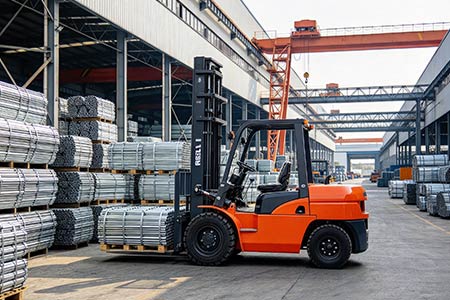
Evaluate customization and order delivery capacity. Different working scenarios bring differentiated requirements for internal combustion forklifts, such as side shifters, various mast heights, off-road tires and other optional attachments. Source factories support optional configurations and adjust whole machine solutions according to working conditions. Meanwhile confirm production cycle and shipping schedule for bulk orders, and specify delivery time in contracts to avoid project delay risks and guarantee on-time project operation.
Negotiate commercial terms for bulk procurement. During internal combustion diesel forklift procurement, you can discuss tiered pricing, packaging and logistics solutions, clarify included items in quotations and distinguish standard accessories from extra optional attachments. Put warranty period, acceptance criteria and liability for breach of contract into purchase contracts to prevent commercial disputes in later cooperation.
-
 Reliability Of Newnewton Warehouse Forklifts For Heavy-Duty ShiftsWarehouse forklift reliability relies on industrial parts, reinforced frames and factory durability tests. Proper operation and maintenance reduce unexpected downtime.
Do you like ?0
Read more -
 Forklift Configuration Strategy For Dense Warehousing, Warehouse ForkliftDense warehousing needs matched forklifts besides racks. Reach and trilateral stackers fit different layouts, coordinate aisle, load curve and floor for smooth handling.
Do you like ?0
Read more -
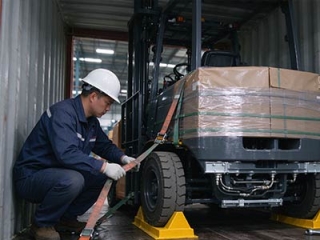 Full Container Supply For Export Forklifts, Forklift ManufacturerBulk forklift orders for overseas can ship by FCL or LCL. Newnewton FCL offers stable freight, safer packing and mixed models for large purchases.
Do you like ?0
Read more -
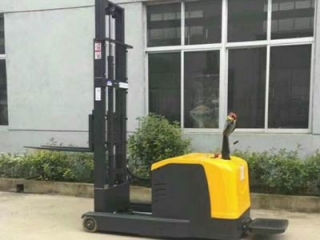 Stand-on Reach Stacker For Narrow Aisle Stacking, Mast Reach StructureStand-on reach stackers feature sliding masts that stay outside racks. They boost storage density in narrow aisles and require flat floors and standard pallets.
Do you like ?0
Read more -
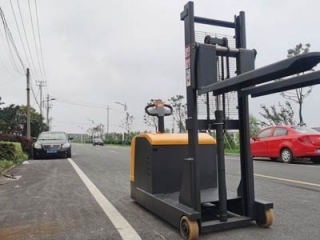 Stand-on Counterbalance Stacker For Various Pallets, Why No Leg RestrictionCounterbalance stackers have no front outriggers, using rear counterweight to avoid pallet interference. They fit various odd pallets yet need wider warehouse aisles.
Do you like ?0
Read more -
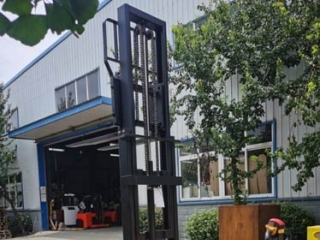 Custom Walk-Behind Counterbalance Stacker | Non-Standard ModificationsStandard walk-behind counterbalance stackers struggle with non-standard pallets and tight aisles. Customize load, lift, forks and structure, share working conditions for safe design.
Do you like ?0
Read more








