Retrofit Guide of Exhaust Filter for Internal Combustion Diesel Forklift
The function of exhaust treatment device for diesel forklift is to meet factory environmental protection standards. Forklift emission is a common inspection item during environmental audits. Old diesel forklifts leave factory without purification parts and produce black smoke during operation. Particulates spread inside workshops and may trigger environmental rectification notices. Exhaust treatment devices can solve excessive emission problems.
There are two mainstream types on the market. Diesel particulate filters mainly trap soot, while catalytic purifiers decompose harmful gas such as carbon monoxide. They match different engine versions.
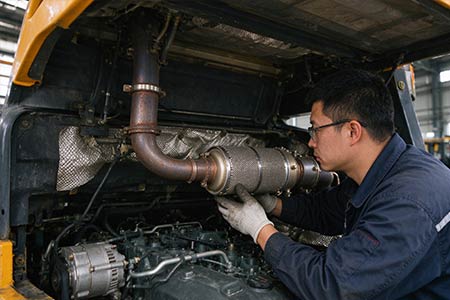
Generally, the particulate filter intercepts solid particulates in exhaust gas. Accumulated soot is consumed through high-temperature regeneration. Visible black smoke disappears during forklift operation, and exhaust concentration inside the factory drops to satisfy park and plant emission control rules.
Do not buy the device blindly. Check the engine model and original emission standard first. Parameters for filters suitable for China Stage II and Stage III engines are not interchangeable. Wrong installation raises exhaust back pressure, resulting in weak power and higher fuel consumption.
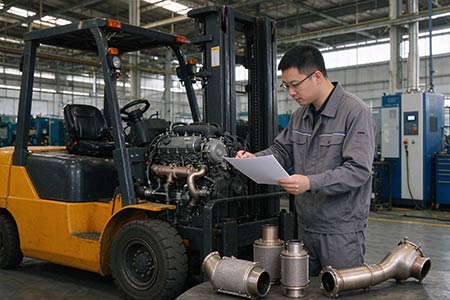
Daily maintenance of the exhaust device is often neglected. Filters accumulate carbon faster in heavy-load and dusty workshops and need regular regeneration or cleaning. Severe blockage causes poor ventilation and may damage the engine. Since forklifts have compact structures and the exhaust device runs at high temperature, arrange it away from oil pipes, wiring harnesses and tires with thermal insulation protection, and reserve space for later maintenance to avoid fire risks.
For passing environmental inspection, fitting exhaust equipment on internal combustion diesel forklift is only one part of renovation. Enterprises should keep renovation records and carry out regular self-inspection. Compared with buying new China Stage IV forklifts, installing purification devices is a cost-effective transition plan.
-
 How Does Truck-Mounted Self-Lifting Stacker Work for City DeliveryLight electric self-loading stackers let one driver load pallets inside trucks without tailgates, yet they have limits on load, space and working conditions.
Do you like ?0
Read more -
 N1 License Guide for Stand-on Counterbalance StackerStand-on stackers and stand-on counterbalance stackers are both industrial trucks under TSG 81—2022. Operators need N1 certificates, though inspection focuses differ.
Do you like ?0
Read more -
 Retrofit Guide of Exhaust Filter for Internal Combustion Diesel ForkliftExhaust treatment devices help diesel forklifts pass environmental checks. DPF and catalytic cleaners differ; match engine models to avoid abnormal backpressure damage.
Do you like ?0
Read more -
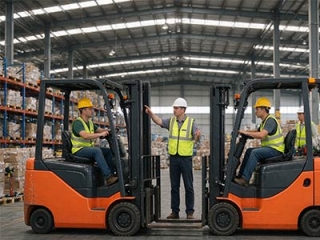 Benefits of Sourcing Warehouse Handling Equipment From One-Stop Forklift MakerSeparate sourcing for forklifts, attachments and service causes delays and disputes. One-stop suppliers offer plans, equipment, OEM and CE files to cut coordination costs.
Do you like ?0
Read more -
 Overseas Cold Chain Sourcing Guide for Three-Point Electric ForkliftCold chain dealers overlook condensation damage to 3-wheel forklifts. Standard models risk short circuits; custom low-temp versions suit narrow cold aisles.
Do you like ?0
Read more -
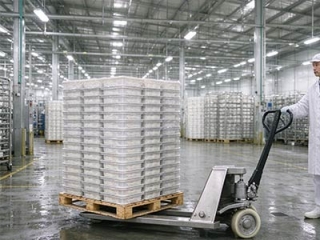 Manual Hydraulic Pallet Truck for Food Workshop | Selection Key PointsStandard carbon pallet trucks rust in wet food workshops. Choose 304 stainless or coated models with non-marking wheels to meet food hygiene rules.
Do you like ?0
Read more