How Does Truck-Mounted Self-Lifting Stacker Work for City Delivery
Many urban and trunk delivery fleets struggle with insufficient loading staff. Light electric self-lifting stacker is widely considered a solution for single-person loading and unloading. Many fleet owners wonder whether one worker can handle pallet goods loading and unloading easily.
A daily goods delivery fleet tested truck-mounted equipment and compared manual handling and conventional forklifts. Electric truck-mounted self-lifting stacker comes with driving and lifting power. It can drive directly into the truck container and lift pallets with its own hydraulic system. No truck tailgate or on-site forklift is required, so the driver can finish loading and unloading independently.
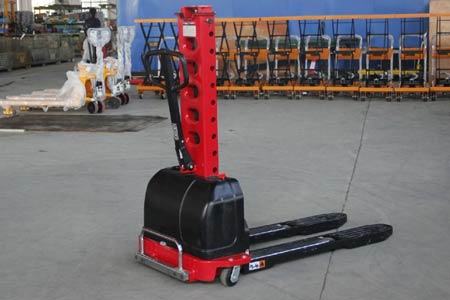
It features compact size and takes little space after folding. It can be stored inside ordinary box trucks, saving waiting time for forklifts and extra labor support. It suits multi-stop delivery routes with scattered unloading tasks. Electric lifting removes heavy manual lifting work, yet it still has operation requirements.
Operators need to master alignment, fork insertion and weight balance. Slanted cargo or broken pallets raise operation difficulty. Light-duty models have fixed load limits. Operation slows down and safety margin reduces under heavy and fully loaded pallet conditions.
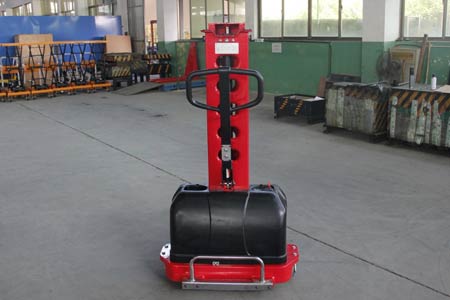
It also has clear drawbacks. Its working speed cannot match stationary forklifts, so it is not fit for mass concentrated loading. Maneuvering is limited inside narrow containers. Stability drops on uneven ground or slippery truck floors.
In summary, light electric self-lifting stacker greatly cuts labor reliance and supports single-person unloading for small and scattered deliveries. It cannot fit all cargo types. Evaluate regular cargo weight, container size and pallet types before purchase to match route conditions and maximize its advantages.
-
 How Does Truck-Mounted Self-Lifting Stacker Work for City DeliveryLight electric self-loading stackers let one driver load pallets inside trucks without tailgates, yet they have limits on load, space and working conditions.
Do you like ?0
Read more -
 N1 License Guide for Stand-on Counterbalance StackerStand-on stackers and stand-on counterbalance stackers are both industrial trucks under TSG 81—2022. Operators need N1 certificates, though inspection focuses differ.
Do you like ?0
Read more -
 Retrofit Guide of Exhaust Filter for Internal Combustion Diesel ForkliftExhaust treatment devices help diesel forklifts pass environmental checks. DPF and catalytic cleaners differ; match engine models to avoid abnormal backpressure damage.
Do you like ?0
Read more -
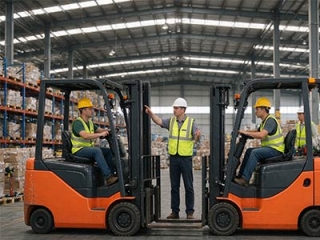 Benefits of Sourcing Warehouse Handling Equipment From One-Stop Forklift MakerSeparate sourcing for forklifts, attachments and service causes delays and disputes. One-stop suppliers offer plans, equipment, OEM and CE files to cut coordination costs.
Do you like ?0
Read more -
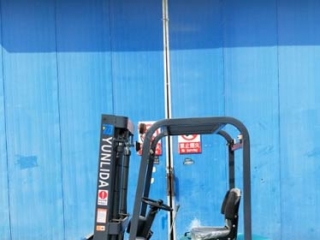 Overseas Cold Chain Sourcing Guide for Three-Point Electric ForkliftCold chain dealers overlook condensation damage to 3-wheel forklifts. Standard models risk short circuits; custom low-temp versions suit narrow cold aisles.
Do you like ?0
Read more -
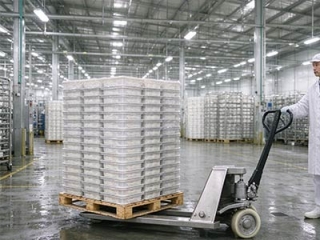 Manual Hydraulic Pallet Truck for Food Workshop | Selection Key PointsStandard carbon pallet trucks rust in wet food workshops. Choose 304 stainless or coated models with non-marking wheels to meet food hygiene rules.
Do you like ?0
Read more