How To Save Energy For Internal Combustion Forklift | Fuel Saving Methods
Rising fuel prices increase operating costs greatly. If you are looking into How To Save Energy For Internal Combustion Forklift, follow these operation, routing and maintenance tips to cut oil consumption effectively.
1. Fuel-saving Driving Habits
Limit idle running strictly Turn off the engine if waiting exceeds 3 minutes. A forklift burns about 2.5L diesel per hour at idle, which causes carbon deposit and shortens engine life. Warm up for only 30 seconds before moving. Do not rev the engine repeatedly.
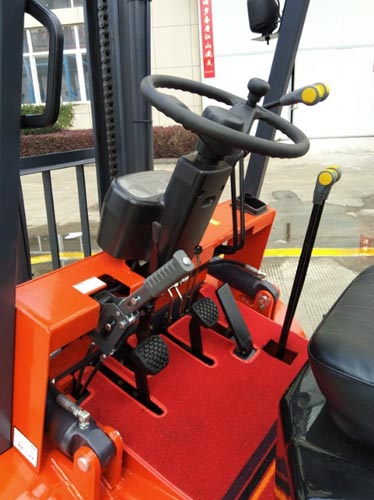
Start gently and drive at steady speed Avoid harsh acceleration and sudden braking. Maintain moderate speed with loads and ease off the throttle before turning. Smooth operation can cut fuel consumption by more than 10%.
Minimize unnecessary hydraulic movement Only lift forks to the required height. Do not lift or lower while driving to avoid idle hydraulic power loss.
Never overload or carry off-center loads Overloading increases engine load and fuel burn. Center cargo evenly to reduce driving resistance.
2. Optimize Cargo & Route
Plan routes in advance to avoid repeated reversing and detours. Consolidate goods to reduce empty return trips and unnecessary runs.
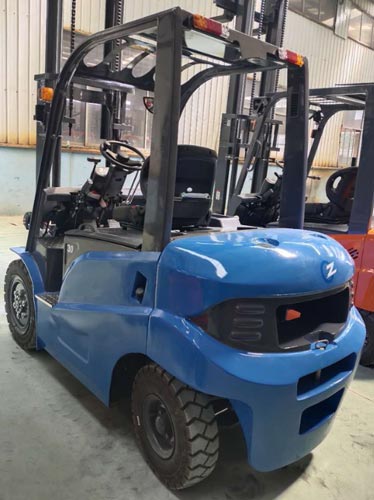
3. Preventive Maintenance
Replace air filter on schedule Clogged air filters lead to incomplete combustion and raise fuel consumption by 5%-8%. Clean or replace the filter every 250 working hours.
Change engine oil and diesel filter regularly Blocked fuel lines and thick oil increase engine resistance, resulting in weak power and high fuel cost.
Keep proper tire pressure Low tire pressure brings extra rolling resistance. Always maintain standard pressure to save fuel waste.
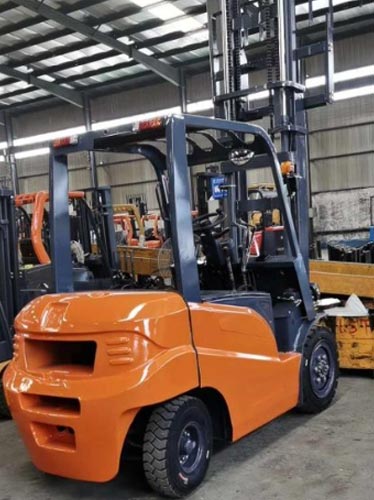
Clean carbon deposits and calibrate fuel injectors Poor fuel atomization causes high oil consumption and black exhaust. Regular calibration keeps the engine in good condition.
These practical Fuel-saving Tips For Diesel Forklift help reduce energy waste in daily warehouse work. Bookmark this guide for long-term cost control.
-
 Reliability Of Newnewton Warehouse Forklifts For Heavy-Duty ShiftsWarehouse forklift reliability relies on industrial parts, reinforced frames and factory durability tests. Proper operation and maintenance reduce unexpected downtime.
Do you like ?0
Read more -
 Forklift Configuration Strategy For Dense Warehousing, Warehouse ForkliftDense warehousing needs matched forklifts besides racks. Reach and trilateral stackers fit different layouts, coordinate aisle, load curve and floor for smooth handling.
Do you like ?0
Read more -
 Full Container Supply For Export Forklifts, Forklift ManufacturerBulk forklift orders for overseas can ship by FCL or LCL. Newnewton FCL offers stable freight, safer packing and mixed models for large purchases.
Do you like ?0
Read more -
 Stand-on Reach Stacker For Narrow Aisle Stacking, Mast Reach StructureStand-on reach stackers feature sliding masts that stay outside racks. They boost storage density in narrow aisles and require flat floors and standard pallets.
Do you like ?0
Read more -
 Stand-on Counterbalance Stacker For Various Pallets, Why No Leg RestrictionCounterbalance stackers have no front outriggers, using rear counterweight to avoid pallet interference. They fit various odd pallets yet need wider warehouse aisles.
Do you like ?0
Read more -
 Custom Walk-Behind Counterbalance Stacker | Non-Standard ModificationsStandard walk-behind counterbalance stackers struggle with non-standard pallets and tight aisles. Customize load, lift, forks and structure, share working conditions for safe design.
Do you like ?0
Read more