
Overseas and domestic buyers face numerous details during OEM customization of electric double pallet truck. Minor oversights may lead to mismatched equipment or delayed delivery. Since double‑pallet structure is not mainstream, mistakes often happen in procurement. Read this guide to sort out critical notes for OEM project of double pallet jack.
Confirm base machine model first. OEM customization rarely means complete new development. Prioritize existing mature chassis from the manufacturer. Core assemblies of electric double pallet jack include frame, drive unit, hydraulic lifting group and battery system. Major structural modifications require stability calculation. Excessive changes will raise cost sharply and extend lead‑time.
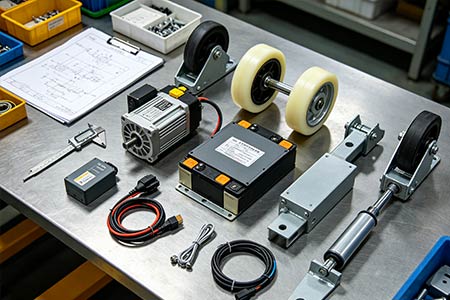
Define fork arm spacing, fork length and rated load clearly. Verify overall machine stability under dual‑pallet loading condition in accordance with GB/T 26949 industrial standard. Avoid modifying main chassis unnecessarily. Make adaptive adjustments based on proven base model to balance cost and reliability.
Clarify component specifications. Verbal agreements in OEM projects often cause inconsistency between prototype and mass‑production parts. Complete written BOM list shall be confirmed, covering drive motor, controller, battery type and wheel material.
Choose lead‑acid or lithium‑ion battery as required; confirm quick‑swap function for lithium versions. Select polyurethane or nylon wheels according to warehouse floor condition. For export orders, make sure complete CE document package is available and certificate model matches customized unit to prevent customs hold‑up. Body color, logo silk‑screen and nameplate content belong to regular cosmetic OEM modifications.
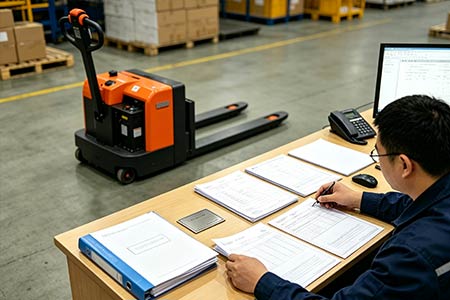
Carry out prototype testing before mass production. Real‑site simulation tests are compulsory after prototype completion. Run full‑load cycle tests for single‑pallet and double‑pallet modes respectively. Inspect dual‑fork lifting synchronization, travelling power, brake performance and overload protection.
Pay close attention to body shaking and hydraulic pressure drop under dual‑pallet working condition. Resolve all defects found in prototype trial before launching mass production. Do not place bulk orders merely according to drawings, which may result in full‑batch rework.
To sum up, OEM customization for electric double pallet truck needs reasonable adjustment. Following above checklist helps you avoid common sourcing risks.
-
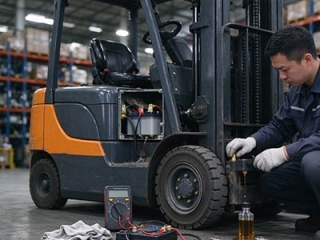 Reliability Of Newnewton Warehouse Forklifts For Heavy-Duty ShiftsWarehouse forklift reliability relies on industrial parts, reinforced frames and factory durability tests. Proper operation and maintenance reduce unexpected downtime.
Do you like ?0
Read more -
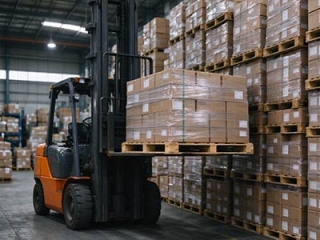 Forklift Configuration Strategy For Dense Warehousing, Warehouse ForkliftDense warehousing needs matched forklifts besides racks. Reach and trilateral stackers fit different layouts, coordinate aisle, load curve and floor for smooth handling.
Do you like ?0
Read more -
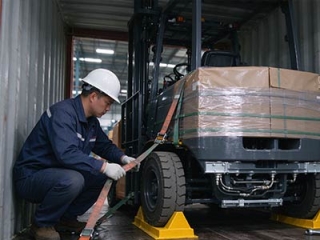 Full Container Supply For Export Forklifts, Forklift ManufacturerBulk forklift orders for overseas can ship by FCL or LCL. Newnewton FCL offers stable freight, safer packing and mixed models for large purchases.
Do you like ?0
Read more -
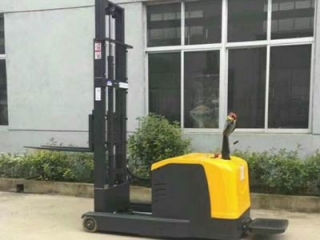 Stand-on Reach Stacker For Narrow Aisle Stacking, Mast Reach StructureStand-on reach stackers feature sliding masts that stay outside racks. They boost storage density in narrow aisles and require flat floors and standard pallets.
Do you like ?0
Read more -
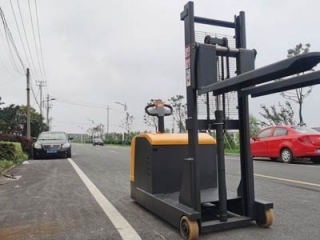 Stand-on Counterbalance Stacker For Various Pallets, Why No Leg RestrictionCounterbalance stackers have no front outriggers, using rear counterweight to avoid pallet interference. They fit various odd pallets yet need wider warehouse aisles.
Do you like ?0
Read more -
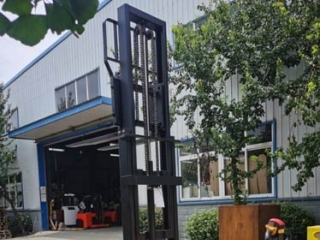 Custom Walk-Behind Counterbalance Stacker | Non-Standard ModificationsStandard walk-behind counterbalance stackers struggle with non-standard pallets and tight aisles. Customize load, lift, forks and structure, share working conditions for safe design.
Do you like ?0
Read more








