Electric forklift controller circuit diagram, how much do you know?
Circuit diagram analysis of electric forklift controller
This article will analyze the circuit diagram of the electric forklift controller in detail, and analyze its working principle and debugging method in combination with the actual application scenarios.
Circuit principle
1. Power Circuit:
The controller adopts a regulated power supply circuit to convert the 36V voltage of the battery into 12V to supply power to the control circuit. The regulated power supply consists of TL431 and Q3, and the 12V supply voltage can be calibrated by adjusting the VR6.
2. PWM Generation Circuit:
The PWM circuit uses the TL494 pulse-width modulator as the core, and generates an oscillation frequency of about 12kHz through R3, C4, and the internal circuit.
3. Motor drive circuit:
The motor drive circuit is composed of Q1, Q2, Q4 and other components to control the permanent magnet DC brush motor. The width-shifting pulse output by TL494 is reversed-phase amplified by Q1 to drive VDMOS transistor Q2. The wider the low-level part of the widened pulse output of the (8) pin of the TL494, the longer the Q2 on-time and the higher the motor speed. D1 is the motor freewheeling diode to prevent Q2 breakdown.
4. Battery discharge indication circuit:
The discharge indication circuit uses LM324 chip, through four comparators, according to the change of battery voltage, to control the LED light to indicate the battery power status.
5. Battery over-discharge protection circuit:
When the battery voltage is lower than 31.5V, the (1) pin of LM324 outputs a low level, and the triode Q5 is turned on, forcing the TL494 to cut off the internal widening pulse output tube, and the motor stops running and enters the battery protection state.
6. Motor over-current protection circuit:
When the motor current exceeds the set value, the sampling voltage on the R30 exceeds the threshold, and the TL494 internal op amp 2 outputs a high level to stop the motor from running and protect the motor.
7. Brake Protection:
When braking, KEY2 is turned on, forcing the TL494 to cut off the internal widening pulse output tube, and the motor stops running.
debugging
During the debugging process, the speed regulation circuit, braking circuit, overcurrent protection circuit, and battery discharge indication circuit should be tested respectively to ensure the normal operation of each functional module.
Fuel level display circuit
The fuel display circuit uses the LM339 chip, which controls the LED light to turn on and off according to the change of battery voltage to indicate the battery level.
Improvement scenarios
Application scenarios
The circuit diagram of the electric forklift controller is widely used in various electric forklifts to control the speed, direction, braking and other functions of the motor to improve work efficiency and safety.
summary
This article analyzes the circuit diagram of the electric forklift controller in detail, and introduces its working principle, debugging methods and application scenarios. We hope to help readers better understand the design and application of electric forklift controllers.
Use Hall speed knob instead of photoelectric speed knob.
Use a microcontroller for more complex control functions
-
 Newnewton Forklift Manufacturer, Forklift CE Certification for ExportNewnewton forklift factory offers full CE certification complying with EN ISO 3691, complete technical documents and OEM service to reduce customs detention risks.
Do you like ?0
Read more -
 Electric Forklift Vs Diesel Forklift, Warehouse Selection GuideElectric forklift is zero-emission and quiet for indoor clean warehouses. Diesel forklift offers strong power for outdoor heavy-duty tasks.
Do you like ?0
Read more -
 Narrow Aisle Stacker Forklift Custom Manufacturer for WarehouseCustom narrow aisle stacker for non-standard racking. Adjust body, mast and fork specs, upgrade power and protection, site survey available.
Do you like ?0
Read more -
 4WD All Terrain Rough Terrain Forklift Climbing for Mountain Sites4WD rough terrain forklift works on unpaved roads. Observe load climbing limit, attachments optional for forest and construction sites.
Do you like ?0
Read more -
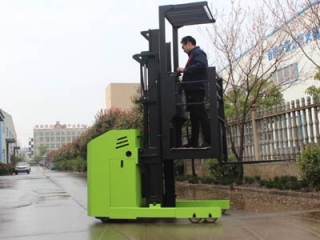 Man-Up Order Picker for High Level Picking, Suitable Warehouse ModesMan-up high level order picker for high-level split picking. Not for full pallet stacking, check rack, aisle and floor before selection.
Do you like ?0
Read more -
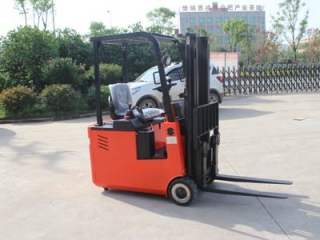 Narrow Aisle Operation Of Three-Wheel Forklift With Compact Turning RadiusThree-point electric forklift features small turning radius for narrow aisles. Reserve safety margin and check floor condition during selection.
Do you like ?0
Read more