Precautions for starting and driving electric forklifts and electric tractors
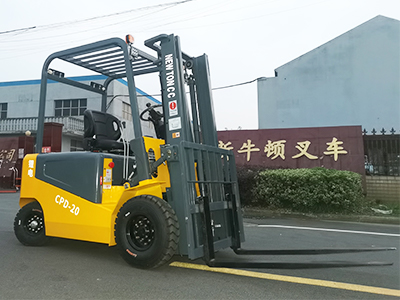
Before driving an electric forklift, the driver should first inspect and clean the site and passages to make them suitable for forklift operation and towing;
2. The forklift manufacturer stipulates that when starting, the emergency switch should be turned on and the electric lock should be turned on first. The forklift manufacturer should then position the direction switch, sound the horn, and slowly start and gradually accelerate. It is prohibited to quickly step on the speed control pedal to start, in order to prevent the motor from being burnt out due to excessive starting current;
3. When driving, gradually accelerate and do not allow prolonged low-speed driving; When meeting or giving way, empty vehicles should give way to heavy vehicles;
4. It is strictly prohibited to turn the direction switch during driving. Only after the vehicle has stopped stably can the direction switch be turned to change direction. Try to avoid sudden braking. In case of emergency, quickly pull down the knife switch, step on the brake pedal, and stop immediately;
5. Electric forklifts should honk their horns when starting or turning. When turning, downhill, on uneven roads, or passing through narrow channels, they should slow down and pay attention to safety;
6. When driving on the road, it is necessary to rely on the right side for passage. The forklift fork should be about 100mm~200mm above the ground, and the gantry should be in a backward tilt position; When two vehicles are driving in the same direction, a distance of at least 2 meters should be maintained between the front and rear
7. When multiple forklifts (tractors) are traveling on the platform, the distance between the front and rear should be more than 5m. When traveling in the same direction on a narrow platform, parallel operation should be strictly prohibited, and the distance from the edge of the platform should be more than 0.3m;
8. When a forklift or tractor is towing a trailer, the forklift manufacturer prohibits continuous curve driving to avoid high current discharge and impact on safety; Whether fully loaded, unloaded, uphill, downhill, etc., reverse driving is strictly prohibited; When turning, slow down and avoid the scattering of goods. At the same time, pay attention to the inner wheel difference to prevent the trailer from scratching the inside or driving out of the road;
9. The loading height of the electric forklift trailer shall not exceed 15m from the vehicle floor, and the width of both sides shall not exceed 200mm from the edge of the trailer; Tractors are not allowed to turn when driving on slopes above 10%, and it is strictly prohibited to operate on slopes above 5%; In general, the walking motor and oil pump motor of battery forklifts are prohibited from working simultaneously to extend the service life of the battery;
When the working voltage is lower than the minimum limit voltage of the vehicle, it should be stopped and charged in a timely manner; 12. If any abnormal phenomena are found during driving, immediately stop the vehicle for inspection and promptly eliminate the fault; Forks and trailers are prohibited from carrying people; It is strictly prohibited to drive with faults.

3、 The operation of electric forklifts after stopping.
After using the machinery, the entire vehicle should be cleaned in a timely manner and parked in a suitable place, paying attention to antifreeze, sun exposure, and rain;
2. The electric lock should be turned off, the emergency switch should be pulled down, the directional switch and light switch should be placed in the "O" position, the cargo fork should be placed on the ground, and the piston rods of each oil cylinder should be retracted into the oil cylinder, and the hand brake should be applied;
3. Clean and inspect the battery, replenish distilled water, check and adjust the specific gravity of the electrolyte; Check the battery voltage and charge it in a timely manner; When the battery voltage is less than the minimum limit voltage, it should be charged immediately; 4. Check if there is any leakage in the oil pipes, joints, oil cylinders, distribution valves, oil tanks, etc. of the hydraulic system;
5. Carry out shift handover work for electric forklifts, complete shift maintenance projects, Forklift manufacturers require special attention to the maintenance of mechanical safety devices and their technical status.
-
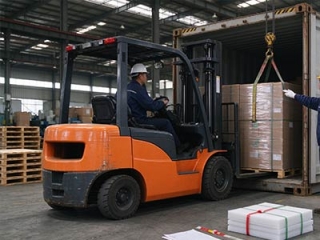 Newnewton Forklift Manufacturer, Forklift CE Certification for ExportNewnewton forklift factory offers full CE certification complying with EN ISO 3691, complete technical documents and OEM service to reduce customs detention risks.
Do you like ?0
Read more -
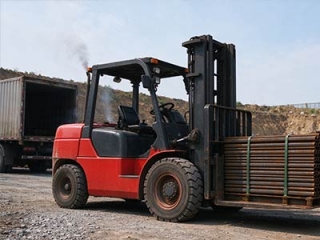 Electric Forklift Vs Diesel Forklift, Warehouse Selection GuideElectric forklift is zero-emission and quiet for indoor clean warehouses. Diesel forklift offers strong power for outdoor heavy-duty tasks.
Do you like ?0
Read more -
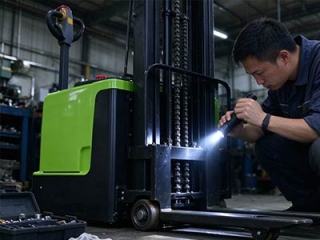 Narrow Aisle Stacker Forklift Custom Manufacturer for WarehouseCustom narrow aisle stacker for non-standard racking. Adjust body, mast and fork specs, upgrade power and protection, site survey available.
Do you like ?0
Read more -
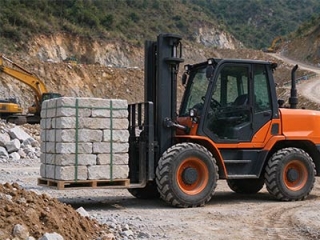 4WD All Terrain Rough Terrain Forklift Climbing for Mountain Sites4WD rough terrain forklift works on unpaved roads. Observe load climbing limit, attachments optional for forest and construction sites.
Do you like ?0
Read more -
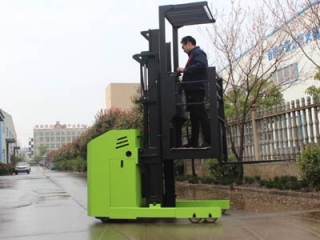 Man-Up Order Picker for High Level Picking, Suitable Warehouse ModesMan-up high level order picker for high-level split picking. Not for full pallet stacking, check rack, aisle and floor before selection.
Do you like ?0
Read more -
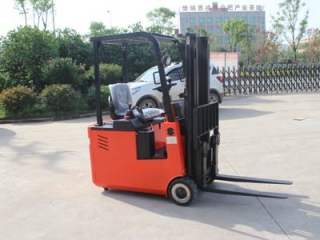 Narrow Aisle Operation Of Three-Wheel Forklift With Compact Turning RadiusThree-point electric forklift features small turning radius for narrow aisles. Reserve safety margin and check floor condition during selection.
Do you like ?0
Read more