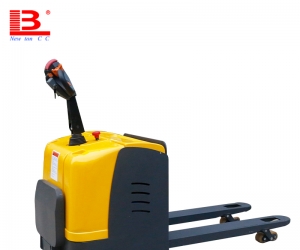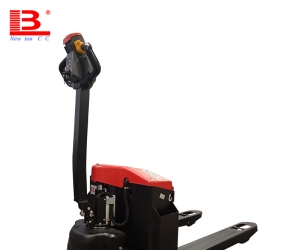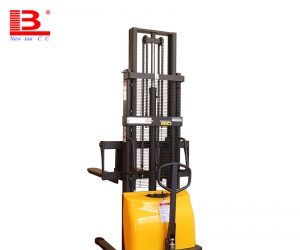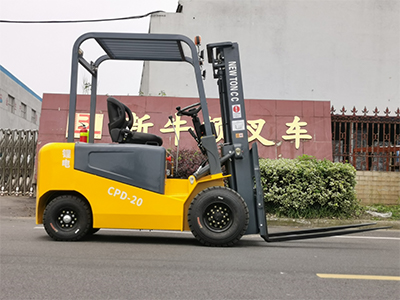
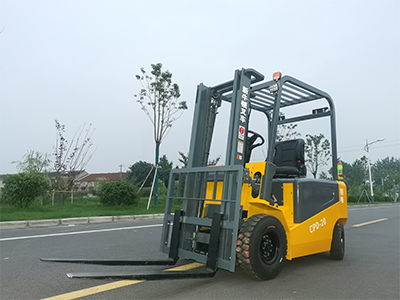
Electric forklift machinery and corresponding internal combustion machinery are generally the same in structure, so the operating methods are also basically the same. Since the driving speed and reversing of the battery machine are realized by changing the current size and direction of the drive motor, it has no mechanical transmission and clutch device. Instead, it directly controls the speed with the speed regulating pedal and changes the driving direction of the machine (forward or reverse) with the reversing switch. Electric machinery has no speed, and as soon as the driving motor rotates, the machinery starts; Its speed is controlled by the speed control pedal; Foot and hand brakes combined with deceleration parking. Although the basic operating methods of various forklifts produced by forklift manufacturers are the same, they also have their own characteristics due to differences in vehicle models and structures. When operating, it is necessary to repeatedly experience the manipulation amount and weight of each mechanism in order to achieve proficiency and ensure safety.
Preparation work for electric forklifts before driving
Drivers should conduct the following technical inspections on electric forklifts and electric tractors before starting work:
1. Check the height and specific gravity of the battery electrolyte level. The liquid level of the battery electrolyte should be 10mm~15mm higher than the partition; The specific gravity should meet the requirements of the region and season; The voltage of a single cell shall not be lower than 1.75V, and the voltage of the entire vehicle shall not be lower than the minimum limit voltage (such as 21V for 0t electric vehicles and 35V for 2t electric traction vehicles). Otherwise, the electrolyte shall be supplemented and charged; Each electrode joint should be clean and fastened; Wear work clothes in strict accordance with the requirements of the forklift manufacturer, and it is strictly prohibited to wear shirtless, bare feet, high heels, and sandals when participating in operations;
2. Check the power circuit. All wire joints should be tightly connected and in good contact, the fuse should be intact, and all switches and handles should be in the stop position;
3. Close the emergency switch of the electric forklift, open the electric lock, and check whether the instruments, lights, horns, etc. work normally;
4. Check the steering mechanism, which should be flexible and lightweight;
5. Check the braking device, which should be flexible and reliable;
6. Check whether all bearings and related operating parts are well lubricated and operate flexibly;
7. Check whether the traveling part and forklift hydraulic system work normally, especially whether there is oil leakage in hydraulic components such as pipelines, joints, cylinder distribution valves, etc;
8. Forklift manufacturers select forks based on the size of the loaded and unloaded goods, install them on the forks, and adjust the distance; Select the blocking frame of the clamping device and adjust it appropriately according to the height of the goods;
9. Check that the forks, locking mechanisms, lateral mechanisms, lifting chains, gantry frames, etc. of electric forklifts are in good working condition and reliable in use;
10. When towing a trailer with a forklift or tractor, an appropriate number of trailers should be selected and the towing hook should be checked for secure connection;
11. If any faults are found, they should be promptly resolved and the vehicle should be driven without any faults.
-
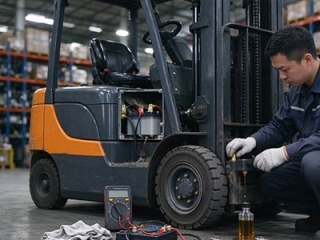 Reliability Of Newnewton Warehouse Forklifts For Heavy-Duty ShiftsWarehouse forklift reliability relies on industrial parts, reinforced frames and factory durability tests. Proper operation and maintenance reduce unexpected downtime.
Do you like ?0
Read more -
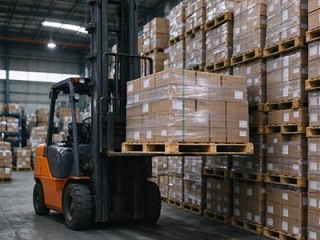 Forklift Configuration Strategy For Dense Warehousing, Warehouse ForkliftDense warehousing needs matched forklifts besides racks. Reach and trilateral stackers fit different layouts, coordinate aisle, load curve and floor for smooth handling.
Do you like ?0
Read more -
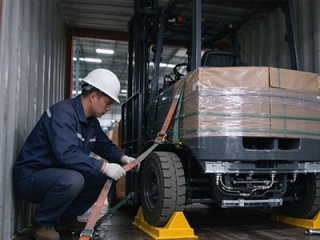 Full Container Supply For Export Forklifts, Forklift ManufacturerBulk forklift orders for overseas can ship by FCL or LCL. Newnewton FCL offers stable freight, safer packing and mixed models for large purchases.
Do you like ?0
Read more -
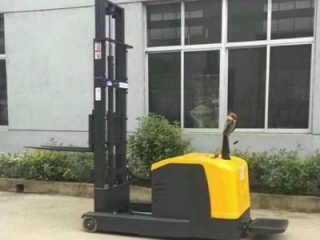 Stand-on Reach Stacker For Narrow Aisle Stacking, Mast Reach StructureStand-on reach stackers feature sliding masts that stay outside racks. They boost storage density in narrow aisles and require flat floors and standard pallets.
Do you like ?0
Read more -
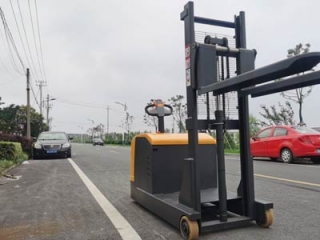 Stand-on Counterbalance Stacker For Various Pallets, Why No Leg RestrictionCounterbalance stackers have no front outriggers, using rear counterweight to avoid pallet interference. They fit various odd pallets yet need wider warehouse aisles.
Do you like ?0
Read more -
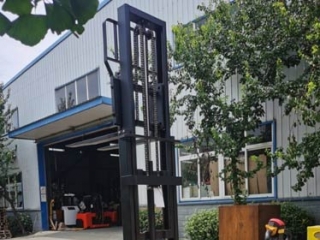 Custom Walk-Behind Counterbalance Stacker | Non-Standard ModificationsStandard walk-behind counterbalance stackers struggle with non-standard pallets and tight aisles. Customize load, lift, forks and structure, share working conditions for safe design.
Do you like ?0
Read more