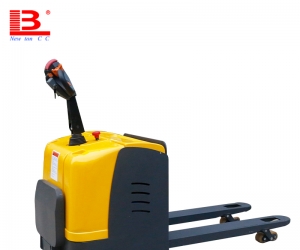
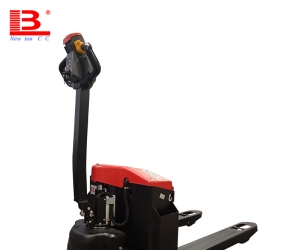
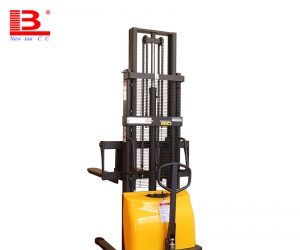
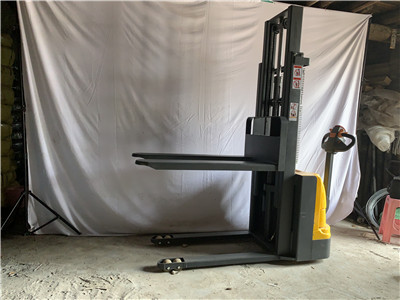
The electric stacker forklift is a logistics storage device with a battery as its main source. As a member of the forklift, the electric pallet stacker plays a very important role and is also indispensable in the forklift. Electric stacker forklift is often used in warehouses, workshops and other places where logistics is required. So how do you standardize the use of electric pallet stacker?
1. Electric stacker forklift starts
Check, insert the key into the electric lock, turn it clockwise, then lift the emergency stop switch to start the electric pallet stacker.
2. Forward/backward of electric stacker forklift
Move the control handle of the electric pallet stacker to your side and swing it down a suitable angle. (Leaving the vertical position but not pressing to the lowest position), then use the thumb to turn the two rotary switches: If you turn this switch forward, the electric stacker forklift will advance. If you turn this switch backwards, the electric pallet stacker will return.
3, the fork of the electric stacker forklift rises and falls
Press the up mark button on the control handle with your finger and the fork will rise; press the button with the down mark to lower the fork; release it immediately and stop lifting.
4, parking of electric pallet stacker
When the truck needs to stop smoothly, release the thumb and the rotary switch will automatically reset. At this point, the controller will generate a reverse current and the electric stacker forklift will move a short distance and then stop smoothly.
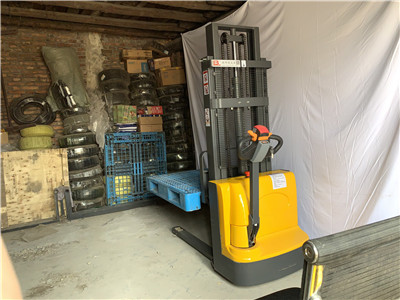
5, Electric pallet stacker charging
When the fuel gauge emits a flashing signal, that is, the “depleted battery” alarm, electric stacker forklift should be charged in time.
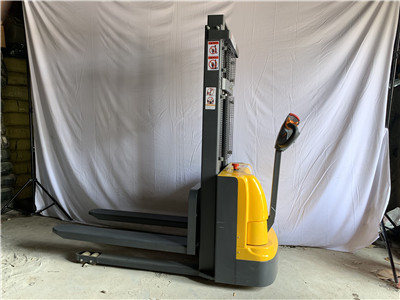
These are the basic operations that regulate the use of electric pallet stacker. Of course, it should also be noted that for safety reasons, the operator is familiar with the electric stacker forklift must be in open space. After basic familiarity, they can be used on the first and second floors of the shelf. After a month of familiarity, the operator can operate a stack of three, four and five layers of goods.
-
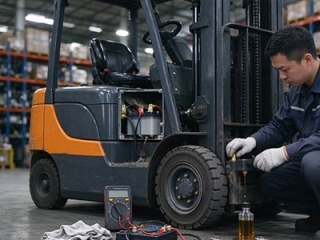 Reliability Of Newnewton Warehouse Forklifts For Heavy-Duty ShiftsWarehouse forklift reliability relies on industrial parts, reinforced frames and factory durability tests. Proper operation and maintenance reduce unexpected downtime.
Do you like ?0
Read more -
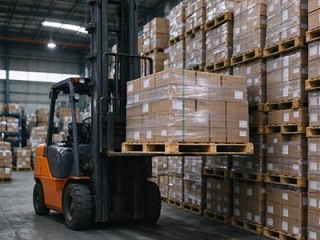 Forklift Configuration Strategy For Dense Warehousing, Warehouse ForkliftDense warehousing needs matched forklifts besides racks. Reach and trilateral stackers fit different layouts, coordinate aisle, load curve and floor for smooth handling.
Do you like ?0
Read more -
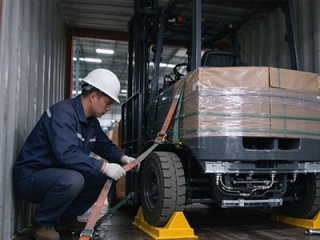 Full Container Supply For Export Forklifts, Forklift ManufacturerBulk forklift orders for overseas can ship by FCL or LCL. Newnewton FCL offers stable freight, safer packing and mixed models for large purchases.
Do you like ?0
Read more -
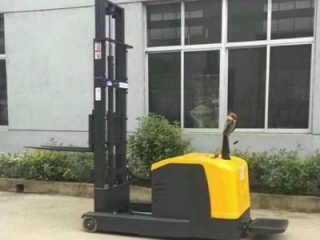 Stand-on Reach Stacker For Narrow Aisle Stacking, Mast Reach StructureStand-on reach stackers feature sliding masts that stay outside racks. They boost storage density in narrow aisles and require flat floors and standard pallets.
Do you like ?0
Read more -
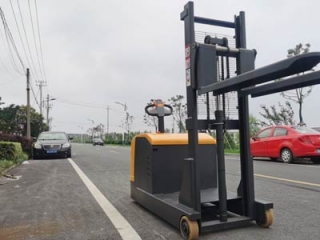 Stand-on Counterbalance Stacker For Various Pallets, Why No Leg RestrictionCounterbalance stackers have no front outriggers, using rear counterweight to avoid pallet interference. They fit various odd pallets yet need wider warehouse aisles.
Do you like ?0
Read more -
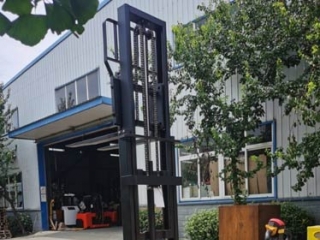 Custom Walk-Behind Counterbalance Stacker | Non-Standard ModificationsStandard walk-behind counterbalance stackers struggle with non-standard pallets and tight aisles. Customize load, lift, forks and structure, share working conditions for safe design.
Do you like ?0
Read more