Speed Control & Overcurrent Protection For Electric Stacker Motor Controller
As the core power component of electric warehouse trucks, the Electric Stacker Motor Controller realizes stepless speed adjustment by regulating output voltage and frequency. Current limiting protection acts as the most critical safety barrier within the speed control system. This article combines the Forklift Controller Speed Regulation Principle to thoroughly explain the operating logic and trigger conditions of current limiting protection.
Basic Speed Regulation Workflow of Forklift Controller
The operator manipulates the accelerator (travel pedal or rotary tiller) and sends target speed instructions to the Electric Stacker Motor Controller.
The controller calculates required output power according to signals and adjusts output voltage & current to drive the motor.
Under ideal no-load conditions, output current remains low. The controller fully follows accelerator signals and delivers linear speed rise.
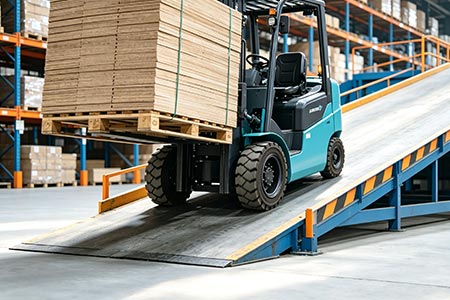
When load increases, such as heavy cargo, climbing slopes or wheel jamming, the motor demands higher current. Once the current hits the preset threshold, current limiting protection activates immediately.
Core underlying rule: Speed commands cannot exceed the upper current safety limit. No matter how large the accelerator signal is, output current will be confined within a safe preset range to prevent overcurrent burnout of the motor, controller and traction battery.
1. Soft Current Limiting (Most Common for Heavy Load & Climbing)
The Forklift Controller will not cut off power directly; it actively caps the maximum output current. Speed performance: Even with full accelerator input, output power is suppressed, and the motor cannot reach target speed. Operators will feel weak acceleration and limited maximum speed. Working logic: Rising load → current approaches limit threshold → controller reduces PWM duty cycle or output frequency → lower motor maximum rotational speed, which means the target speed is forced down. Typical working scenarios: Heavy-duty travelling, continuous slope operation, overloaded cargo.
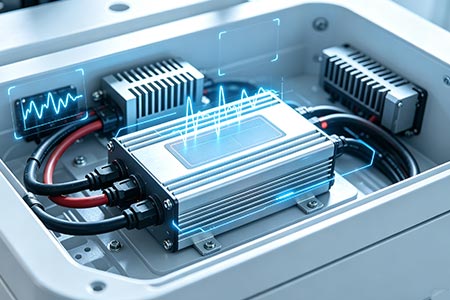
2. Hard Current Limiting Protection (Motor Stall & Extreme Overload)
Instant current surge exceeds the emergency protection threshold. Speed performance: Power cuts off instantly. You need to release the accelerator and re-trigger operation to resume movement. Working logic: Wheels stuck or sudden full acceleration from static status generates huge instantaneous impulse current. The Electric Stacker Motor Controller directly cuts power output to avoid high current damaging power tubes and motor windings.
Main Trigger Scenarios of Current Limiting Protection
Heavy-load startup High starting torque demand causes instantaneous current spikes, easily triggering current limits. High-quality controllers adopt soft-start speed curves to raise current gently and reduce frequent hard limiting activation.
Continuous uphill climbing Sustained heavy load keeps working current at a high level. The controller maintains soft limiting, so the truck can only climb slowly without acceleration.
Foreign objects tangled in wheels or excessive ground resistance Sudden load resistance forces the motor to draw higher current to maintain preset speed, triggering limiting and speed reduction. Long-term forced operation creates repeated impact stress on electronic components.
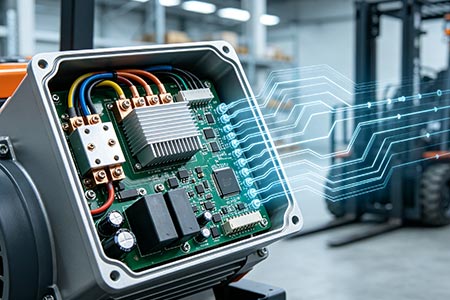
Low battery voltage To maintain the same output power under low voltage, the system needs larger current, making it easier to reach the current limit threshold. The vehicle obviously becomes weaker when battery power drops.
Current limiting derating caused by high component temperature When the Electric Stacker Motor Controller or motor overheats, the system automatically lowers the current limit threshold and enters power reduction speed regulation mode, known as thermal power limiting protection.
Above introduces the Forklift Controller Speed Regulation Principle and current limiting protection mechanism. If you have further questions or want to watch relevant videos about the motor controller and forklift electrical systems, contact us to get technical materials.
-
 Reliability Of Newnewton Warehouse Forklifts For Heavy-Duty ShiftsWarehouse forklift reliability relies on industrial parts, reinforced frames and factory durability tests. Proper operation and maintenance reduce unexpected downtime.
Do you like ?0
Read more -
 Forklift Configuration Strategy For Dense Warehousing, Warehouse ForkliftDense warehousing needs matched forklifts besides racks. Reach and trilateral stackers fit different layouts, coordinate aisle, load curve and floor for smooth handling.
Do you like ?0
Read more -
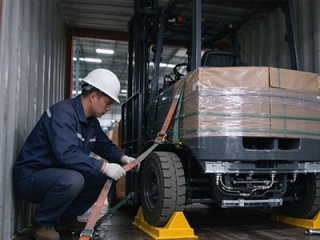 Full Container Supply For Export Forklifts, Forklift ManufacturerBulk forklift orders for overseas can ship by FCL or LCL. Newnewton FCL offers stable freight, safer packing and mixed models for large purchases.
Do you like ?0
Read more -
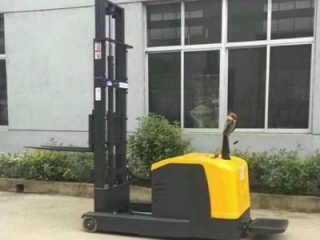 Stand-on Reach Stacker For Narrow Aisle Stacking, Mast Reach StructureStand-on reach stackers feature sliding masts that stay outside racks. They boost storage density in narrow aisles and require flat floors and standard pallets.
Do you like ?0
Read more -
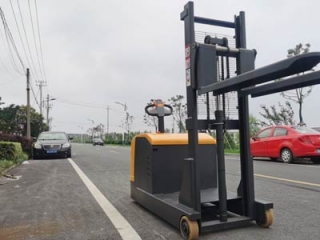 Stand-on Counterbalance Stacker For Various Pallets, Why No Leg RestrictionCounterbalance stackers have no front outriggers, using rear counterweight to avoid pallet interference. They fit various odd pallets yet need wider warehouse aisles.
Do you like ?0
Read more -
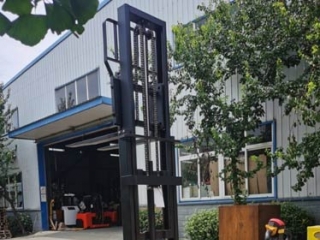 Custom Walk-Behind Counterbalance Stacker | Non-Standard ModificationsStandard walk-behind counterbalance stackers struggle with non-standard pallets and tight aisles. Customize load, lift, forks and structure, share working conditions for safe design.
Do you like ?0
Read more