How To Choose Between Manual Stacker & Electric Stacker Complete Buying Guide
Many warehouse operators struggle to decide whether to buy a manual or electric stacker. This guide systematically compares Manual Stacker & Electric Stacker from application scenarios, power structure and labor intensity to help you make the right selection.
Working Scenario Analysis
Power Supply Conditions
Choose manual stacker if there are no fixed charging stations, temporary outdoor handling or limited power access. Electric stackers are suitable for warehouses with dedicated charging zones.
Lifting Height Limits
Standard manual stackers support lifting heights of 2–3m and are not recommended for ultra-high racks. For storage above 3m, electric stackers provide more stable lifting and easier operation.
Floor & Road Conditions
Both models work well on flat indoor floors. Warehouses with long ramps or thresholds create heavy pushing resistance for manual stackers; electric stackers deliver obvious advantages with built-in drive power.
Power Structure
Manual Stacker
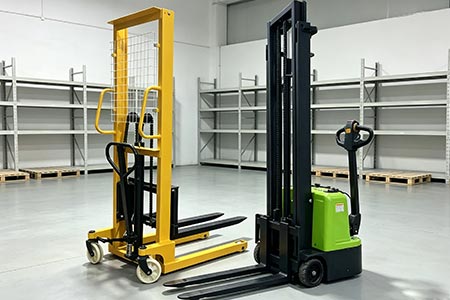
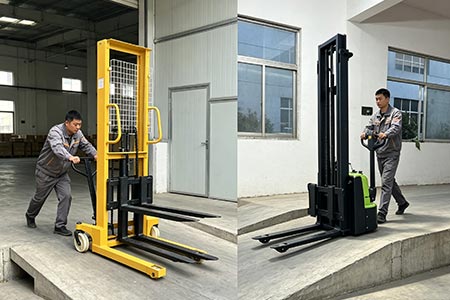
Lifting relies on manual foot pumping of the hydraulic pump. Vehicle movement is fully manual push-pull. No motors, batteries or controllers. Simple mechanical structure, no charging required and unrestricted by power sockets.
Electric Stacker (Two Main Types)
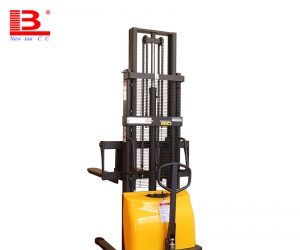
Semi-electric Stacker: Electric hydraulic lifting; movement still depends on manual pushing.
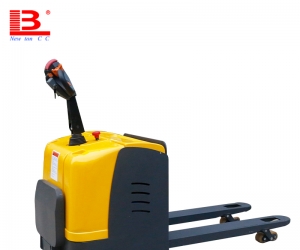
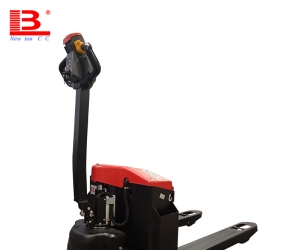
Full Electric Stacker: Both lifting and travelling are motor-driven via tiller operation without manual force. Equipped with battery, drive motor, hydraulic power unit and complete electronic control system; regular charging is required.
Labor Intensity
Manual Stacker: Repeated foot pumping is needed for heavy load lifting. Long-distance transport and ramp pushing are exhausting. Operators fatigue quickly under frequent shifts. High-level stacking above 3m becomes difficult.
Electric Stacker: One-touch electric lifting. Full electric models have travel power to drastically cut physical strain and support long continuous working hours.
Selection Recommendations
✅ Choose Manual Stacker if: Low daily stacking frequency, only for occasional restocking and stocktaking; Lifting height ≤ 3m, load within 1 ton for light-duty handling; Lack of charging facilities, temporary transfer or seasonal short-term usage; Limited budget for small shops or mini workshops with sporadic stacking.
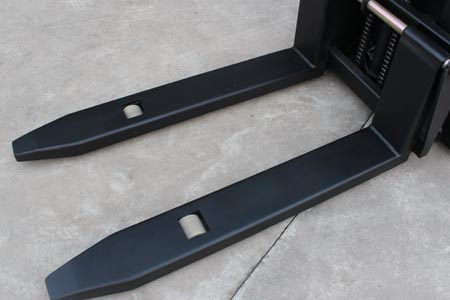
✅ Choose Electric Stacker if: Continuous daily stacking, high inbound & outbound volume and higher efficiency required; Rack height exceeds 3m with frequent high-level pallet access; Heavy cargo causing high labor pressure for manual operation; Large warehouse area requiring frequent cross-zone transport or gentle ramps; Only frequent lifting and short-distance moving → select semi-electric stacker; Frequent lifting plus long-distance transit → directly choose full electric stacker.
-
 Reliability Of Newnewton Warehouse Forklifts For Heavy-Duty ShiftsWarehouse forklift reliability relies on industrial parts, reinforced frames and factory durability tests. Proper operation and maintenance reduce unexpected downtime.
Do you like ?0
Read more -
 Forklift Configuration Strategy For Dense Warehousing, Warehouse ForkliftDense warehousing needs matched forklifts besides racks. Reach and trilateral stackers fit different layouts, coordinate aisle, load curve and floor for smooth handling.
Do you like ?0
Read more -
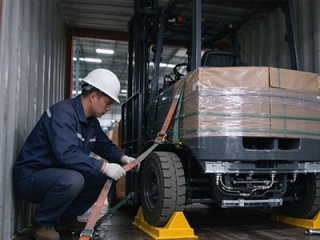 Full Container Supply For Export Forklifts, Forklift ManufacturerBulk forklift orders for overseas can ship by FCL or LCL. Newnewton FCL offers stable freight, safer packing and mixed models for large purchases.
Do you like ?0
Read more -
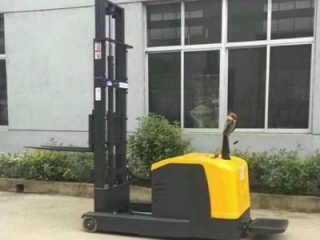 Stand-on Reach Stacker For Narrow Aisle Stacking, Mast Reach StructureStand-on reach stackers feature sliding masts that stay outside racks. They boost storage density in narrow aisles and require flat floors and standard pallets.
Do you like ?0
Read more -
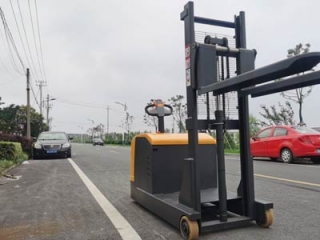 Stand-on Counterbalance Stacker For Various Pallets, Why No Leg RestrictionCounterbalance stackers have no front outriggers, using rear counterweight to avoid pallet interference. They fit various odd pallets yet need wider warehouse aisles.
Do you like ?0
Read more -
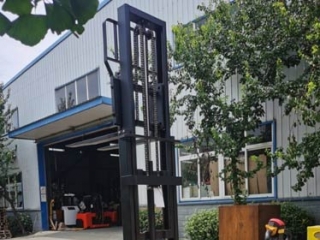 Custom Walk-Behind Counterbalance Stacker | Non-Standard ModificationsStandard walk-behind counterbalance stackers struggle with non-standard pallets and tight aisles. Customize load, lift, forks and structure, share working conditions for safe design.
Do you like ?0
Read more