
5 Key Notes for Warehouse Forklift Polyurethane Tire Replacement
Forklift operators usually focus on motors, masts and forks to avoid equipment downtime. However, warehouse forklift polyurethane tires are easily overlooked, yet they greatly affect driving stability and operational safety. Worn, chipped or cracked tires will cause deviation, abnormal noise and accelerated component damage if replaced improperly. Follow these 5 key precautions for replacing worn forklift tires.
Confirm tire model and load parameters Verify the original tire diameter, width, hub pitch and rated load before replacement. Polyurethane tires come with different hardness levels. Low-hardness tires offer quieter operation but lower wear resistance. High-hardness tires feature better durability and suit high-frequency working conditions. Mismatched tire specifications lead to difficult installation, insufficient load capacity and premature wear.
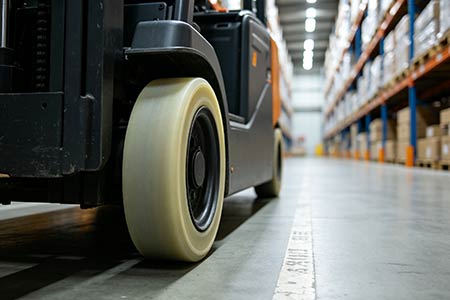
Check hub and bearing condition Do not install new tires directly after removing old ones. Carefully check the hub for deformation and rust. Inspect bearings for excessive clearance, jamming and abnormal noise. Installing new warehouse forklift polyurethane tires on damaged bearings causes uneven force. The new tires will wear out quickly, so faulty bearings must be replaced synchronously.
Keep consistent tires on the same axle Two tires on one axle must be identical in model, hardness and wear degree. Different tire specifications result in unbalanced rolling resistance on both sides. This causes forklift drifting, stiff steering and accelerated wear of tires and masts. Always replace tires in pairs instead of single replacement.
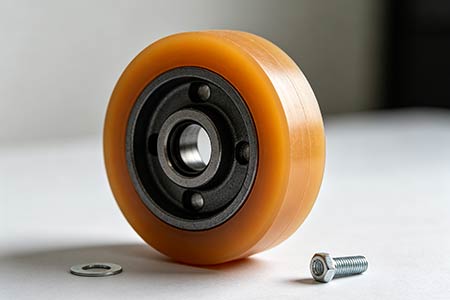
Install in place and fasten bolts with standard torque Clean dust and burrs on the hub surface to ensure a flat fitting surface. Tighten bolts diagonally and evenly instead of fastening one side at a time to avoid hub skew. Follow factory standard torque values. Loose fasteners cause wheel shaking, while excessive torque leads to bolt thread slipping.
Test run and check ground conditions after replacement Do not start heavy-load operation immediately after tire installation. Test drive at low speed with no load to check for drifting, abnormal noise and vibration. Perform light-load trial operation after confirming normal driving. Polyurethane tires have limited anti-slip performance. Clean wet or oily warehouse floors to reduce slipping risks.
These are the core precautions for replacing worn forklift tires. Contact us for professional guidance if you have any questions about tire selection and replacement.
-
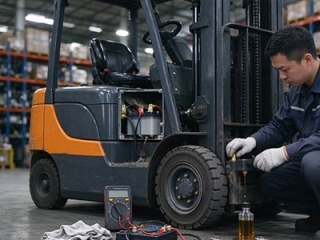 Reliability Of Newnewton Warehouse Forklifts For Heavy-Duty ShiftsWarehouse forklift reliability relies on industrial parts, reinforced frames and factory durability tests. Proper operation and maintenance reduce unexpected downtime.
Do you like ?0
Read more -
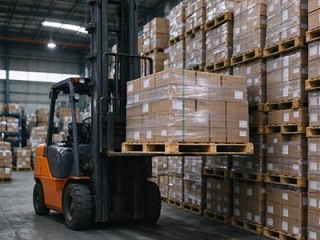 Forklift Configuration Strategy For Dense Warehousing, Warehouse ForkliftDense warehousing needs matched forklifts besides racks. Reach and trilateral stackers fit different layouts, coordinate aisle, load curve and floor for smooth handling.
Do you like ?0
Read more -
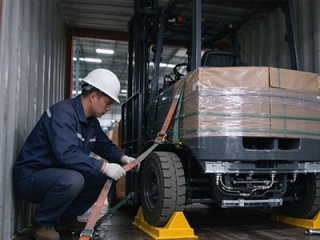 Full Container Supply For Export Forklifts, Forklift ManufacturerBulk forklift orders for overseas can ship by FCL or LCL. Newnewton FCL offers stable freight, safer packing and mixed models for large purchases.
Do you like ?0
Read more -
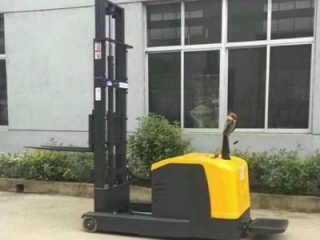 Stand-on Reach Stacker For Narrow Aisle Stacking, Mast Reach StructureStand-on reach stackers feature sliding masts that stay outside racks. They boost storage density in narrow aisles and require flat floors and standard pallets.
Do you like ?0
Read more -
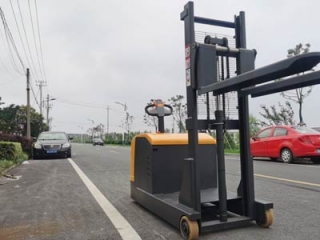 Stand-on Counterbalance Stacker For Various Pallets, Why No Leg RestrictionCounterbalance stackers have no front outriggers, using rear counterweight to avoid pallet interference. They fit various odd pallets yet need wider warehouse aisles.
Do you like ?0
Read more -
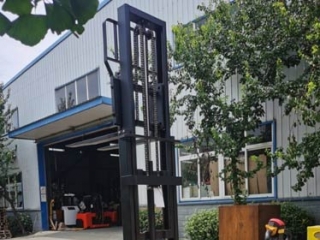 Custom Walk-Behind Counterbalance Stacker | Non-Standard ModificationsStandard walk-behind counterbalance stackers struggle with non-standard pallets and tight aisles. Customize load, lift, forks and structure, share working conditions for safe design.
Do you like ?0
Read more








