Forklift Configuration Strategy For Dense Warehousing, Warehouse Forklift
Many customers focus mainly on racking systems when building dense warehouses, while ignoring the matching between forklifts and racks. Even well-designed compact racks cannot deliver high throughput if handling equipment is mismatched. Operators may face issues such as inaccessible aisles and unstable stacking, which waste your early warehouse investment. This article shares the forklift configuration strategy for dense warehousing.
The core goal of dense warehousing is to balance storage density and operational efficiency within limited space.
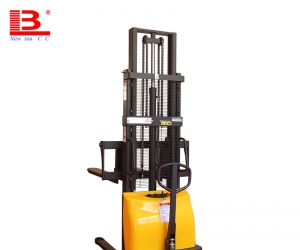
Aisle width is the first parameter to confirm. Different forklift models require different working spaces. Counterbalance stackers need wide turning aisles and are not ideal for high-density layouts. Reach stackers extend the mast forward to reduce aisle requirements and are widely used for high-level dense racking. Bi-directional and trilateral stackers take up the least aisle space, suitable for ultra-high-density racking areas.
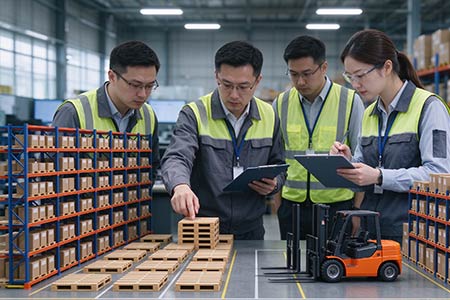
After confirming aisle size, check lifting height and load rating curves. Dense warehouses usually adopt high racks. Do not only refer to the rated load capacity. Verify the residual load capacity at the maximum lifting height according to the load curve to ensure stable cargo handling. Stability matters more than theoretical load capacity at high lifting positions, so you can avoid operational restrictions and potential safety hazards.
Equipment combination should match your warehouse workflow.
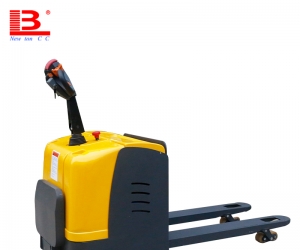
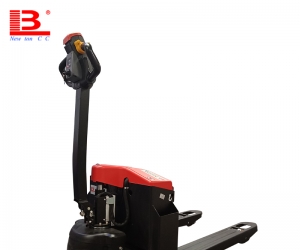
Stand-on reach stackers are preferred for full-pallet bulk inbound and outbound tasks to balance efficiency and cost. If order picking and scattered cargo transfer are required, you can add walkie electric pallet trucks for front-end pallet transportation and build a coordinated equipment fleet.
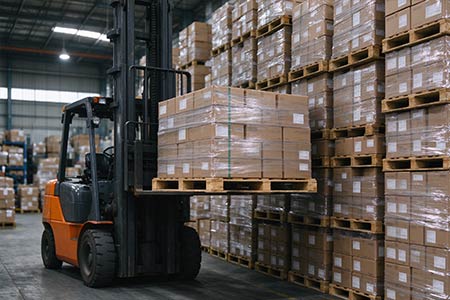
Floor condition is another critical factor. Reach-type stackers demand flat ground. Settlement and potholes will hinder mast sliding and threaten driving safety.
A qualified dense storage solution cannot rely on a single machine. Racks, pallets and warehouse-specific forklift must be planned together. Rack spacing, pallet size and fork length need mutual coordination. Many projects run into costly retrofits because forklifts are selected after rack installation, leading to conflicting parameters.
If you are planning a dense warehousing project, send us your aisle width, rack height, pallet size and daily throughput. We can provide a complete forklift configuration plan and budget reference for you.
-
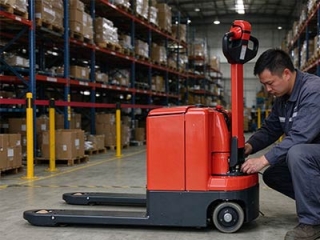 Maintenance Notes for Double Pallet Truck Under Heavy Warehouse LoadsOperators often ignore abnormal motor noise of double pallet trucks during rush orders. Continuous operation burns motors. Timely maintenance prevents failures.
Do you like ?0
Read more -
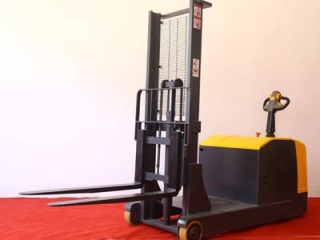 How to Get Accurate Quotations for Stand-on Counterbalance StackerStand-on counterbalance stackers rely on rear weight for stability and cost more. Battery, load, lift height and custom options affect final quotations.
Do you like ?0
Read more -
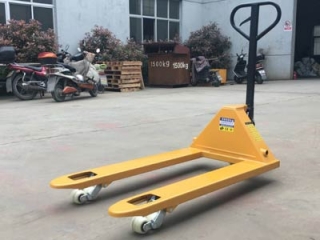 Manual Stacker Vs Pallet Jack: Key Operational Function DifferencesNew buyers confuse manual pallet trucks and manual stackers. They differ in lifting function. Pallet trucks for transfer, stackers for racking to avoid risks.
Do you like ?0
Read more -
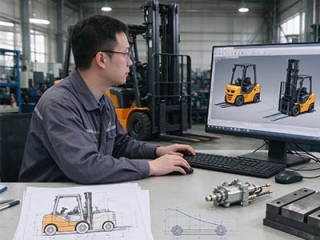 Custom Forklift Dimensions for Export to Fit Narrow Warehouse AislesForklift export faces size risks. Overseas orders may fail door, container or aisle fit. Customization needs balance of gravity, load and target market certifications.
Do you like ?0
Read more -
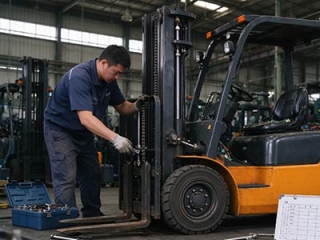 Forklift Safety Management Guide Based on Special Equipment SpecificationsForklifts are special equipment. Follow TSG 81 with training, records, inspection and on-site control to prevent accidents and penalties.
Do you like ?0
Read more -
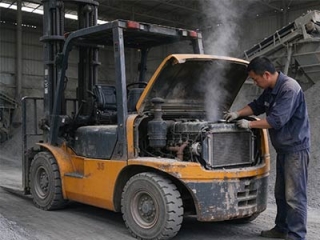 Heavy-Duty Diesel Forklift High Temperature Troubleshooting Guide3.5t diesel forklifts often overheat when handling sand and stone. Inspect cooling system step by step: radiator, belt, shroud, thermostat and water pump.
Do you like ?0
Read more