How many kinds of mobile lifting platforms can be divided into?
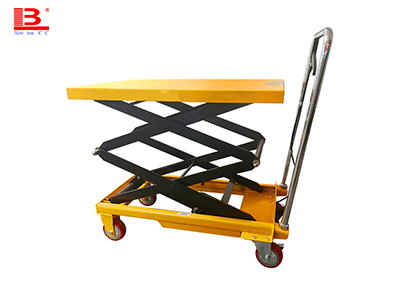
The lifting platform can be divided into many kinds. In terms of driving mode, there are manual platform scissor lift, semi-automatic lifting platform vehicles, and fully automatic lifting platform vehicles. In terms of usage, there are fixed platforms and mobile platform vehicles. In terms of load increase, there are small platform trucks that can be used in factory assembly lines and large high-altitude loads.
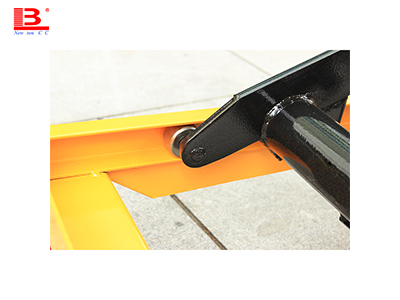
The small lifting platform is the most common one in the factory. This platform truck can be used to move and lift a small range of items. Because of its small size, it does not require much space. The ground is ordinary ceramic tiles or It is a concrete floor, preferably the kind that has been painted with floor paint. This small lifting platform truck has four casters, two directional wheels, two universal wheels, and the wheels are red silent wheels.

There are also semi-electric and all-electric small mobile platform vehicles. Semi-electric means walking manpower and electric lifting. When lifting, there is a guide wheel under the scissor, and the lifting is carried out by the contraction of the guide wheel. The same goes for manually moving the lifting platform. The lifting range of small platform trucks is generally more than 70 cm-180 cm. The table can be customized, the area of the table, whether the table is equipped with guide wheels, rollers and so on.
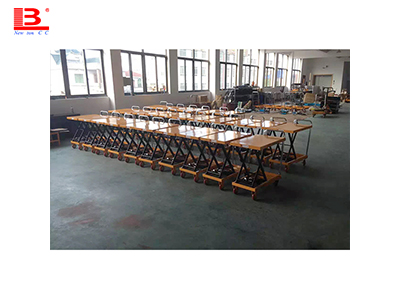
The high-altitude manned picking lifting platform truck can also be called the high-altitude automatic lifting platform truck, which is a kind of scissor-type lifting platform. Although the lifting height of this type of car is limited, the working platform is relatively large and has good weighing ability. Equipment can be placed on the table for operation. The working platform is made of high-strength manganese steel and imported hydraulic cylinders. The working range is limited to fixed vertical lifting. The maximum lifting height is 10 meters. Mainly suitable for high-altitude maintenance in the factory, crane maintenance and installation, etc.
-
 Reliability Of Newnewton Warehouse Forklifts For Heavy-Duty ShiftsWarehouse forklift reliability relies on industrial parts, reinforced frames and factory durability tests. Proper operation and maintenance reduce unexpected downtime.
Do you like ?0
Read more -
 Forklift Configuration Strategy For Dense Warehousing, Warehouse ForkliftDense warehousing needs matched forklifts besides racks. Reach and trilateral stackers fit different layouts, coordinate aisle, load curve and floor for smooth handling.
Do you like ?0
Read more -
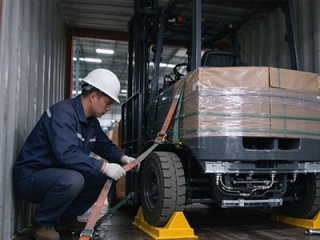 Full Container Supply For Export Forklifts, Forklift ManufacturerBulk forklift orders for overseas can ship by FCL or LCL. Newnewton FCL offers stable freight, safer packing and mixed models for large purchases.
Do you like ?0
Read more -
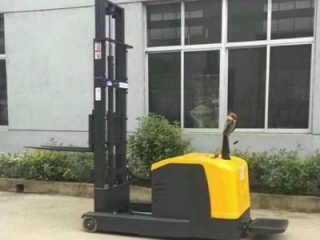 Stand-on Reach Stacker For Narrow Aisle Stacking, Mast Reach StructureStand-on reach stackers feature sliding masts that stay outside racks. They boost storage density in narrow aisles and require flat floors and standard pallets.
Do you like ?0
Read more -
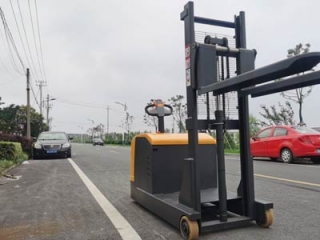 Stand-on Counterbalance Stacker For Various Pallets, Why No Leg RestrictionCounterbalance stackers have no front outriggers, using rear counterweight to avoid pallet interference. They fit various odd pallets yet need wider warehouse aisles.
Do you like ?0
Read more -
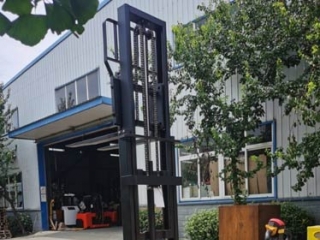 Custom Walk-Behind Counterbalance Stacker | Non-Standard ModificationsStandard walk-behind counterbalance stackers struggle with non-standard pallets and tight aisles. Customize load, lift, forks and structure, share working conditions for safe design.
Do you like ?0
Read more