How to deal with several common failures ofmanual hydraulic stackers?

The most common failure of manual hydraulic stacker is that the forks cannot be hit and the oil cylinder is leaking. This is the most common failure and the problem we deal with the most. If the fork of the manual stacker cannot hit, let's analyze the main cause of the failure and some troubleshooting methods.
In the first case, the fork frame of the manual stacker cannot reach the maximum height. The reason for this is insufficient hydraulic oil. The solution is to add hydraulic oil;
In the second case, the fork of the manual hydraulic stacker cannot be lifted. There are four possibilities:
1. There may be no hydraulic oil, this only needs to be refueled;
2. It may be that the hydraulic oil is impure, let out all the hydraulic oil in the cylinder and replace the hydraulic oil again;
3. It may be that the adjusting nut is too high. Opening the unloading valve can increase the test pressure of the adjusting nut;
4. There may be air in the hydraulic oil. It is sufficient to remove the air in the hydraulic oil. The exhaust method is to pull the finger handle to the lower position, and then pull the handle to reciprocate up and down several times.
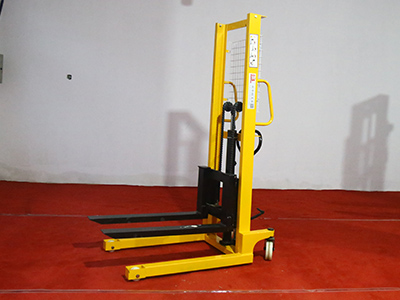
The fork of the manual hydraulic stacker cannot be lowered:
1. The piston rod or cylinder body is damaged and deformed due to the goods being biased to one side or overload, just replace the piston rod or cylinder body;
Second, it may be that the fork frame of the manual stacker has been in a raised position for a long time, and the piston rod is exposed and rusted, making the piston unable to move. The solution is to lower the fork frame of the manual hydraulic stacker when not in use. To the lowest position, pay attention to timely lubrication of the piston rod;
Third, the position of the adjusting nut may be wrong. The solution is to adjust the nut.
There are also some common faults, such as the aging or damage of the seals of the manual stacker, and the damage of certain parts causing oil leakage. The solution is to replace the seals and parts.
-
 Reliability Of Newnewton Warehouse Forklifts For Heavy-Duty ShiftsWarehouse forklift reliability relies on industrial parts, reinforced frames and factory durability tests. Proper operation and maintenance reduce unexpected downtime.
Do you like ?0
Read more -
 Forklift Configuration Strategy For Dense Warehousing, Warehouse ForkliftDense warehousing needs matched forklifts besides racks. Reach and trilateral stackers fit different layouts, coordinate aisle, load curve and floor for smooth handling.
Do you like ?0
Read more -
 Full Container Supply For Export Forklifts, Forklift ManufacturerBulk forklift orders for overseas can ship by FCL or LCL. Newnewton FCL offers stable freight, safer packing and mixed models for large purchases.
Do you like ?0
Read more -
 Stand-on Reach Stacker For Narrow Aisle Stacking, Mast Reach StructureStand-on reach stackers feature sliding masts that stay outside racks. They boost storage density in narrow aisles and require flat floors and standard pallets.
Do you like ?0
Read more -
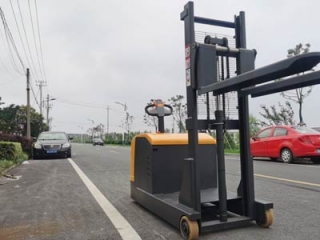 Stand-on Counterbalance Stacker For Various Pallets, Why No Leg RestrictionCounterbalance stackers have no front outriggers, using rear counterweight to avoid pallet interference. They fit various odd pallets yet need wider warehouse aisles.
Do you like ?0
Read more -
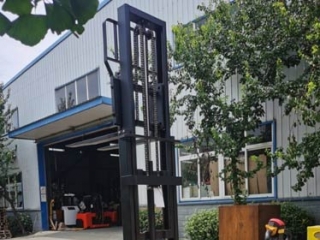 Custom Walk-Behind Counterbalance Stacker | Non-Standard ModificationsStandard walk-behind counterbalance stackers struggle with non-standard pallets and tight aisles. Customize load, lift, forks and structure, share working conditions for safe design.
Do you like ?0
Read more