
Many factories and logistics warehouses adopt hydraulic dock leveler for loading‑bay renovation. Some buyers only focus on load capacity without recognizing structural differences. Wrong model selection, such as choosing mobile type for pit‑required installation or installing fixed unit without civil‑work condition, leads to unusable equipment after installation. This article sorts out four main categories of hydraulic dock ramp.
Fixed Hydraulic Dock Leveler
Fixed type is most widely used in logistics parks and large factories. It shall be embedded into pre‑dug pit on loading platform. Electric‑hydraulic driven with strong load capacity of 8‑15 tons, it fits containers and box trucks. When idle, its surface stays flush with platform without occupying passage space, suitable for warehouses with high‑volume 24‑hour loading operations. The drawback lies in necessary civil‑work construction. Retrofitting old warehouses without reserved pits will generate high reconstruction cost.
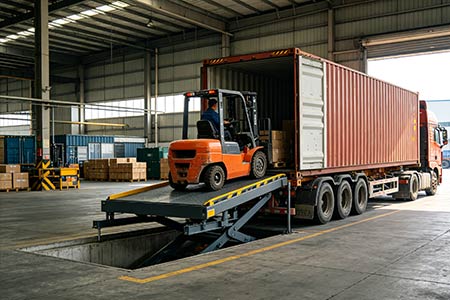
Mobile Hydraulic Dock Ramp
Mobile hydraulic dock leveler requires no pit excavation. Equipped with travelling wheels, it can be moved freely between working spots and connects trucks without permanent loading platform. Manual‑hydraulic and electric‑hydraulic versions are available with 6‑12‑ton load range. It suits temporary loading spots, multi‑site operation and factories without standardized dock. It needs storage space and is not designed for non‑stop heavy‑duty cycles. Support legs must be deployed during operation for stability.
Edge‑of‑Dock Hydraulic Leveler
Edge‑of‑dock model is ideal for old‑warehouse renovation. It mounts directly onto dock end face without pit digging, featuring short installation cycle and minimal site damage. Limited adjustment stroke and inferior heavy‑load stability compared with pit‑mounted fixed units, its load capacity is mostly 6‑8 tons. It fits medium‑frequency loading tasks in small‑medium manufacturing plants and e‑commerce warehouses with limited civil‑work budget.
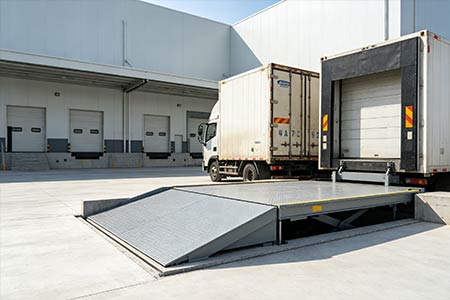
Recessed Hydraulic Dock Leveler
Recessed hydraulic dock ramp fully retracts inside dock pit and keeps flush with platform when idle for neat appearance. Pit dimension must be confirmed in early‑stage plant planning, and retrofitting on existing warehouses is difficult. Mainly applied in newly‑built high‑standard cold‑storage warehouses and large distribution centers. Though with higher cost, it owns reasonable force‑bearing structure and excellent anti‑deformation performance under heavy‑load conditions, preferred for projects with strict site neatness and safety requirements.
If you are looking for hydraulic dock leveler and confused about model selection, contact us for free digital catalog and one‑on‑one customized service to get matched loading‑bay equipment efficiently.
-
 Reliability Of Newnewton Warehouse Forklifts For Heavy-Duty ShiftsWarehouse forklift reliability relies on industrial parts, reinforced frames and factory durability tests. Proper operation and maintenance reduce unexpected downtime.
Do you like ?0
Read more -
 Forklift Configuration Strategy For Dense Warehousing, Warehouse ForkliftDense warehousing needs matched forklifts besides racks. Reach and trilateral stackers fit different layouts, coordinate aisle, load curve and floor for smooth handling.
Do you like ?0
Read more -
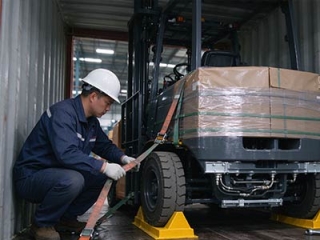 Full Container Supply For Export Forklifts, Forklift ManufacturerBulk forklift orders for overseas can ship by FCL or LCL. Newnewton FCL offers stable freight, safer packing and mixed models for large purchases.
Do you like ?0
Read more -
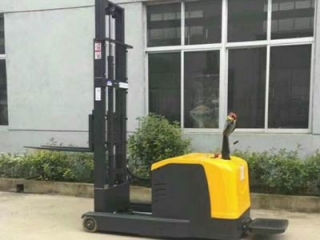 Stand-on Reach Stacker For Narrow Aisle Stacking, Mast Reach StructureStand-on reach stackers feature sliding masts that stay outside racks. They boost storage density in narrow aisles and require flat floors and standard pallets.
Do you like ?0
Read more -
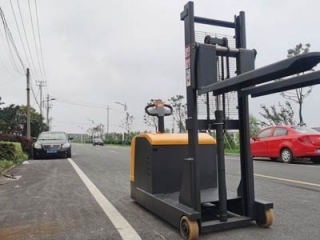 Stand-on Counterbalance Stacker For Various Pallets, Why No Leg RestrictionCounterbalance stackers have no front outriggers, using rear counterweight to avoid pallet interference. They fit various odd pallets yet need wider warehouse aisles.
Do you like ?0
Read more -
 Custom Walk-Behind Counterbalance Stacker | Non-Standard ModificationsStandard walk-behind counterbalance stackers struggle with non-standard pallets and tight aisles. Customize load, lift, forks and structure, share working conditions for safe design.
Do you like ?0
Read more








