Summer Maintenance Tips How to Maintain Lithium Battery Forklift in Hot Weather
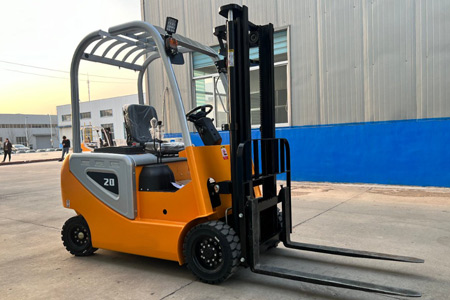
Under intense outdoor sunlight and stuffy enclosed workshops in summer, lithium battery forklifts are prone to overheated batteries, sharp range drop, electric control alarms and accelerated capacity attenuation. Many operators only use the equipment without regular maintenance, which easily leads to battery bulging and severe capacity loss within just one or two years, resulting in high replacement costs. Mastering practical high temperature forklift maintenance tips can reduce unexpected downtime and greatly prolong the service life of both the whole vehicle and lithium batteries.
Tip 1: Avoid charging in extreme heat
Never charge the forklift immediately after working under direct midday sun. Let it cool down for 30 minutes first, then start charging in cool and well-ventilated areas. Do not charge under blazing sunshine. Keep the charging space dry and airy, and place the charger away from the forklift body to avoid accumulated heat.
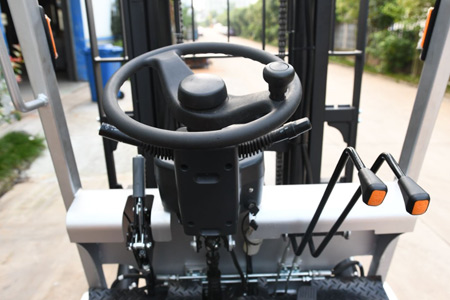
Tip 2: Reasonably arrange working hours
Avoid long-time full-load continuous operation in hot weather. Stop regularly for heat dissipation to reduce the load on motors and batteries. Cut down frequent climbing, heavy-load rapid start and sudden stop actions to slow down overall heat generation and protect electric control and driving systems.
Tip 3: Inspect heat dissipation regularly
Clean dust and debris on the battery surface frequently, and do not block heat dissipation holes. Check cooling fans and wire connectors regularly. Repair aging and overheating wires in time to prevent short circuit and fire risks caused by high temperature.
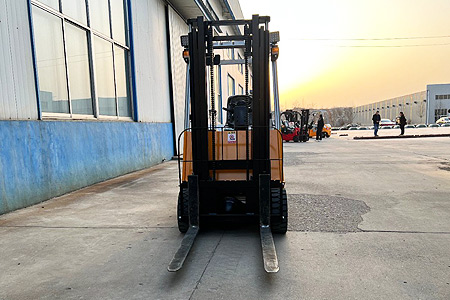
Tip 4: Correct parking methods
Do not park lithium battery forklifts in open areas exposed to strong sunlight for a long time. Choose cool warehouses or shaded places for storage. For long-term idle use, keep the battery power level between 50% and 70%. Neither fully charged nor empty battery storage under high temperature is allowed, which will cause severe damage to battery cells.
In conclusion, standard summer maintenance for lithium battery forklift effectively solves common summer faults such as system alarms, poor endurance and early battery aging. It helps you save plenty of repair and battery replacement costs, and keeps your forklift stable and low-failure all year round.
-
 Reliability Of Newnewton Warehouse Forklifts For Heavy-Duty ShiftsWarehouse forklift reliability relies on industrial parts, reinforced frames and factory durability tests. Proper operation and maintenance reduce unexpected downtime.
Do you like ?0
Read more -
 Forklift Configuration Strategy For Dense Warehousing, Warehouse ForkliftDense warehousing needs matched forklifts besides racks. Reach and trilateral stackers fit different layouts, coordinate aisle, load curve and floor for smooth handling.
Do you like ?0
Read more -
 Full Container Supply For Export Forklifts, Forklift ManufacturerBulk forklift orders for overseas can ship by FCL or LCL. Newnewton FCL offers stable freight, safer packing and mixed models for large purchases.
Do you like ?0
Read more -
 Stand-on Reach Stacker For Narrow Aisle Stacking, Mast Reach StructureStand-on reach stackers feature sliding masts that stay outside racks. They boost storage density in narrow aisles and require flat floors and standard pallets.
Do you like ?0
Read more -
 Stand-on Counterbalance Stacker For Various Pallets, Why No Leg RestrictionCounterbalance stackers have no front outriggers, using rear counterweight to avoid pallet interference. They fit various odd pallets yet need wider warehouse aisles.
Do you like ?0
Read more -
 Custom Walk-Behind Counterbalance Stacker | Non-Standard ModificationsStandard walk-behind counterbalance stackers struggle with non-standard pallets and tight aisles. Customize load, lift, forks and structure, share working conditions for safe design.
Do you like ?0
Read more