
Maintenance Tips: Change Load Wheels and Steering Wheels of Pallet Jack
Wheels are wearing parts on manual hydraulic pallet trucks. After long-time operation on cement or gravel ground, polyurethane wheels may crack, delaminate or have seized bearings. Timely replacement avoids stiff pushing and tilted pallets and keeps smooth handling. How to replace wheels of manual hydraulic pallet truck? A pallet truck has load wheels and steering wheels, and their disassembly steps are slightly different.
Prepare matching wheels, circlip pliers, hammer, dust seals and other spare parts in advance and confirm the wheel model matches the original one. For load wheel replacement, fully release the hydraulic pressure and lower the forks to the lowest position. Tilt or prop up the truck body to lift the load wheels off the ground.
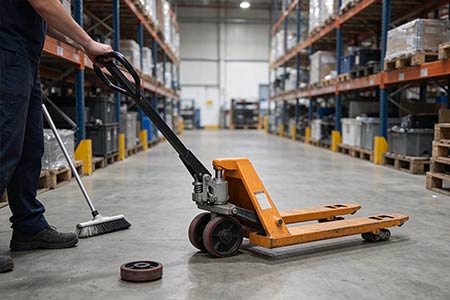
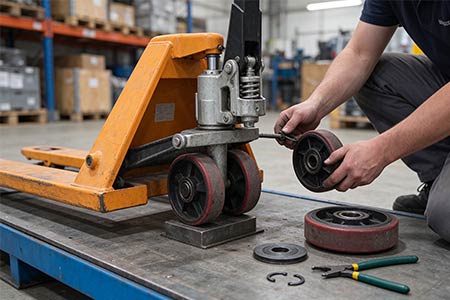
Remove circlips on both ends of the axle with circlip pliers, knock out the axle gently and take out the old wheel, bearing and spacer sleeve. Check bearing wear. Replace the bearing together if there is excessive clearance. Fit the spacer sleeve and new wheel in order, insert the axle and reinstall the circlip. Make sure the circlip locks firmly into the groove and will not fall off.
Steering wheel replacement is relatively easier as the steering assembly is usually integrated. Lift the truck body to suspend the steering wheel, remove the circlip on the steering axle and knock out the axle to take out the old wheel. Fit the new wheel and keep dust washers in place to block dust and grit from entering the bearing. Refit the axle and circlip, then spin the wheel manually to check smooth rotation without jamming or uneven wear.
After all wheels are fitted, push and pull the truck repeatedly for testing. Check free rotation and abnormal noise during steering. If the manual pallet truck wheel rubs against the bracket or the truck runs off track, check for missing spacer washers and confirm the axle is seated properly. Regularly clear wire and strapping debris stuck between wheels in daily use to extend wheel service life.
FAQ
Q: Polyurethane wheel or nylon wheel, which one to choose?
A: Polyurethane wheels are preferred for flat indoor floors, quiet and floor-friendly. Nylon wheels offer better wear resistance for rough and gravel ground.
Q: Why is the truck heavy to push after wheel replacement?
A: It is usually caused by over-tight circlips, damaged bearings or crooked axle. Disassemble and reposition the components.
-
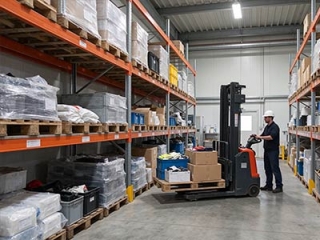 Semi-Electric Stacker for Factory Warehouse, Low-Lift Semi-Electric StackerSemi-electric stackers with electric lift and manual push are easy to operate. Ideal for production lines, cold rooms and low-height stacking tasks.
Do you like ?0
Read more -
 Light Manual Hydraulic Stacker for Small Warehouse Low-Frequency Stacking1t manual stacker fits small hardware & e-commerce warehouses with tight budgets. No charging or license needed for low-frequency stacking. Check lift margin and floor condition.
Do you like ?0
Read more -
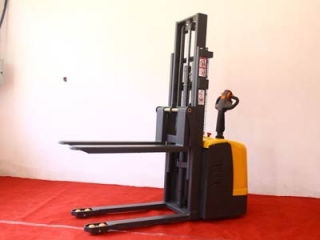 Standard Workflow of Special Stand-on Stacker for Pallet StackingNew operators struggle with stand-on electric stackers. Follow standard procedures, pre-shift inspection and low-speed travel to cut mistakes and learn fast.
Do you like ?0
Read more -
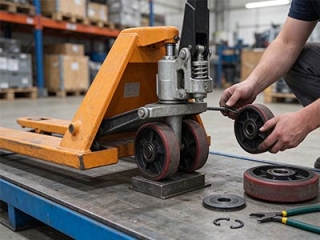 Maintenance Tips: Change Load Wheels and Steering Wheels of Pallet JackWheels of manual pallet trucks are wearing parts. PU wheels crack and jam easily. Load and steering wheels differ in disassembly. Match parts and test after replacement.
Do you like ?0
Read more -
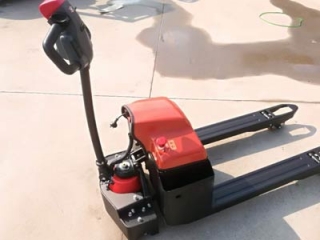 Walkie Electric Pallet Jack: Rated Load vs Actual Load CapacityMany buyers mix rated load and actual load of walkie pallet trucks. Load capacity drops with changed ground, center of gravity and pallets. Reserve load margin for safe selection.
Do you like ?0
Read more -
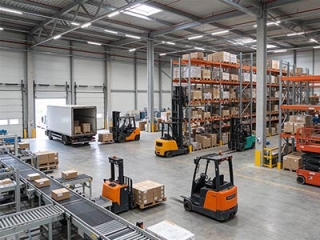 Full Product Range of Newnewton Forklift for Warehouse Handling SolutionsNewnewton forklifts cover five series for transport, stacking and offloading. Customization and export services are available for diverse warehouse applications.
Do you like ?0
Read more








