
Standard Workflow of Special Stand-on Stacker for Pallet Stacking
New warehouse operators may feel unfamiliar with the control logic and stacking rhythm when using stand-on electric stackers for the first time. Mastering standard procedures helps them get started smoothly and reduce operation errors. This article sorts out the detailed operation procedure of stand-on electric stacker for enterprises and operators.
Complete pre-shift inspection before operation. Check the body for deformation and damage, inspect tyre wear and confirm sufficient battery power. Verify that the control handle, lift buttons and emergency stop button work properly and there is no hydraulic oil leakage. Clear the working aisle to ensure a flat ground free of debris and reserve enough operating space around racks.
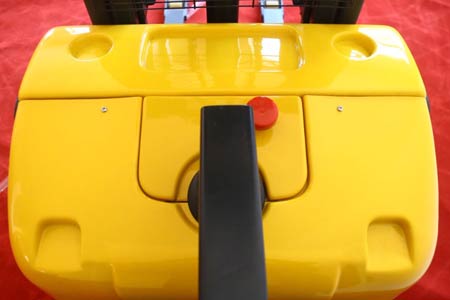
For operation, stand in the designated area and hold the control handle. Release the emergency stop switch and start the truck slowly. Keep low speed while travelling in the warehouse and slow down in advance before turning. Watch out for nearby staff and goods. When approaching the pallet, adjust the forks to align with pallet openings and insert them steadily. Lift the forks slowly only after the forks are fully under the pallet to raise the pallet off the ground.
Transport the cargo to the rack position, align with the storage slot and fine-tune the angle of the truck and forks. Lift slowly to the required stacking height. After confirming the pallet lines up with rack beams, lower the forks steadily to place the goods. Once the pallet is set down, lower the forks slightly to separate from the pallet and reverse the truck gently to finish one stacking cycle.
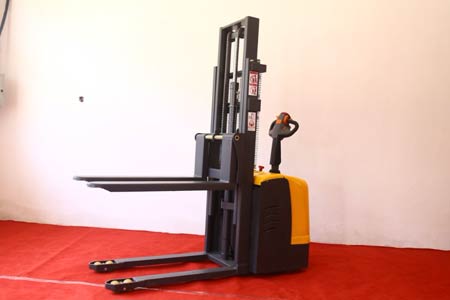
After finishing work, drive the truck to the designated parking area. Lower the forks completely to the lowest position, turn off the power and activate the emergency stop. Clean the truck and briefly record its running condition. Always remember not to overload, carry passengers or stack goods on slopes. Stay focused during high-lifting operations and avoid fast blind lifting and lowering.
The stand-on stacker for stacking features simple controls. The handle integrates travelling and lifting functions with clear operation marks. With this standard workflow, new operators can handle regular warehouse stacking independently after short training.
-
 Semi-Electric Stacker for Factory Warehouse, Low-Lift Semi-Electric StackerSemi-electric stackers with electric lift and manual push are easy to operate. Ideal for production lines, cold rooms and low-height stacking tasks.
Do you like ?0
Read more -
 Light Manual Hydraulic Stacker for Small Warehouse Low-Frequency Stacking1t manual stacker fits small hardware & e-commerce warehouses with tight budgets. No charging or license needed for low-frequency stacking. Check lift margin and floor condition.
Do you like ?0
Read more -
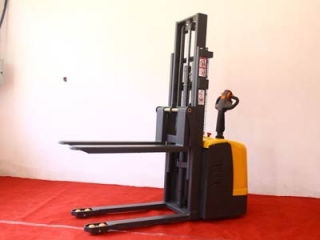 Standard Workflow of Special Stand-on Stacker for Pallet StackingNew operators struggle with stand-on electric stackers. Follow standard procedures, pre-shift inspection and low-speed travel to cut mistakes and learn fast.
Do you like ?0
Read more -
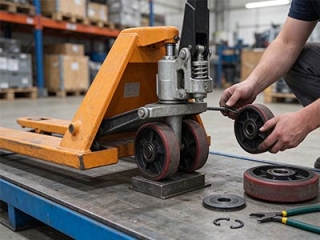 Maintenance Tips: Change Load Wheels and Steering Wheels of Pallet JackWheels of manual pallet trucks are wearing parts. PU wheels crack and jam easily. Load and steering wheels differ in disassembly. Match parts and test after replacement.
Do you like ?0
Read more -
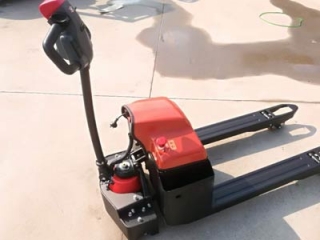 Walkie Electric Pallet Jack: Rated Load vs Actual Load CapacityMany buyers mix rated load and actual load of walkie pallet trucks. Load capacity drops with changed ground, center of gravity and pallets. Reserve load margin for safe selection.
Do you like ?0
Read more -
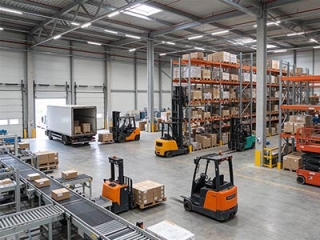 Full Product Range of Newnewton Forklift for Warehouse Handling SolutionsNewnewton forklifts cover five series for transport, stacking and offloading. Customization and export services are available for diverse warehouse applications.
Do you like ?0
Read more








