Troubleshoot Manual Hydraulic Pallet Jack Fault, Locate Oil Leak Points Fast
You do not need to panic when you run into a manual hydraulic pallet jack fault. You can carry out simple self-inspection to locate the root cause, and many minor issues can be handled on your own. Oil leakage is one of the most frequent failures, and the shared checking methods here help you diagnose and solve manual hydraulic pallet truck oil leakage problems.
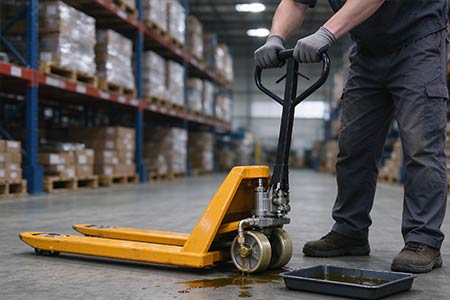
Check oil seals and sealing components. This is the most common trigger for leaks. Repeated lifting pressure, degraded hydraulic oil, low-temperature hardening or sand abrasion may deform or crack cylinder oil seals and valve spool gaskets. Leaks usually appear at the root of the cylinder piston rod, and dripping becomes more obvious during lifting. Seal wear deserves priority attention in daily maintenance.
Inspect hydraulic hoses and connectors. Long-term dragging, impact and squeezing may damage the outer hose layer. Loose joint bolts and aged gaskets also lead to slow seepage. Check for oil sludge around joints and shake connectors gently to see fresh oil outflow. Many of these faults can be fixed by tightening connections or replacing hoses and gaskets.
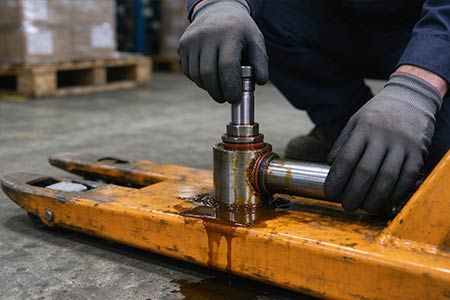
Examine the valve assembly. Worn steel balls and springs inside the valve or trapped dirt will break the return oil seal and let oil escape from valve gaps. This fault often comes with lifting failure or uncontrolled pressure release. Some units work well after cleaning dirt, while severe part wear requires a full valve replacement.
Above are the common causes of manual hydraulic pallet truck oil leakage. Wear proper protection during inspection. Lay the pallet truck flat and release pressure, wipe off surface oil stains, then pump the handle repeatedly to observe leak points. Tell simple repairable faults apart from severe damage needing spare parts. Contact us anytime if you have questions.
-
 Troubleshoot Manual Hydraulic Pallet Jack Fault, Locate Oil Leak Points FastManual hydraulic pallet jack oil leakage can be checked by inspecting oil seals, hose joints and valves. Release pressure first, tighten or replace parts as needed.
Do you like ?0
Read more -
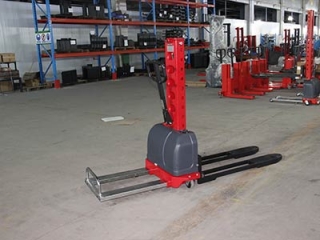 One Machine For Picking And Stacking, Benefits Of Self-Propelled Lifting StackerSelf-elevating stacker combines order picking and stacking, for high-level picking and pallet stacking. Check lifting height, load and width when selecting.
Do you like ?0
Read more -
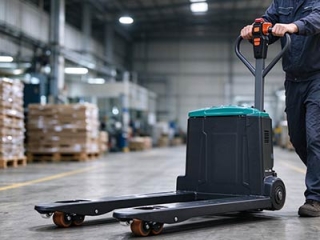 3 Key Parameters To Select Narrow Aisle Double Pallet Truck For Dense WarehouseHigh-density warehouses choose narrow aisle double pallet truck, check turning radius, load center and fork span, lithium battery optional to avoid operation risks.
Do you like ?0
Read more -
 How To Calibrate Weighing Pallet Jack, Fix Inaccurate Readings & Weight DriftScale pallet jack with fluctuating readings & weighing errors needs cleaning, flat ground and circuit check. Calibrate zero and span with standard weights, replace sensors if faulty.
Do you like ?0
Read more -
 Reliability Of Newnewton Warehouse Forklifts For Heavy-Duty ShiftsWarehouse forklift reliability relies on industrial parts, reinforced frames and factory durability tests. Proper operation and maintenance reduce unexpected downtime.
Do you like ?0
Read more -
 Forklift Configuration Strategy For Dense Warehousing, Warehouse ForkliftDense warehousing needs matched forklifts besides racks. Reach and trilateral stackers fit different layouts, coordinate aisle, load curve and floor for smooth handling.
Do you like ?0
Read more