
Scissor Lift Safety Precautions, Mobile Scissor Lift Platform
Mobile scissor lift platforms are widely used for factory maintenance, venue construction and warehouse overhead work. Aerial work carries obvious risks, and you need to follow standard rules throughout the whole process. Learn these scissor lift safety precautions to prevent accidents.
Before starting work, inspect the site and machine. The ground must be flat and solid. Place support plates on soft ground to prevent sinking or tilting. Make sure four outriggers are fully extended and firmly supported without suspension.
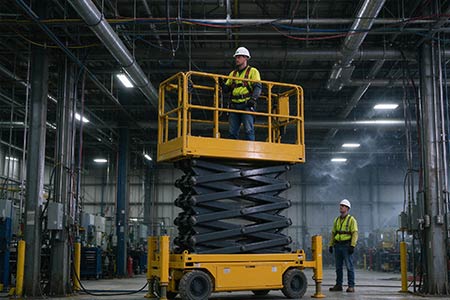
Check guardrails and gate latches. Test emergency stop, audible and visual alarms and tilt protection devices. Confirm no hydraulic leakage, intact tires and sufficient power. Never operate the machine with faults, abnormal noise or oil leaks.
For personal protection, operators must wear helmets and safety harnesses. Attach harnesses to independent fixed anchor points instead of guardrails. Do not exceed rated load and passenger limit. Distribute materials evenly to avoid unbalanced center of gravity. Do not lean on rails, climb or jump on the platform.
Operate lifting smoothly and avoid frequent tapping of control buttons. Do not move the platform when it is raised. Lower it fully before relocation. Keep away from overhead pipes and power lines to prevent electric shock. Stop work and lower the platform immediately in heavy wind, thunder or rain.
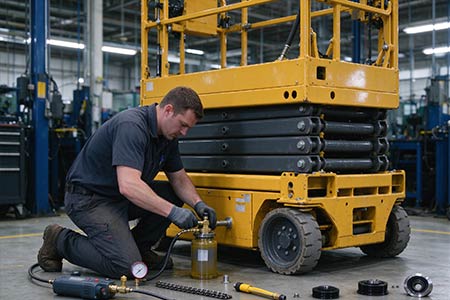
Regular maintenance also reduces risks. Check hydraulic oil, pins, chains and seals, and replace worn parts timely. Only qualified technicians can adjust limit switches and pressure protection devices. Operators must receive professional training. Untrained personnel are not allowed to use the equipment.
Following all mobile scissor lift platform safety rules greatly reduces aerial hazards. Contact us for purchase and maintenance support.
-
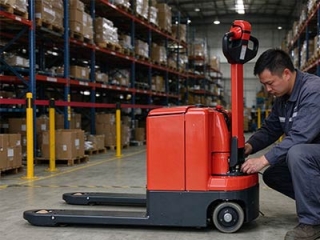 Maintenance Notes for Double Pallet Truck Under Heavy Warehouse LoadsOperators often ignore abnormal motor noise of double pallet trucks during rush orders. Continuous operation burns motors. Timely maintenance prevents failures.
Do you like ?0
Read more -
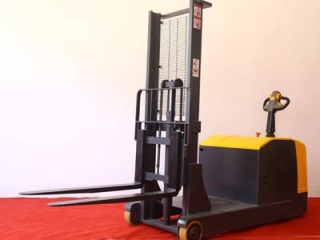 How to Get Accurate Quotations for Stand-on Counterbalance StackerStand-on counterbalance stackers rely on rear weight for stability and cost more. Battery, load, lift height and custom options affect final quotations.
Do you like ?0
Read more -
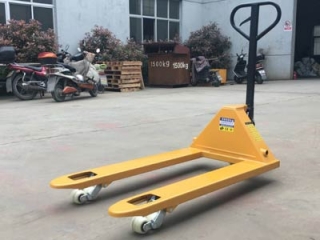 Manual Stacker Vs Pallet Jack: Key Operational Function DifferencesNew buyers confuse manual pallet trucks and manual stackers. They differ in lifting function. Pallet trucks for transfer, stackers for racking to avoid risks.
Do you like ?0
Read more -
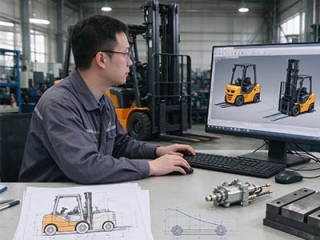 Custom Forklift Dimensions for Export to Fit Narrow Warehouse AislesForklift export faces size risks. Overseas orders may fail door, container or aisle fit. Customization needs balance of gravity, load and target market certifications.
Do you like ?0
Read more -
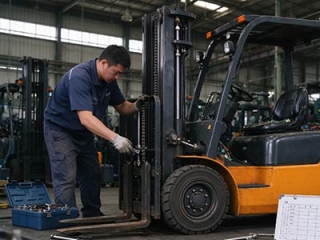 Forklift Safety Management Guide Based on Special Equipment SpecificationsForklifts are special equipment. Follow TSG 81 with training, records, inspection and on-site control to prevent accidents and penalties.
Do you like ?0
Read more -
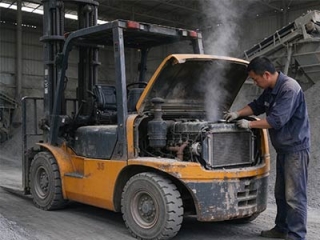 Heavy-Duty Diesel Forklift High Temperature Troubleshooting Guide3.5t diesel forklifts often overheat when handling sand and stone. Inspect cooling system step by step: radiator, belt, shroud, thermostat and water pump.
Do you like ?0
Read more








