Guide to the use and maintenance of manual stackers
Seal replacement
When the seal is replaced, air may enter the hydraulic system, so the lever needs to be placed in the lowest position and then the handle is repeatedly swung a dozen times to expel the air.
Lubricate moving parts with hydraulic or lubricating oil to reduce wear
Daily inspection and maintenance
Inspect manual stackers regularly to minimize wear and tear.
Particular attention is paid to inspecting the wheels, axles, forks, lifting and lowering handling sections.
After each job, the forks should be left unloaded and lowered to the lowest position.
Operational precautions
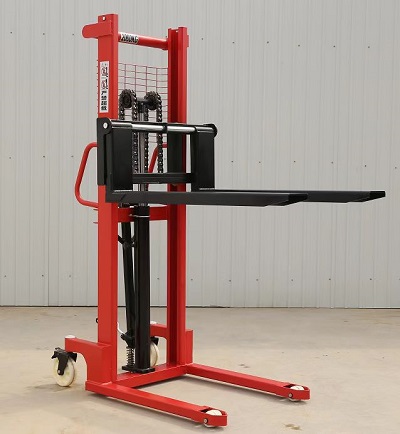
Since battery damage can have a significant impact on the vehicle, the operator must familiarize himself with the condition of the vehicle before using it.
It is forbidden to allow unsupervised personnel to operate the vehicle at will.
The vehicle cannot accelerate for a long time.
Before starting, you should slow down for a few seconds before accelerating.
When driving, do not mistake the Forward and Backward directional buttons for the steering buttons.
Safety Tips
Ensure that operators have the necessary safety knowledge and operational skills.
Regularly inspect the vehicle's hydraulic system, brake system, and other critical components.
Be aware of your surroundings and avoid collisions or accidents
The inspection of the manual stacker minimizes wear and tear and requires special attention to the wheels, axles, forks, lifting and lowering operations. At the end of each job, the forks should be unloaded and lowered to the lowest position.
Therefore, the damage to the manual stacker will be relatively large; The operator must be familiar with the condition of the vehicle before use, and shall not let unlicensed personnel operate it at will; The vehicle cannot accelerate to start for a long time; Slow down before driving, slow down for a few seconds and then accelerate; When the vehicle is advancing, do not mistake the Forward and Backward directional buttons for the turn buttons.
-
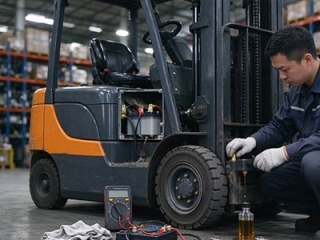 Reliability Of Newnewton Warehouse Forklifts For Heavy-Duty ShiftsWarehouse forklift reliability relies on industrial parts, reinforced frames and factory durability tests. Proper operation and maintenance reduce unexpected downtime.
Do you like ?0
Read more -
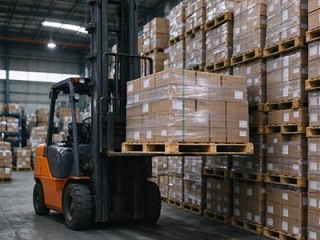 Forklift Configuration Strategy For Dense Warehousing, Warehouse ForkliftDense warehousing needs matched forklifts besides racks. Reach and trilateral stackers fit different layouts, coordinate aisle, load curve and floor for smooth handling.
Do you like ?0
Read more -
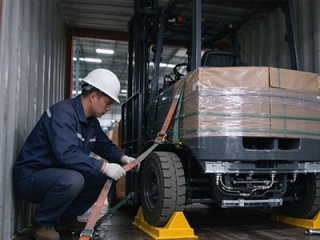 Full Container Supply For Export Forklifts, Forklift ManufacturerBulk forklift orders for overseas can ship by FCL or LCL. Newnewton FCL offers stable freight, safer packing and mixed models for large purchases.
Do you like ?0
Read more -
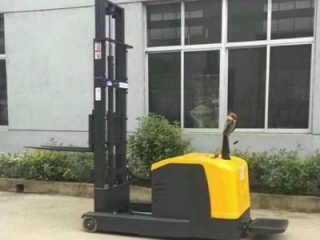 Stand-on Reach Stacker For Narrow Aisle Stacking, Mast Reach StructureStand-on reach stackers feature sliding masts that stay outside racks. They boost storage density in narrow aisles and require flat floors and standard pallets.
Do you like ?0
Read more -
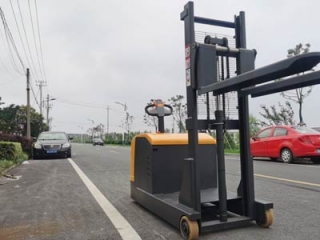 Stand-on Counterbalance Stacker For Various Pallets, Why No Leg RestrictionCounterbalance stackers have no front outriggers, using rear counterweight to avoid pallet interference. They fit various odd pallets yet need wider warehouse aisles.
Do you like ?0
Read more -
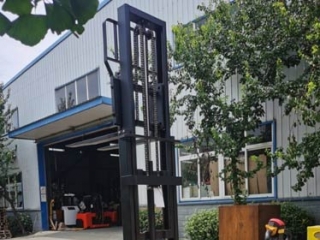 Custom Walk-Behind Counterbalance Stacker | Non-Standard ModificationsStandard walk-behind counterbalance stackers struggle with non-standard pallets and tight aisles. Customize load, lift, forks and structure, share working conditions for safe design.
Do you like ?0
Read more