
Space is limited and racks are densely arranged in narrow warehouses. There is little room for error when forklifts turn and align. Careless reversing or steering may scratch racks and damage goods. How to balance safety and handling efficiency? Learn these precautions for forklift operation in narrow warehouses.
Check reserved aisle width in advance. Confirm the minimum turning radius of the forklift and compare it with the clear aisle width before operation. Do not force entry for stacking if the aisle is too narrow. Switch to suitable narrow-aisle models to prevent the truck from getting stuck between racks.
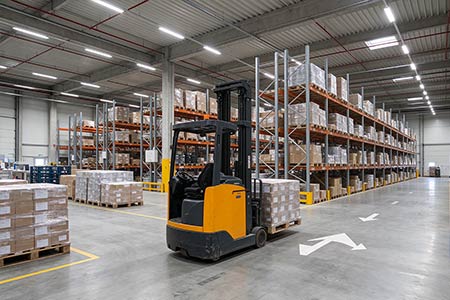
Keep a low and steady travelling speed. Blind spots are common due to goods and uprights inside narrow warehouses. Maintain low speed all the time, slow down in advance at corners and rack ends, and avoid rapid acceleration and sudden braking.
Standardize fork lifting and alignment movements. Align forks horizontally with pallet openings when picking or stacking goods. Lift just high enough to clear the lower rack level. Do not raise the mast blindly. The vehicle centre of gravity rises and stability drops under high lifting conditions.
Watch surrounding staff and warning signs. Pedestrian and cargo flows easily cross in narrow warehouses. Keep observing surroundings during operation and stop immediately when called. Pay close attention to warning signs at rack corners and aisle entrances, and avoid stacking during peak pedestrian hours.
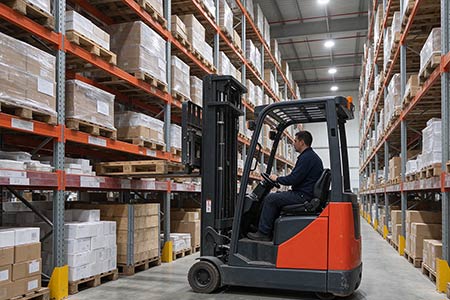
Inspect steering, lights and anti-collision parts regularly. Frequent turning in confined spaces wears the steering system faster. Lights and bumpers offer vital protection for narrow warehouse work. Stop operation for maintenance promptly if steering jams or bumpers get damaged.
Plan the loading and unloading sequence properly. Follow the stacking rule of outside first then inside to reduce U-turns. Set up one-way routes for long-distance transfer to avoid head-on encounters and lower collision risks.
Narrow warehouse electric forklift features a compact body and small turning radius, made for high-density rack storage. Combined with standardized operation procedures, it cuts handling losses and improves warehouse turnover efficiency. Feel free to contact us if you have any questions about narrow-aisle forklift usage.
-
 Full Product Range of Newnewton Forklift for Warehouse Handling SolutionsNewnewton forklifts cover five series for transport, stacking and offloading. Customization and export services are available for diverse warehouse applications.
Do you like ?0
Read more -
 Precautions for Forklift Operation in Narrow WarehousesNarrow dense racks leave little margin for forklifts. Six rules including aisle check, speed control and pre-shift inspection balance safety and handling efficiency.
Do you like ?0
Read more -
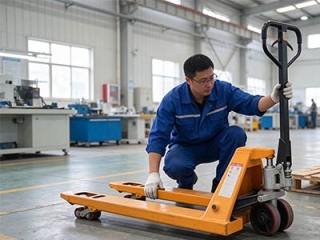 How Is Warehouse Manual Pallet Truck? Key Selection Tips for ExportOverseas bulk manual pallet truck purchases need CE compliance and local pallet standards for SE Asia, Europe and America to cut return risks.
Do you like ?0
Read more -
 How Much Does an Electric Self-Elevating Stacker CostPrices of electric self-loading stackers vary widely. Check load, lift, battery and controls, plus certificates and after-sales to avoid overpricing traps.
Do you like ?0
Read more -
 Stand-on Reach Stacker vs Sit-down Reach Forklift, How to ChooseRide-on and stand-on reach stackers both use extendable masts, yet differ in aisle demand, workload, lifting capacity and service cost.
Do you like ?0
Read more -
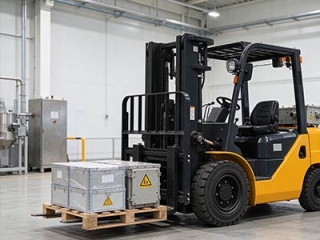 GB 19854 & GB 3836 Guide for Explosion-proof Electric Forklift SelectionWhen buying newnewton explosion-proof forklifts, follow GB 19854 & GB 3836, verify full certificates and distinguish original units from retrofitted ones.
Do you like ?0
Read more








