
Many safety hazards in material handling come from improper operation. To ensure workplace safety, you must understand and avoid common violations in forklift operation. These violations are not only against regulations but also the main cause of tip‑overs, collisions, falling cargo and injuries.
1. Personnel Qualification & Operating Rules
Operating without a valid forklift license, or lending/using others’ licenses.
Skipping pre-operation inspections and working with faulty equipment.
Releasing hands from the controls, using mobile phones, or chatting while operating.
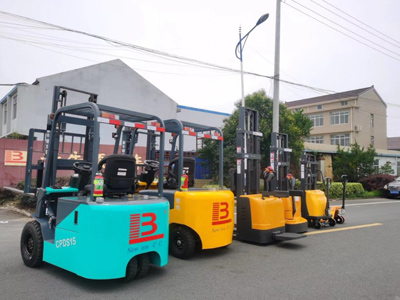
Operating under the influence of alcohol, fatigue or emotional stress; allowing untrained staff to drive.
Jumping on or off the forklift without using handholds and steps.
Extending any body part outside the operator compartment.
Failing to horn when turning or reversing; no spotter in blind‑zone operations.
Speeding, sudden acceleration, hard braking or sharp turns; not slowing down at crossings.
Lifting forks higher than 30 cm off the ground while driving; adjusting forks during travel.
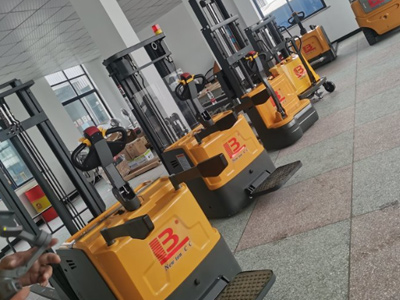
2. Load Handling (Over 60% of Tip‑over Accidents)
Overloading beyond the rated capacity; lifting unknown‑weight cargo.
Unbalanced loading, single‑fork lifting, off‑center cargo, or insufficient fork insertion depth.
Handling oversized loads without proper fixation or supervision.
Rapid lifting/lowering; sharp turns or stops with loaded forks.
Using forks to push, hit or force cargo; carrying people without a certified platform.
Taizhou Newnewton Forklift reminds you of ramp safety: do not drive downhill with forks forward, uphill with forks backward, or turn, park or load on slopes.
Lifting cargo over people or allowing anyone to stand under raised forks.
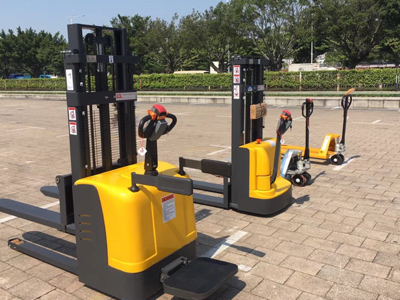
3. Equipment Parking & Maintenance
Parking in non-designated areas: aisles, ramps, intersections or under racks.
Leaving forks raised, not engaging the parking brake, keeping the key inserted.
Improper battery charging or refueling in confined spaces.
Unauthorized modifications; skipping required professional maintenance.
Delaying repairs or disassembling faulty forklifts without warning signs.
4. Work Environment & Coordination
Overtaking in narrow spaces; driving side by side with other forklifts.
Not keeping safe distances or yielding to pedestrians.
Speeding on wet, oily or uneven ground.
Long operation in confined spaces without ventilation.
Using damaged pallets or stacking extra pallets on forks.
Hitting rack columns or overloading storage racks.
Working quickly around obstacles, cables or clutter.
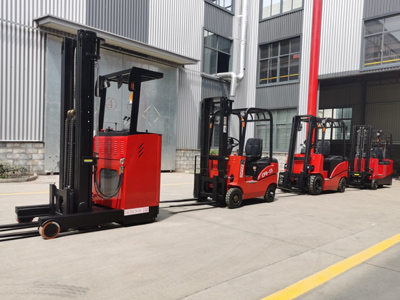
5. Other Common Violations
Not wearing PPE; operating in slippers, high heels or loose clothing.
Towing without proper equipment or safety measures.
Raising forks too high when empty.
Working without lights at night or in dark areas.
Parking in fire lanes, near fire hydrants or emergency exits.
In summary, understanding these risks helps create a safer workplace. We hope you fully understand forklift accident prevention measures and operate safely to protect yourself and others.
-
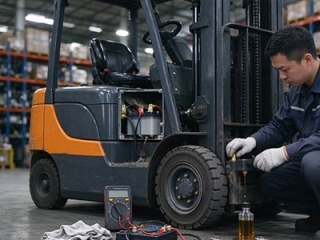 Reliability Of Newnewton Warehouse Forklifts For Heavy-Duty ShiftsWarehouse forklift reliability relies on industrial parts, reinforced frames and factory durability tests. Proper operation and maintenance reduce unexpected downtime.
Do you like ?0
Read more -
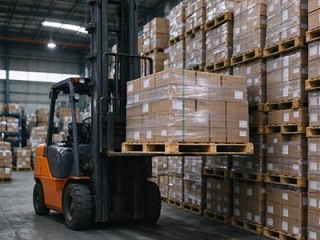 Forklift Configuration Strategy For Dense Warehousing, Warehouse ForkliftDense warehousing needs matched forklifts besides racks. Reach and trilateral stackers fit different layouts, coordinate aisle, load curve and floor for smooth handling.
Do you like ?0
Read more -
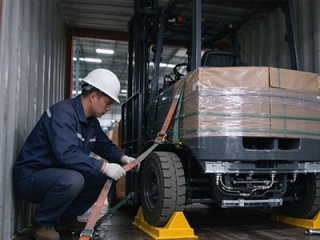 Full Container Supply For Export Forklifts, Forklift ManufacturerBulk forklift orders for overseas can ship by FCL or LCL. Newnewton FCL offers stable freight, safer packing and mixed models for large purchases.
Do you like ?0
Read more -
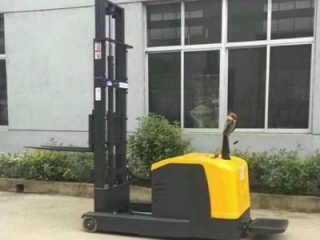 Stand-on Reach Stacker For Narrow Aisle Stacking, Mast Reach StructureStand-on reach stackers feature sliding masts that stay outside racks. They boost storage density in narrow aisles and require flat floors and standard pallets.
Do you like ?0
Read more -
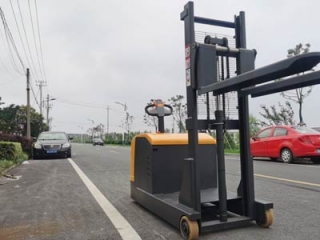 Stand-on Counterbalance Stacker For Various Pallets, Why No Leg RestrictionCounterbalance stackers have no front outriggers, using rear counterweight to avoid pallet interference. They fit various odd pallets yet need wider warehouse aisles.
Do you like ?0
Read more -
 Custom Walk-Behind Counterbalance Stacker | Non-Standard ModificationsStandard walk-behind counterbalance stackers struggle with non-standard pallets and tight aisles. Customize load, lift, forks and structure, share working conditions for safe design.
Do you like ?0
Read more








