
Many warehouse buyers focus only on unit price when checking semi electric stacker quotation, ignoring whether equipment parameters match warehouse working conditions. Blindly chasing low prices may lead to insufficient load capacity or inadequate lifting height, bringing extra operating costs. The market price of semi electric stackers varies greatly, and budgets should be estimated with comprehensive parameter evaluation.
Load capacity and lifting height 1 ton, 1.5 ton and 2 ton are mainstream models. For the same load capacity, higher lifting height requires stronger mast materials and better hydraulic systems, pushing up the price. Common lifting specifications include 1.6m, 2m, 2.5m and 3m. Buyers should check the rated load at maximum lifting height to avoid load attenuation during high stacking work.
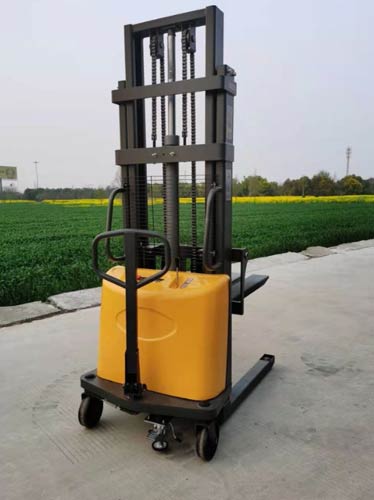
Battery configuration Semi electric stackers are available with lead acid or lithium batteries. Lead acid versions have lower upfront cost for occasional warehouse use. Lithium batteries cost more, featuring fast charging and long cycle life for daily heavy-duty operations.
Mast material, oil cylinder seals and tire types also cause price differences. Stackers with thick steel masts and integrated sealed cylinders resist oil leakage and deformation, and their price is higher than standard models.
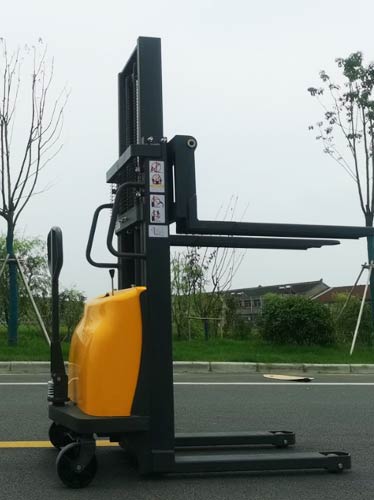
Site conditions Warehouses with narrow aisles need to check overall truck width and outrigger spacing to match pallet sizes. Solid wear-resistant tires are recommended for uneven floors. Cold storage or customized outrigger width requires factory customization, with different price and lead time compared with standard stock units.
Many buyers wonder semi electric stacker how much. Prices range from thousands to over ten thousand. It is necessary to tell the difference between source factory and distributor offers. Source factories cut intermediate markup and provide direct after-sales support. Confirm freight, warranty and spare parts before ordering, as some quotations exclude these services and cause higher maintenance cost later.
If you have any questions, feel free to contact us.
-
 Maintenance Notes for Double Pallet Truck Under Heavy Warehouse LoadsOperators often ignore abnormal motor noise of double pallet trucks during rush orders. Continuous operation burns motors. Timely maintenance prevents failures.
Do you like ?0
Read more -
 How to Get Accurate Quotations for Stand-on Counterbalance StackerStand-on counterbalance stackers rely on rear weight for stability and cost more. Battery, load, lift height and custom options affect final quotations.
Do you like ?0
Read more -
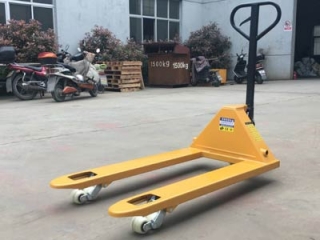 Manual Stacker Vs Pallet Jack: Key Operational Function DifferencesNew buyers confuse manual pallet trucks and manual stackers. They differ in lifting function. Pallet trucks for transfer, stackers for racking to avoid risks.
Do you like ?0
Read more -
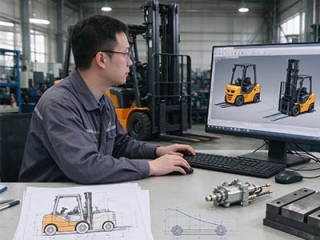 Custom Forklift Dimensions for Export to Fit Narrow Warehouse AislesForklift export faces size risks. Overseas orders may fail door, container or aisle fit. Customization needs balance of gravity, load and target market certifications.
Do you like ?0
Read more -
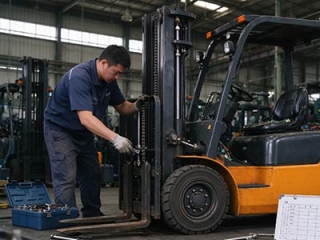 Forklift Safety Management Guide Based on Special Equipment SpecificationsForklifts are special equipment. Follow TSG 81 with training, records, inspection and on-site control to prevent accidents and penalties.
Do you like ?0
Read more -
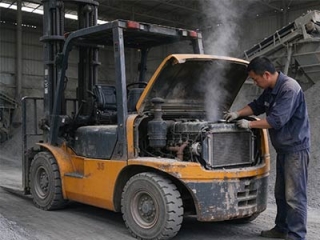 Heavy-Duty Diesel Forklift High Temperature Troubleshooting Guide3.5t diesel forklifts often overheat when handling sand and stone. Inspect cooling system step by step: radiator, belt, shroud, thermostat and water pump.
Do you like ?0
Read more








