As a powerful assistant for handling goods, manual stackers will inevitably encounter oil leakage problems caused by oil seal wear or cracks. Worried about oil stains staining the floor? Afraid of safety hazards caused by tubing rupture? Don't worry, this article will explain in detail how to replace the oil seal of the manual stacker, and help you easily solve the problem of oil leakage.
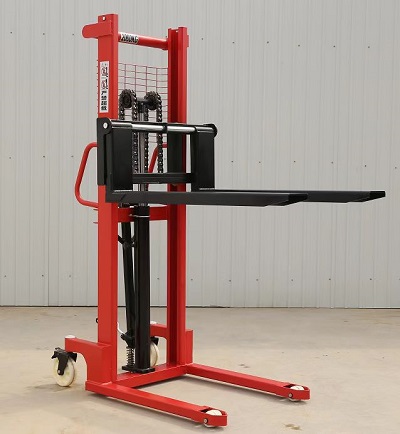
Oil seal replacement steps
Tips:
Through the above simple steps, you can easily complete the replacement of the oil seal of the manual forklift, and avoid the potential safety hazards and environmental pollution caused by the oil leakage problem.
Note: If you are not familiar with the structure and operation of manual stackers, it is recommended to seek professional help to avoid unnecessary losses caused by improper operation.
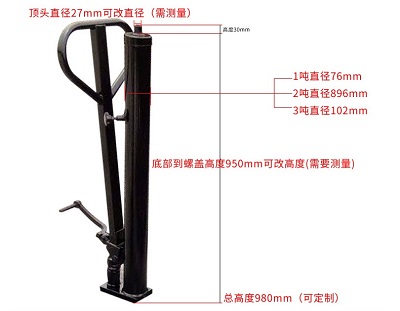
Disassembly: First, use a tool such as a wrench to carefully remove the springs and brake screws at both ends of the manual stacker cylinder.
Loosen the guide sleeves: Find the guide sleeves on both sides of the cylinder and gently loosen them.
Remove the old oil seal: Once the guide sleeve is loosened, the old seal can be removed from the guide sleeve.
Install the new oil seal: Carefully install the new oil seal into the guide sleeve, make sure it is in the correct position, and press it in evenly to avoid damaging the oil seal.
Reset: Install the guide sleeve, brake screws and springs in turn to ensure that all parts are securely installed.
If the seal is aging and sticking to the cylinder or deformed and difficult to take out, the seal can be soaked in hot water for about 10 minutes to make it easier to remove after softening.
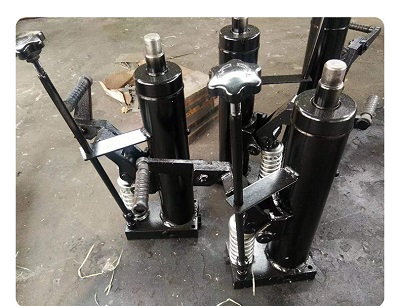
It is recommended to choose an oil seal that is consistent with the original specifications for replacement to ensure the best sealing effect.
When installing a new oil seal, a small amount of hydraulic oil can be applied to the surface of the oil seal to facilitate installation and reduce wear.
-
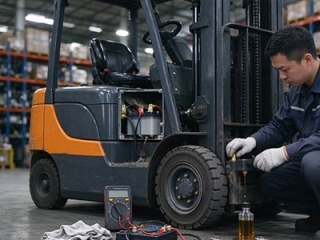 Reliability Of Newnewton Warehouse Forklifts For Heavy-Duty ShiftsWarehouse forklift reliability relies on industrial parts, reinforced frames and factory durability tests. Proper operation and maintenance reduce unexpected downtime.
Do you like ?0
Read more -
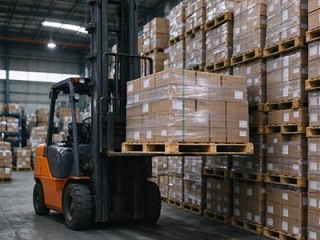 Forklift Configuration Strategy For Dense Warehousing, Warehouse ForkliftDense warehousing needs matched forklifts besides racks. Reach and trilateral stackers fit different layouts, coordinate aisle, load curve and floor for smooth handling.
Do you like ?0
Read more -
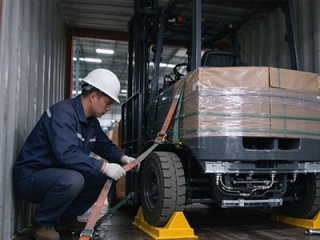 Full Container Supply For Export Forklifts, Forklift ManufacturerBulk forklift orders for overseas can ship by FCL or LCL. Newnewton FCL offers stable freight, safer packing and mixed models for large purchases.
Do you like ?0
Read more -
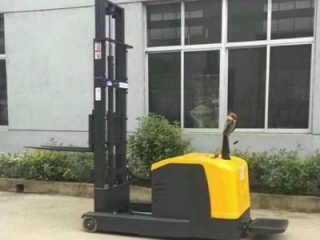 Stand-on Reach Stacker For Narrow Aisle Stacking, Mast Reach StructureStand-on reach stackers feature sliding masts that stay outside racks. They boost storage density in narrow aisles and require flat floors and standard pallets.
Do you like ?0
Read more -
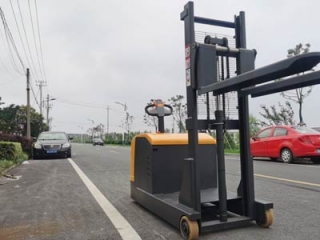 Stand-on Counterbalance Stacker For Various Pallets, Why No Leg RestrictionCounterbalance stackers have no front outriggers, using rear counterweight to avoid pallet interference. They fit various odd pallets yet need wider warehouse aisles.
Do you like ?0
Read more -
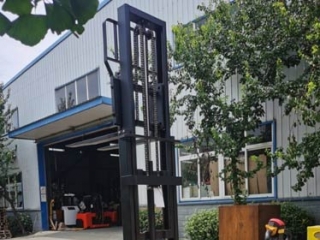 Custom Walk-Behind Counterbalance Stacker | Non-Standard ModificationsStandard walk-behind counterbalance stackers struggle with non-standard pallets and tight aisles. Customize load, lift, forks and structure, share working conditions for safe design.
Do you like ?0
Read more