Outdoor Rough Terrain Stacker: Critical Specs For Mud & Uneven Working Surface
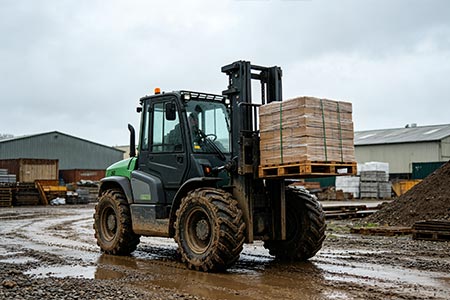
Ordinary indoor electric stackers cannot work reliably on muddy ground after rain. Wheel slipping, sinking and chassis scraping frequently occur, which may burn out motors and electric parts and raise maintenance expenses significantly. When choosing equipment for muddy sites, do not merely focus on load capacity and lifting height. You must check critical parameters of outdoor all-electric rough terrain stacker.
Tire Configuration
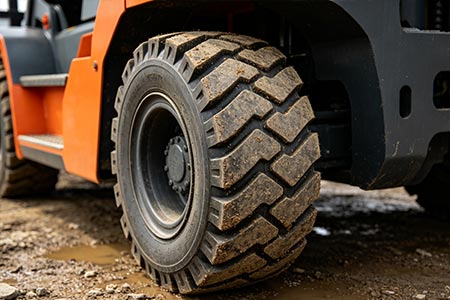
Large-diameter solid rubber off-road tires with deep open tread patterns are preferred. Deep grooves realize self-cleaning of mud; Tire width ≥100mm expands contact area, lowers ground pressure and reduces sinking risks. Avoid narrow drive wheels. Pneumatic off-road tires are optional for soft mud to improve traction.
Chassis Ground Clearance
Most regular walkie straddle stackers only achieve 40–60mm loaded ground clearance. Mud pits and soil bumps easily scratch the chassis and block outriggers. Reference standard for muddy yards: rough terrain electric stacker should have minimum loaded ground clearance over 100mm. Sites covered with potholes and rain-formed mud pits require upgraded chassis with 110–150mm ground clearance. Important reminder: Only loaded ground clearance counts; unloaded data has limited reference value.
Drive System & Climbing Capacity
Low friction on muddy ground easily leads to wheel spin during startup and climbing.
Motor: High-torque brushless drive motor is recommended to deliver stable torque and avoid slipping at low speed.
Gradeability: Loaded climbing capacity ≥10%. Select models with 15% gradeability if long slopes exist in open yards.
Braking: Standard electromagnetic power-off brake prevents sliding on slopes. Anti-slip control system is available as an option.
Electrical Waterproof and Dustproof Grade
Splashing mud and rainwater can invade motors and controllers and cause short circuits. Controllers and drive motors need sealed structure with protection rating no lower than IP54. Wiring adopts waterproof aviation plugs to prevent terminal corrosion from mud and water. The battery compartment is designed with dust and mud barriers to avoid mud accumulation erasing battery housings and terminals.
These are core standards when carrying out stacker selection for muddy ground. Contact us to get the electronic brochure for complete technical parameters.
-
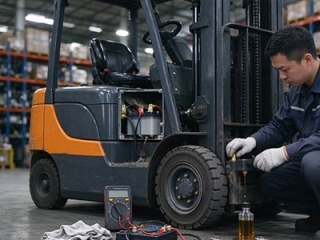 Reliability Of Newnewton Warehouse Forklifts For Heavy-Duty ShiftsWarehouse forklift reliability relies on industrial parts, reinforced frames and factory durability tests. Proper operation and maintenance reduce unexpected downtime.
Do you like ?0
Read more -
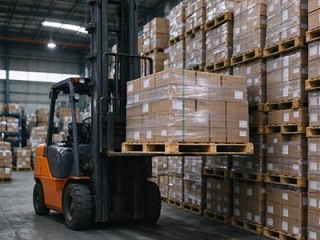 Forklift Configuration Strategy For Dense Warehousing, Warehouse ForkliftDense warehousing needs matched forklifts besides racks. Reach and trilateral stackers fit different layouts, coordinate aisle, load curve and floor for smooth handling.
Do you like ?0
Read more -
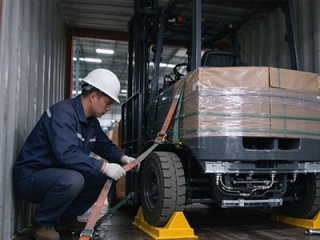 Full Container Supply For Export Forklifts, Forklift ManufacturerBulk forklift orders for overseas can ship by FCL or LCL. Newnewton FCL offers stable freight, safer packing and mixed models for large purchases.
Do you like ?0
Read more -
 Stand-on Reach Stacker For Narrow Aisle Stacking, Mast Reach StructureStand-on reach stackers feature sliding masts that stay outside racks. They boost storage density in narrow aisles and require flat floors and standard pallets.
Do you like ?0
Read more -
 Stand-on Counterbalance Stacker For Various Pallets, Why No Leg RestrictionCounterbalance stackers have no front outriggers, using rear counterweight to avoid pallet interference. They fit various odd pallets yet need wider warehouse aisles.
Do you like ?0
Read more -
 Custom Walk-Behind Counterbalance Stacker | Non-Standard ModificationsStandard walk-behind counterbalance stackers struggle with non-standard pallets and tight aisles. Customize load, lift, forks and structure, share working conditions for safe design.
Do you like ?0
Read more