
5 Practical Features of Walk-behind Counterbalance Stacker for Narrow Warehouse
To achieve higher efficiency and easier handling in narrow warehouses, many old and small factories are limited by tight space. Conventional stackers struggle to pass through narrow aisles and may fail to fit certain pallets. In such cases, learning about the benefits of walk-behind counterbalance stacker helps buyers make proper purchasing decisions for narrow warehouse operations.
No outrigger design, compatible with all kinds of pallets Conventional stackers with support legs require legs to slide under pallets, so they only work with open-bottom pallets. They cannot handle solid pallets, closed-base pallets or pallets for long materials. The walk-behind counterbalance stacker relies on rear counterweight for stability without front support outriggers. It is not restricted by pallet bottom structures. It can lift and stack standard pallets and special-shaped non-standard pallets, covering multiple cargo handling tasks with one unit.
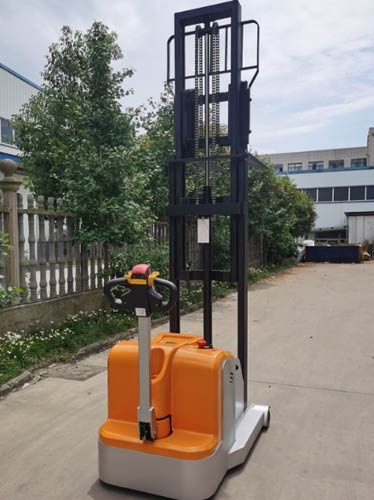
Compact body and small turning radius for narrow aisles Many old warehouses only have aisle width between 1.8m and 2.2m. Ordinary forklifts have wide bodies and need extra space to turn, making steering inside rack aisles difficult. The walk-behind counterbalance stacker features compact overall dimensions and small turning radius. It can steer flexibly inside narrow rack aisles and start stacking work directly without rack reconstruction.
Walk-behind control, low operation threshold and higher safety Operators control the machine while walking beside it. There is no cabin, offering wide vision to observe forks and surrounding racks in real time. The machine can stop quickly when workers or goods block the path, reducing risks of rack collision or cargo falling. New warehouse staff can operate it after simple training.
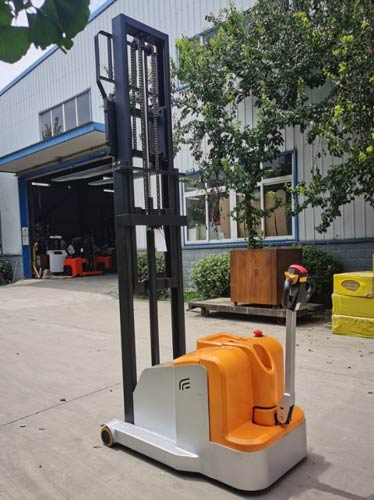
Lithium power configuration, stable endurance and convenient charging The lithium version of walk-behind counterbalance stacker delivers smooth power output, suitable for intermittent continuous stacking tasks in warehouses. The battery has smaller size and keeps reasonable overall machine weight. It supports fast charging, so power can be refilled during lunch break without disrupting daily warehouse work. Compared with lead-acid batteries, it requires less maintenance and no frequent water refilling.
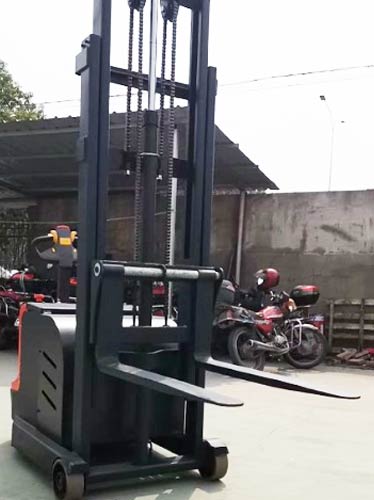
Light and flexible machine for multi-scene application Besides high-level stacking inside warehouses, this machine can also handle raw material transfer and finished goods loading preparation in workshops. Controlled machine weight makes relocation easy. For small and medium warehouses without super heavy cargo, choosing the narrow aisle lithium counterbalance stacker saves procurement budget and fully utilizes existing warehouse space.
In summary, the narrow aisle lithium counterbalance stacker suits space-limited sites and special pallet requirements to improve operation efficiency. Feel free to contact us to get detailed specification sheets and demo videos.
-
 Maintenance Notes for Double Pallet Truck Under Heavy Warehouse LoadsOperators often ignore abnormal motor noise of double pallet trucks during rush orders. Continuous operation burns motors. Timely maintenance prevents failures.
Do you like ?0
Read more -
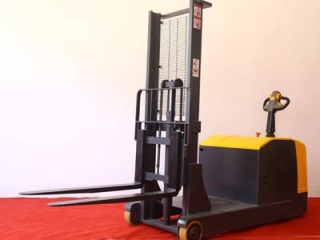 How to Get Accurate Quotations for Stand-on Counterbalance StackerStand-on counterbalance stackers rely on rear weight for stability and cost more. Battery, load, lift height and custom options affect final quotations.
Do you like ?0
Read more -
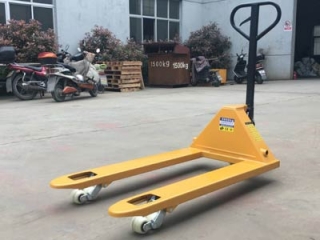 Manual Stacker Vs Pallet Jack: Key Operational Function DifferencesNew buyers confuse manual pallet trucks and manual stackers. They differ in lifting function. Pallet trucks for transfer, stackers for racking to avoid risks.
Do you like ?0
Read more -
 Custom Forklift Dimensions for Export to Fit Narrow Warehouse AislesForklift export faces size risks. Overseas orders may fail door, container or aisle fit. Customization needs balance of gravity, load and target market certifications.
Do you like ?0
Read more -
 Forklift Safety Management Guide Based on Special Equipment SpecificationsForklifts are special equipment. Follow TSG 81 with training, records, inspection and on-site control to prevent accidents and penalties.
Do you like ?0
Read more -
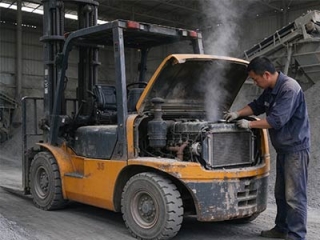 Heavy-Duty Diesel Forklift High Temperature Troubleshooting Guide3.5t diesel forklifts often overheat when handling sand and stone. Inspect cooling system step by step: radiator, belt, shroud, thermostat and water pump.
Do you like ?0
Read more








