
Principles and steps for installing semi electric stacker truck components

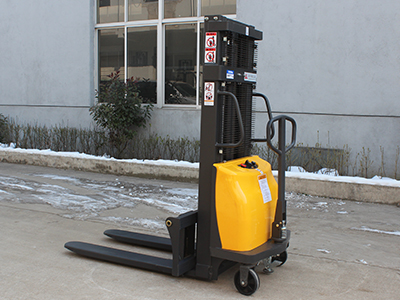
In warehouse workshop operations, the application of semi electric stacker truck has gradually become popular. When bosses buy back semi-electric stackers from warehouse forklift manufacturers, they are often not finished products due to transportation space and safety considerations, and some parts need to be installed by themselves. Then, the installation of the semi-electric stacker has become a very important issue. Next, follow us to understand the principles and steps of installing semi-electric stacker components.
The installation of the semi electric stacker truck usually follows the installation principles from bottom to top, from inside to outside, from back to front, and from left to right. Let's look at the specific steps below:
1. The piston ring should be used as a complete set, and can not be disassembled and assembled at will. Install from the third ring.
2. Do not touch the piston, the surface of the crankshaft, the connecting rod, the piston, the crankshaft, and the camshaft at will. When installing these parts, apply engine oil evenly for the purpose of protection and lubrication.
3. Apply butter to the O-ring as required, and then install the cylinder liner. Warehouse forklift manufacturers remind everyone not to knock the cylinder liner during installation.
4. Remember not to install the ring vertically or horizontally. When installing the ring opening, it is appropriate to stagger at least 120°.
5. Another thing that the warehouse forklift manufacturer should tell everyone is that the cylinder head gasket can be installed after the oil is applied, and the process is irreversible.
6. When installing the cylinder head screws, the warehouse forklift manufacturer should also remind everyone that the wrenches should be tightened from the middle to the four sides of the cylinder head screws 2-3 times to ensure that each screw is evenly stressed, and then from the middle to the two. Tighten the crankshaft bush connecting rod in 2-3 times.
7. Install the piston connecting rod in the original direction of the piston as required. Use a special tool to install the piston connecting rod. The piston should not be knocked as well, and the oil must be evenly applied to the connecting rod bush.
8. Pay attention to the alignment of the gears when installing the high-pressure fuel injection pump gears and camshafts. Warehouse forklift manufacturers consider this to be very important.
The above are the principles and steps for the storage forklift manufacturers to install the parts of the semi-electric stacker. I hope our content can be helpful to everyone.
-
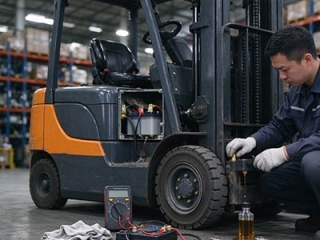 Reliability Of Newnewton Warehouse Forklifts For Heavy-Duty ShiftsWarehouse forklift reliability relies on industrial parts, reinforced frames and factory durability tests. Proper operation and maintenance reduce unexpected downtime.
Do you like ?0
Read more -
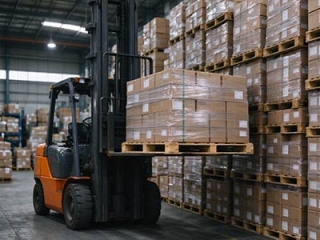 Forklift Configuration Strategy For Dense Warehousing, Warehouse ForkliftDense warehousing needs matched forklifts besides racks. Reach and trilateral stackers fit different layouts, coordinate aisle, load curve and floor for smooth handling.
Do you like ?0
Read more -
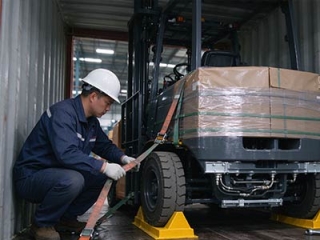 Full Container Supply For Export Forklifts, Forklift ManufacturerBulk forklift orders for overseas can ship by FCL or LCL. Newnewton FCL offers stable freight, safer packing and mixed models for large purchases.
Do you like ?0
Read more -
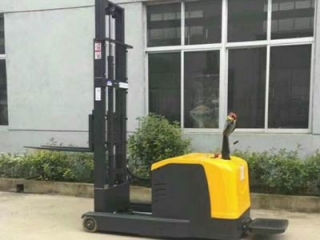 Stand-on Reach Stacker For Narrow Aisle Stacking, Mast Reach StructureStand-on reach stackers feature sliding masts that stay outside racks. They boost storage density in narrow aisles and require flat floors and standard pallets.
Do you like ?0
Read more -
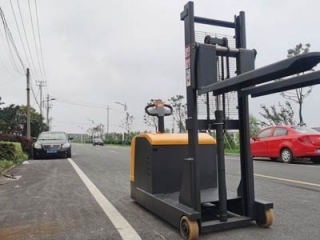 Stand-on Counterbalance Stacker For Various Pallets, Why No Leg RestrictionCounterbalance stackers have no front outriggers, using rear counterweight to avoid pallet interference. They fit various odd pallets yet need wider warehouse aisles.
Do you like ?0
Read more -
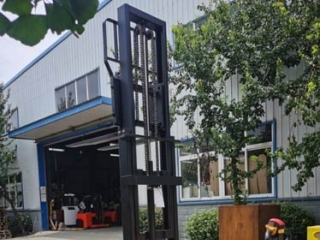 Custom Walk-Behind Counterbalance Stacker | Non-Standard ModificationsStandard walk-behind counterbalance stackers struggle with non-standard pallets and tight aisles. Customize load, lift, forks and structure, share working conditions for safe design.
Do you like ?0
Read more








